










IELTS Computer Based Practice Test Preparation Guide

Facebook
Email
WhatsApp

IELTS computer based practice test preparation guide work should feel close to the real exam, not like casual revision on a laptop. The computer-delivered test rewards the same English skills as IELTS on paper, but it adds practical demands: screen reading, typing control, answer entry, scrolling, timing, and digital checking. Before you start doing full tests every day, take the IELTS Express Pre-Test to estimate your current band range and identify whether your main gap is English skill, test strategy, or computer-test handling.

A useful computer-based practice test is not just an online worksheet. It should help you rehearse the way you will read, listen, write, check, and move through questions on test day. That matters even more in 2026 because many Australian candidates now prepare for IELTS as a screen-based exam by default. For practical IELTS preparation that connects score goals with test-day routines, Career Wise English focuses on helping candidates practise with a clear improvement plan rather than random test repetition.

Know What Computer-Based IELTS Practice Should Prove

Your first practice test should answer a simple question: what is stopping you from reaching your target band right now? Some candidates lose marks because their English level is not yet strong enough. Others understand the language but lose time because the computer format feels unfamiliar. A good preparation guide separates those causes before you choose your next study task.

After one timed practice test, write down your score, timing, and mistake types for each section. Do not only record the final band estimate. Note whether you missed answers because of vocabulary, paraphrase, spelling, screen fatigue, slow typing, poor planning, or rushing. The cause matters because each problem needs a different fix.

  • Listening errors may come from distractors, spelling, or typing while the audio continues.
  • Reading errors may come from weak paraphrase recognition or losing your place on screen.
  • Writing errors may come from poor ideas, grammar, structure, or typing without planning.
  • Speaking still needs live answer development, even if the other sections are computer-delivered.
  • Timed review is as important as timed completion.

Set Up Practice Conditions That Match Test Day

Computer-based IELTS practice should use a desktop or laptop whenever possible. A phone is useful for quick vocabulary review, but it does not reproduce the screen size, typing position, or attention demands of the real test. Sit at a desk, use a normal keyboard, remove distractions, and time each section strictly.

Try to make your setup boring and repeatable. Use the same chair, similar headphones, a visible timer, and a clear rule that you do not pause the test. The aim is not to create pressure for the sake of pressure. The aim is to make test-day actions feel familiar before the official result matters.

Practise Listening With Digital Answer Entry

Listening can feel easy during casual practice because you can replay sections or pause to write answers. The real test does not work that way. In computer-based practice, you need to listen, predict the answer type, type or select the answer, and keep moving while the recording continues.

During review, check whether your mistakes came from hearing the wrong information or entering the answer incorrectly. Plural endings, spelling, numbers, dates, and capital letters can all create avoidable errors. If you need repeated exam-style practice, access unlimited IELTS mock tests and compare whether your Listening score stays stable across more than one attempt.

Train Reading For Screen Accuracy

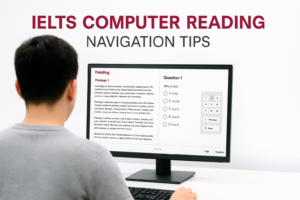
Reading on screen needs a slightly different routine from reading on paper. You may not have the same freedom to circle, underline, and flip between pages. That means your question strategy needs to be cleaner. Read the question first, identify the key words, scan for the relevant paragraph, then slow down at the evidence point.

Do not scroll randomly through the passage hoping the answer will appear. Screen reading rewards organised movement. If you lose your place often, practise one passage at a time and mark where the evidence was found after the test. If your score changes a lot between paper and computer practice, review the IELTS computer test changes 2026 Australia guide so your expectations match the format you are likely to face.

Use Writing Practice To Control Typing, Not Just Word Count

Typing can help IELTS Writing because you can edit sentences, move ideas, and monitor word count more easily. It can also hurt your score if you type too much without planning. A 330-word Task 2 essay with weak paragraph control is not stronger than a 260-word answer that directly answers the question.

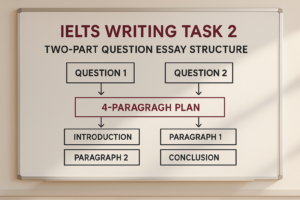
Before each Writing practice, spend a few minutes planning. Decide your position, two main ideas, examples, and paragraph jobs before you start typing. During the final five minutes, check high-value problems first: task response, paragraph order, sentence endings, subject-verb agreement, articles, and repeated vocabulary. For a broader practice structure, the guide on how to review IELTS practice test questions and answers can help you turn each attempt into a correction routine.

Do Full Mock Tests, But Not Every Day

Full computer-based mock tests are valuable because they reveal stamina, timing, and section transitions. However, doing a full test every day without review is usually a poor use of energy. You may become tired, repeat the same mistakes, and mistake activity for improvement.

A stronger pattern is one full mock test, one detailed review session, then two or three focused skill sessions based on the results. If Reading timing collapsed, practise timed passages. If Writing lacked development, rewrite body paragraphs. If Listening mistakes were mostly spelling, drill spelling and plural endings before another full test.

Build A Weekly Preparation Routine

A practical weekly routine should mix full-test rehearsal with targeted correction. For example, complete one full computer-based practice test early in the week. The next day, review every important mistake. Then spend two or three days on the weakest section. Finish the week with a shorter timed section to check whether the correction is working.

This approach is calmer than taking random tests. It also gives you evidence. You can see whether your score is improving because the same mistake type is disappearing, not just because one topic was easier. If your deadline is close, use the IELTS preparation plans page to compare support options before booking another official test.

Review Computer-Based Practice Tests Properly

The review stage should be specific. For Listening and Reading, find the exact evidence for the correct answer. For Writing, compare your answer with the task and the marking criteria. For Speaking, record yourself and check fluency, grammar, pronunciation, and answer development. A simple score alone is not enough.

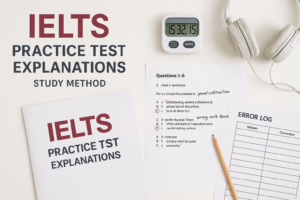
Use a review log with four columns: mistake, cause, correction, and next action. Keep it short enough to use. If you write 30 notes after one test, you will probably ignore them. Choose the three mistakes most likely to appear again and make those the focus of your next session.

Avoid Common Computer Practice Mistakes

The first mistake is practising on paper while planning to sit the computer test. Paper materials can still help with question types and language, but you need screen-based rehearsal before test day. The second mistake is blaming the computer for every low score. Sometimes the real problem is still vocabulary, grammar, weak inference, or poor paragraph development.

The third mistake is over-focusing on speed. Speed helps only when accuracy stays high. Fast scrolling, fast typing, and fast guessing can all lower your score. Build a routine that protects accuracy first, then gradually improve pace.

Use A 14-Day Computer-Based Practice Plan

In days one and two, complete a diagnostic computer-based practice test and review it carefully. In days three to six, focus on the two weakest areas from the review. That might mean Reading paraphrase drills, Listening spelling checks, Writing paragraph rewrites, or typing practice with timed essays.

In days seven to ten, complete timed section practice under strict conditions. In days eleven and twelve, complete another full mock test and compare the pattern with your first attempt. In days thirteen and fourteen, reduce the load, review your checklist, and practise only the routines you will actually use on test day.

Know When To Get Feedback

Self-review works well for Listening and Reading because there are correct answers and evidence in the passage or transcript. Writing and Speaking are harder to judge alone. You may not notice that your essay is underdeveloped, your examples are too general, or your spoken answers are repetitive.

If your practice scores stay stuck after several tests, get feedback before doing more of the same. More practice is useful only when it changes the problem. A teacher can show whether your current barrier is task response, coherence, vocabulary, grammar, pronunciation, timing, or confidence.

Final Checklist Before Your Official Test

Before test day, ask whether you can complete each section under real timing without pausing, whether you can type Writing answers comfortably, and whether you know how to check answers without wasting time. Also ask whether your last two practice results are close to the score you need. One good result is encouraging. A repeated pattern is safer.

The best IELTS computer based practice test preparation guide is practical, not complicated. Match the test format, practise under timed conditions, review mistakes by cause, and fix the highest-value weakness before taking another full test. That is how computer-based practice becomes preparation rather than just another score.


Ready to find out your IELTS band score?
Take the IELTS Express Pre-Test for just $4.99 and get your personalised band prediction with a 14-day improvement plan.

Take the Pre-Test Now ->


FAQ: IELTS Computer Based Practice Test Preparation Guide

How many computer-based IELTS practice tests should I take?

Most candidates benefit from several timed tests, but the number matters less than the review quality. One full test followed by focused correction is usually better than three untouched tests.

Is computer-based IELTS easier than paper-based IELTS?

It is not automatically easier. The English standard is the same. It may feel easier if you type well and read comfortably on screen, but it can feel harder if the format is unfamiliar.

Should I practise IELTS Writing by typing?

Yes, if you plan to sit computer-delivered IELTS. Practise planning before typing, controlling paragraph length, and checking targeted grammar errors in the final minutes.

Can I use paper practice tests for computer IELTS?

Yes, paper materials can help with question types and language skills, but you should also practise on screen so timing, typing, scrolling, and answer entry feel normal.

What should I review after a computer-based practice test?

Review the cause of each important mistake. Separate English issues from computer-handling issues, then choose three next actions for your following study session.

Start your IELTS Journey Today

Try everything for just $1.

Leave a comment

Your email address will not be published. Required fields are marked *

Start your IELTS Journey Today

Try everything for just $1.