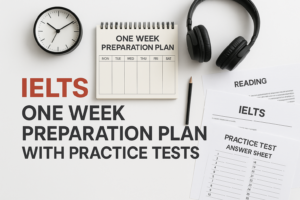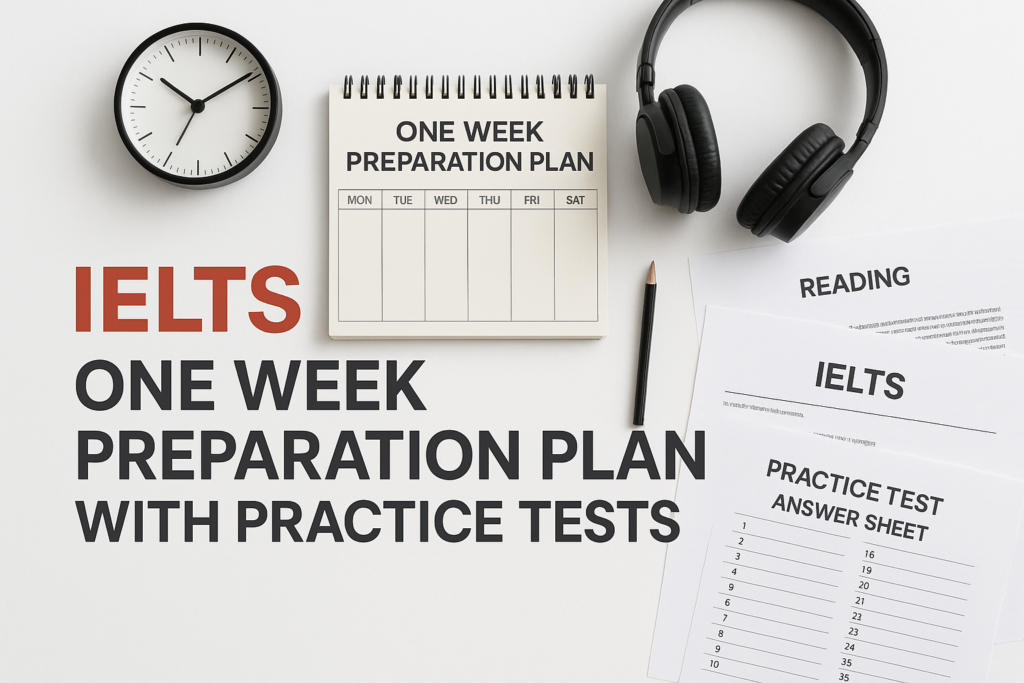
An IELTS one week preparation plan with practice tests needs ruthless prioritisation. Seven days is not enough to rebuild every language skill, but it is enough to understand the test, identify the marks you are losing and replace unhelpful habits with a clear routine. The key is to use practice tests as evidence, not as a daily endurance challenge. If you need a quick starting benchmark, the IELTS Express Pre-Test gives you a personalised band prediction and a 14-day improvement plan that you can adapt to your shorter deadline.
This schedule assumes that your test is seven days away and that you can study for roughly two to four focused hours each day. If you have less time, keep the order but shorten the drills. Start with diagnosis, work on the highest-value weaknesses, complete realistic timed practice, and reduce the workload before test day. That sequence gives each activity a purpose.
Before Day 1: Set A Precise Score Target
Write down the overall band and section minimums required by your university, employer, registration body or visa pathway. “I want a good IELTS score” is too vague to guide a one-week plan. A candidate who needs 7.0 in Writing and 6.5 elsewhere should allocate time differently from someone who needs 7.0 in every skill.
Next, check the format you booked: Academic or General Training, and computer or paper delivery. Use matching materials throughout the week. Reading and Writing differ between Academic and General Training, while the delivery format affects navigation, note-taking and answer transfer. Spend ten minutes confirming the official timing, question sequence and test-day rules. Do not lose study time to material for the wrong test.
Create a simple tracking page with four rows: Listening, Reading, Writing and Speaking. Add columns for current result, target, recurring errors and the next corrective action. This page will stop you from changing direction after every difficult exercise.
Day 1: Take A Diagnostic Practice Test
Complete one full practice test under realistic conditions. Use the correct time limits, take only permitted breaks and remove your phone. For Speaking, record your answers to a complete mock interview. The purpose is not to produce a flattering score. You need a reliable picture of what happens when the sections are combined and the clock is running.
Mark Listening and Reading carefully. For every wrong or uncertain answer, classify the cause: vocabulary, paraphrase, distractor, spelling, navigation, timing or careless reading. For Writing, compare your response with the public assessment criteria and check whether you answered every part of the task. For Speaking, listen for long pauses, memorised phrases, undeveloped answers and repeated grammar errors.
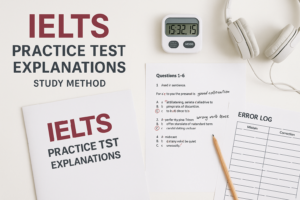
A useful review method is explained in this guide to an IELTS practice test with explanations. Do not merely note the correct answer. Write one sentence explaining why your answer failed and one action that would prevent the same mistake.
Day 2: Repair Listening And Reading Errors
Choose the two error categories that cost you the most marks on Day 1. Work in short blocks of 30 to 45 minutes. In Listening, you might practise predicting answer types, recognising corrections, following maps or recovering after a missed answer. Use transcripts only after an honest first attempt. Locate the exact paraphrase or distraction, then replay the segment without reading.
In Reading, separate comprehension problems from time problems. If you understand a passage after the timer stops, practise locating evidence and making decisions faster. If the language itself blocks you, analyse a smaller number of questions deeply. Underline the words in the passage that prove the answer and note how they paraphrase the question.
Finish with one timed Listening section and one timed Reading passage. Review them immediately. A large bank of unlimited IELTS mock tests is useful here because you can select enough realistic material to check whether the corrected method works beyond a single exercise.
Day 3: Improve Writing Through Planning And Feedback
Do not spend the whole day writing full essays. First inspect your diagnostic response. Did your position remain clear? Did each paragraph have one central purpose? Did you support claims with relevant explanations or examples? In Task 1, did you select and compare the main features instead of listing every number or detail?
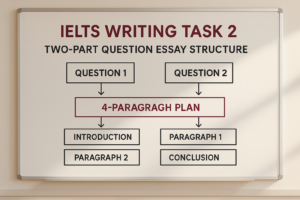
Practise planning three tasks without writing them in full. Give yourself five minutes per plan. For Task 2, write a direct position, two topic sentences and supporting points. For Academic Task 1, identify the overview and the most useful comparisons. For General Training Task 1, identify the purpose, tone and three bullet points.
Then write one complete response under time limits. Reserve a few minutes to check sentence boundaries, verb forms, articles, spelling and repeated words. Avoid introducing unfamiliar “advanced” vocabulary during the final week. Accurate, well-controlled language is safer than impressive wording used incorrectly.
Day 4: Practise Speaking Under Real Time Pressure
Record a complete Speaking test without restarting. In Part 1, answer directly and add a reason or detail. In Part 2, use the preparation minute to note a simple sequence rather than scripting sentences. In Part 3, state a view, explain it and add an example or contrast.
Listen back once and identify three priorities only. You may notice that answers end too quickly, ideas become repetitive, or grammar breaks down in longer sentences. Repeat selected questions with a specific correction. For example, if pauses are caused by searching for perfect words, practise using simpler language and continuing smoothly.
Do not memorise model answers. Examiners need to hear your ability to communicate naturally, and memorised material often fails when the question changes slightly. Instead, prepare flexible examples from work, study, your local area, technology, travel and daily routines.
Day 5: Complete A Second Full Practice Test
Repeat full test conditions using fresh material. This test checks whether the actions from Days 2 to 4 transfer under pressure. Use the same tracking method as Day 1 and compare categories, not just totals. A two-mark improvement is encouraging, but fewer navigation errors or a completed Writing task may be even more useful evidence.
If one section falls sharply, investigate before changing your plan. Was the material genuinely harder? Were you tired? Did one missed Listening answer cause several more? Did you spend too long on a difficult Reading item? Look for the behaviour behind the score.
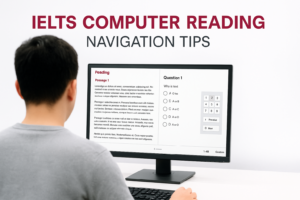
For computer-delivered candidates, test navigation is part of preparation. The recent IELTS computer Reading navigation guide explains practical ways to manage highlighting, scrolling and question movement without losing contact with the passage.
Day 6: Run A Targeted Dress Rehearsal
Do not automatically take a third complete test. Use your results to decide. If timing and stamina remain uncertain, complete the relevant sections in sequence under strict conditions. If your scores are stable but one question type is still weak, spend the morning on focused drills and complete one timed section in the afternoon.
Rehearse your test-day routines. Decide how you will respond when an answer is missed: guess, release it and move forward. In Reading, set checkpoints so one difficult passage cannot consume the whole test. In Writing, commit to planning and checking time. In Speaking, focus on the examiner’s question rather than trying to force a prepared story into every answer.
Review your error log at the end of the day. Circle no more than five reminders for the test. A crowded page of advice is difficult to use under stress. Short prompts such as “check word limit”, “find passage evidence”, “clear position” and “extend with reason” are enough.
Day 7: Reduce The Load And Protect Performance
The final day is for consolidation, not panic. Complete a short familiar warm-up in each skill if it helps you settle, but avoid another exhausting full test. Review your five reminders, check your identification and test-centre details, plan your journey and prepare permitted items.
Stop serious study early. Eat normally, hydrate and protect sleep. One late-night essay or practice paper is unlikely to transform your English, but fatigue can damage concentration across every section. If a score remains below target in practice, keep perspective: use the booked test as calmly as possible, then make a longer improvement plan if another attempt becomes necessary.
How To Choose Practice Tests In A One-Week Plan
Use current, format-appropriate materials from credible providers. Practice should resemble the real test in structure, timing, audio quality and task type. Avoid relying on random worksheets that have no clear source or answer rationale. Poor material can train the wrong expectations.
Two full tests are usually enough for this seven-day schedule: one diagnostic and one progress check. Add a third only when you need a final timing rehearsal and can still review it properly. Between full tests, use targeted sections to correct identified weaknesses. That balance protects energy and gives you time to learn from each attempt.
Keep scores in context. One easy paper can create false confidence, while one unusually hard paper can cause unnecessary panic. Look for repeated patterns across your attempts. Career Wise English provides practical IELTS preparation support for candidates working towards study, professional and migration goals.
Your Seven-Day IELTS Checklist
- Day 1: full diagnostic test and detailed error log.
- Day 2: targeted Listening and Reading correction.
- Day 3: Writing plans, one timed response and editing.
- Day 4: recorded Speaking mock and focused repetitions.
- Day 5: second full test and comparison with Day 1.
- Day 6: targeted dress rehearsal and five final reminders.
- Day 7: light review, practical preparation and rest.
At the end of the week, success means more than completing a pile of papers. You should know your target, recognise your most costly errors and have a response ready when pressure rises. Use each test to make the next session more precise.
Ready to find out your IELTS band score?
Take the IELTS Express Pre-Test for just $4.99 and get your personalised band prediction with a 14-day improvement plan.
FAQ: IELTS Preparation In One Week
Can I prepare for IELTS in one week?
You can make useful progress in one week, especially if your general English is already close to the required level. Focus on test format, timing, recurring errors and reliable strategies. A week is unlikely to produce a dramatic language transformation, so set realistic expectations.
How many full IELTS practice tests should I take?
For a seven-day plan, two well-reviewed full tests are usually more valuable than daily testing. Take one on Day 1 and another on Day 5. Add a third only if timing or stamina needs rehearsal and you have enough time to analyse the result.
Should I study all four IELTS skills every day?
No. Brief contact with several skills can help, but each day should have a clear priority. Use your diagnostic test to allocate more time to the sections and error types that threaten your required minimum scores.
What should I do the day before IELTS?
Keep study light, review a short list of reminders and organise identification, travel and test details. Avoid a late full test. Sleep, food and a calm arrival are part of performance preparation.
Are practice test scores exact predictions of my IELTS result?
No. Scores vary with material quality, difficulty, conditions and your performance on the day. Use several credible results as a range, and pay attention to recurring error patterns rather than treating one score as a guarantee.