
Three IELTS scores meet your requirement, but the fourth falls short. Before booking another full test, check whether IELTS One Skill Retake is available to you. It can be useful when one result is the problem, but eligibility, timing and acceptance are separate checks. Passing one check does not automatically settle the others.
This guide explains the IELTS One Skill Retake eligibility and time limit, then gives you a practical way to decide what to do next. Start with your original test details, not an advertised retake date. Keep your application requirements beside you while you compare options.
IELTS One Skill Retake eligibility: the essential checks
The core rules are straightforward: your original full test must have been IELTS on computer at an eligible centre, and you must complete the retake within 60 days of that test. You can retake only one skill once per original full test. Academic and General Training options are available. Check the current official IELTS One Skill Retake guidance and confirm your booking eligibility with the test provider.
Use your original booking confirmation and result record to establish what you actually took. Do not rely on a friend's booking experience, because they may have used a different provider, centre or test type. If your account does not show a retake option, ask the provider to check your record before paying for another test.
A face-to-face Speaking appointment does not, by itself, tell you whether the full test was paper-based or computer-based. Look at the delivery mode recorded for the original full test. If you had access arrangements, ask the centre how those arrangements affect the available retake pathway rather than assuming a standard booking applies.
The 60-day time limit: sitting the test matters
The important deadline is the retake appointment, not simply the day you pay. Booking during the window is not enough if the actual test falls outside it. The starting point is your original test day, not the date when you opened your result email. Confirm the last eligible appointment with your provider.
Make a simple timeline with four entries: original test date, provider-confirmed retake deadline, your application deadline and the last useful date for receiving results. The earliest practical constraint should drive your booking decision. Leave space for result processing, document submission and any checks the receiving organisation needs to make.
For example, a learner who starts researching options several weeks after the full test may still be eligible but have few suitable appointments left. A date close to the eligibility boundary could also be too late for an application. These are different problems: eligibility answers whether you can sit the test; your application timetable answers whether the result will arrive in time.
Do not plan around an assumed extension. If illness, travel or another disruption makes your appointment uncertain, ask about the provider's current transfer and cancellation terms. A transferred appointment still needs to satisfy the applicable eligibility rules. Record the advice you receive so you are not trying to reconstruct it later.
Check acceptance before spending money
Your university, professional registration body, employer or visa authority may have its own rules about acceptable English evidence. Look for guidance covering One Skill Retake specifically, not just a statement that IELTS is accepted. When the wording is unclear, request confirmation for your exact application route and intake before booking.
Describe your situation precisely when asking: the test type, the skill you want to retake and the purpose of the application. Ask whether a result report containing a retaken skill can satisfy the required overall score and individual skill thresholds. A general reply about English language requirements may not resolve this question.
Save the relevant policy page or written response with your application notes. Acceptance can depend on the receiving organisation and the particular route you use. Avoid borrowing an answer from a different course, employer or visa category. For immigration questions, use the authority's current requirements or qualified advice rather than treating this study guide as a decision about eligibility.
If the organisation does not accept the retake result, targeted preparation may still help, but another full test could be the appropriate route. Establish that before investing your remaining preparation time in a booking that cannot serve your goal.
Choose between a retake, a full test and a result enquiry
Begin by identifying the actual score gap. Write down the overall requirement and each minimum skill score, then compare them with your results. If two skills are below the required level, improving only one will not solve the application problem. Even when one skill is below target, consider how consistently you can perform in the others.
A full test may make more sense if several areas need work, the eligible retake window has passed or the receiving organisation requires it. It also requires preparation across all four skills. A One Skill Retake is narrower, but that does not make the required improvement automatic or the preparation optional.
A result enquiry is a different process: it reviews an existing performance rather than giving you another attempt. If you are considering it, ask your provider about fees, turnaround and how it interacts with your retake options. Do not assume an enquiry changes any booking deadline. Compare the actual timelines before choosing.
Make the decision using evidence, not disappointment alone. Review your practice history and what happened on test day. Was the weaker result typical, or did a specific problem disrupt your performance? That distinction helps you decide whether you need to build a skill, change your test routine or obtain feedback on work you cannot assess accurately yourself.
Build a focused preparation plan for the remaining time
Start with one diagnostic task under realistic conditions. Mark the result and sort errors into a few useful categories. For Listening, these might include losing your place, missing paraphrases, spelling and misunderstanding word limits. For Reading, distinguish locating information from interpreting it. For Writing and Speaking, use feedback against the relevant assessment criteria.
Then choose two or three recurring problems to address. A plan that says “practise more” is difficult to evaluate. A plan that says “review every plural ending missed in a listening answer” gives you something observable. Keep a short error log with the task, the mistake, the reason and what you will do differently next time.
Use the IELTS Express pre-test to help organise your preparation priorities, then compare those priorities with the skill you intend to retake. A study resource can guide practice; it does not establish official booking eligibility or guarantee a result.
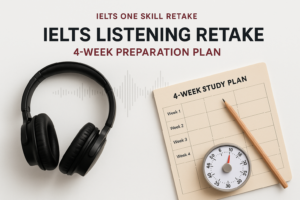
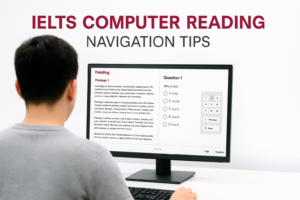
If Listening is your target, the One Skill Retake Listening preparation plan gives you a practical starting structure. If screen navigation contributed to your difficulty, work through the computer Listening interface tips alongside timed practice. Familiarity should support the language task, not replace it.
Keep the final few sessions manageable. Review the mistakes that repeat, practise your checking routine and avoid adding unfamiliar techniques immediately before the appointment. If you need structured preparation, compare the course packages with your available time and the kind of support you need. Choose for a concrete learning need, not an assumed shortcut to a band score.
Your booking and application checklist
Before paying, check the original test record, the eligible skill, the available appointment and the receiving organisation's policy. Ask the provider for the current fee and booking conditions. Do not use a price from an old article or another country as your budget. Keep the confirmation and any eligibility advice in one place.
Before test day, review identification requirements, arrival instructions and any access arrangements. Do not assume the retake uses the same room, schedule or check-in procedure as your full test. Read the new booking confirmation carefully and set a reminder for travel and arrival rather than only for the nominal test start.
Afterwards, check the new report before submitting it. Verify your personal details and the score information against the receiving organisation's requirements. The reporting process allows an original report and a new report incorporating the retaken skill; follow the organisation's submission instructions rather than mixing separate documents yourself.
For broader preparation resources, visit Career Wise English. Keep official policy checks and study decisions separate: the provider confirms what you can book, the receiving organisation confirms what it accepts, and your preparation plan addresses what you need to improve.
Frequently asked questions
Does the 60-day window start when my results arrive?
No. Use the original full test date as the starting point. Waiting for results does not restart the window. Check the eligible date displayed by your provider and make sure the appointment itself is within the allowed period.
Can I retake two skills from the same full test?
No. One Skill Retake is limited to one skill and one retake per original full test. If more than one score needs improvement, assess whether a full test is necessary for your application instead of planning consecutive single-skill bookings.
Can I assume an organisation accepts it because it accepts IELTS?
No. Check One Skill Retake acceptance specifically for your application. Where the published requirements do not answer the question, obtain clarification before booking. Keep the response with the rest of your application evidence.
What if I can book a date but it is too late for my application?
Do not confuse a valid test appointment with a workable application timeline. Allow for results and submission processing. Contact the receiving organisation about its deadline, and compare other test options without assuming late evidence will be accepted.
Should I book immediately or prepare first?
Confirm eligibility, acceptance and available dates promptly, then decide how much preparation the score gap requires. A short diagnostic session can help you judge that gap. Avoid delaying all booking research until your final week, but do not pay before resolving whether the result will be usable.