
An IELTS General Training apology letter asks you to explain a mistake, accept responsibility and offer a practical solution. The situation may involve a friend, neighbour, employer, customer or organisation, so your tone has to match the relationship. This guide gives you a complete sample answer and shows you how to plan a clear response under exam conditions. If you are building a wider study routine, the resources at Career Wise English can help you connect letter practice with the other parts of the IELTS test.
The most important point is that an apology letter is not simply a long expression of regret. Examiners want a purposeful letter that covers every bullet point in the task, explains the relevant facts and gives the reader confidence that you understand what should happen next. Strong answers sound natural because they combine polite language with specific detail. Weak answers often repeat “I am sorry” without developing the situation.
Understand the apology letter task
In IELTS General Training Writing Task 1, you normally receive a situation followed by three bullet points. You should spend about 20 minutes on the task and write at least 150 words. The instructions may ask you to apologise for missing an event, damaging something, causing inconvenience or failing to complete an arrangement. Your first job is to identify the reader and decide whether the letter should be formal, semi-formal or informal.
Imagine this task: you borrowed an important book from a colleague, accidentally damaged it and cannot return it on time. Write a letter to your colleague. In your letter, apologise for the damage, explain how it happened and say what you will do to replace the book. Because the reader is a colleague you know, a semi-formal tone is appropriate. You can be warm, but the language should still be respectful and controlled.
Underline the three required functions before you plan: apologise, explain and resolve. Those functions give you a simple paragraph structure. They also protect you from a common problem: writing a detailed story but forgetting one bullet point. Task Achievement depends on fully addressing the prompt, so each bullet should receive enough development to feel complete.
Plan a clear four-paragraph structure
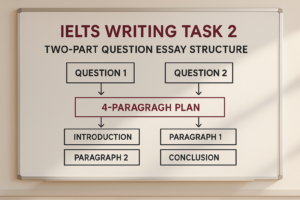
A reliable apology letter can use four short body stages. Begin with the purpose of the letter and a direct apology. Next, explain what happened with enough detail to make the situation credible. Then describe the consequence and acknowledge the inconvenience caused. Finish by offering a specific remedy, including timing where possible. A short closing sentence can repeat your regret without copying the opening.
Your plan does not need full sentences. In one minute, you might write: borrowed reference book; coffee spilled when bag fell; pages stained and cover bent; specialist bookshop has replacement; new copy arrives Friday; lend my scanned notes meanwhile. These notes create a coherent sequence and give you precise vocabulary. They also help you avoid inventing new facts halfway through the letter.
Use the greeting and closing that suit the relationship. For a known colleague, “Dear Maria” and “Best wishes” work well. For an unknown manager or organisation, “Dear Sir or Madam” and “Yours faithfully” are safer. For a close friend, contractions and warmer phrases are acceptable. The tone should remain consistent from the first line to the sign-off.
IELTS General Training apology letter sample answer
Dear Maria,
I am writing to apologise for damaging the reference book you lent me last week and for being unable to return it on Tuesday as promised. I know you need it for your training course, so I am particularly sorry that my carelessness has disrupted your study plans.
The accident happened on Saturday while I was travelling home from the library. I had placed the book in my shoulder bag, but the strap broke as I stepped off the bus. The bag fell onto the pavement and a takeaway coffee inside it opened. Although I dried the book immediately, several pages are stained and the back cover is badly bent.
I have contacted a specialist bookshop and ordered the same edition. They have confirmed that the replacement will arrive by Friday afternoon, and I will bring it to your office as soon as it is delivered. Until then, I can email you the notes and chapter summaries I made, so you can continue preparing for your course.
Please accept my sincere apologies. I understand how inconvenient this is, and I will make sure the new copy reaches you before the weekend.
Best wishes,
Daniel
This response is long enough to develop all three bullet points without becoming repetitive. The apology appears immediately, the explanation is believable and the solution is specific. The writer also recognises the effect on the reader, which makes the tone more sincere. Notice that the letter does not use dramatic or excessively emotional language; it remains practical and respectful.
Why this sample answer works
The opening sentence clearly states the purpose and includes two connected problems: damage and delay. That directness helps the reader understand the situation immediately. The second sentence shows awareness of the colleague’s needs, adding a meaningful reason for the apology rather than repeating the same phrase.
The explanation uses a logical chain of events. The strap broke, the bag fell and the coffee opened. Linking these events with accurate past tenses makes the account easy to follow. Details such as “several pages” and “the back cover” are specific but not distracting. In your own letter, include only facts that support the task.
The solution is measurable. The writer has already ordered the correct edition, gives a delivery day and offers temporary help. This is much stronger than writing “I will fix the problem soon.” Examiners reward ideas that are developed, so add who, what, when or how whenever a point feels too general.
The language also demonstrates range without sounding unnatural. Phrases such as “as promised,” “particularly sorry,” “confirmed that” and “as soon as it is delivered” fit the situation. Cohesive devices are used lightly. Each paragraph has one main purpose, so the response does not need a connector at the start of every sentence.
Useful language for apologising and resolving the problem
For a formal or semi-formal opening, try “I am writing to apologise for…”, “Please accept my sincere apologies for…” or “I regret that I was unable to…”. To accept responsibility, you can write “I take full responsibility for the mistake,” “I realise that this has caused considerable inconvenience” or “I should have informed you sooner.” Choose one or two phrases and support them with facts.
When explaining, maintain control of tense and sequence. Useful patterns include “The problem occurred when…”, “Unfortunately, while I was…, …” and “By the time I realised what had happened, …”. Avoid blaming another person unless the task genuinely requires it. An apology sounds less convincing if the writer spends the whole letter avoiding responsibility.
For solutions, use precise future forms: “I have arranged for a replacement to be delivered,” “I will reimburse you in full by Friday,” or “To prevent this from happening again, I have…”. Modal verbs can make requests polite: “Could you please let me know whether this arrangement is suitable?” A practical offer is usually more persuasive than a vague promise.
Do not memorise an entire model letter. Instead, collect flexible chunks and practise adapting them to different readers. The related IELTS General Training request letter sample answer is useful for comparing how purpose and tone change in another common letter type.
Common mistakes to avoid
One frequent mistake is hiding the apology until the final paragraph. State it early. Another is giving an elaborate excuse that takes most of the response. Your explanation should be complete, but the remedy deserves equal attention. A third problem is using an inappropriate tone, such as “Hey there” in a letter to a manager or stiff legal language in a note to a close friend.
Some candidates address the bullet points in a random order and repeat information. A brief plan prevents this. Others write fewer than 150 words because they count the greeting and sign-off as major content. Aim for roughly 170 to 200 words during practice so you can develop ideas comfortably while staying focused.
Grammar errors often appear when candidates attempt long sentences under pressure. Mix simple and complex structures, but make each relationship clear. Check articles, past-tense verbs, subject–verb agreement and punctuation. Also check names, dates and promised actions for consistency. A polished letter should not say that a replacement arrives on Friday and later promise delivery on Thursday.
Finally, avoid inserting memorised phrases that do not fit the situation. “I hope this letter finds you in radiant health” wastes time in most apology tasks. Natural, direct English is more effective. If you want timed practice across all skills, explore the unlimited IELTS mock tests and use the feedback from each attempt to choose your next focus.
How to practise before test day
Start by planning five apology prompts without writing full letters. Give yourself two minutes for each plan and identify the reader, tone, three content points and one useful solution. This builds speed. Next, write one complete response in 20 minutes. Leave two minutes at the end to check whether every bullet point is visible and sufficiently developed.
Review the letter with four questions. Is the purpose clear in the first paragraph? Does each bullet point have a specific supporting detail? Is the tone consistent? Can the reader understand exactly what will happen next? Rewrite only the weakest paragraph, then compare the revised version with the original. Focused rewriting often teaches more than immediately starting another task.
Once you can produce a coherent letter, vary the situation. Apologise to a neighbour for noise, to a manager for missing a meeting, to a friend for cancelling a visit and to a company for failing to return equipment. Change the relationship each time so that you practise greetings, closings, contractions and levels of formality.
You can also compare the available IELTS preparation options and prices when you want more structured support. Keep a small error log containing your repeated grammar problems, unclear phrases and useful corrections. Before the next timed task, choose only one or two items from the log to monitor. This keeps your attention manageable and makes progress easier to measure.
Frequently asked questions
How many words should an IELTS apology letter contain?
You must write at least 150 words. A practical target is around 170 to 200 words, which normally provides enough space to cover all bullet points while remaining concise. Quality and relevance matter more than producing a very long response.
Should I say sorry more than once?
Usually, a direct apology in the opening and a brief expression of regret near the end are enough. Repeating the same sentence several times reduces the space available for explanation and resolution. Show sincerity through responsibility and a concrete remedy.
Can I invent details that are not in the task?
Yes. You are expected to add plausible details so that your ideas are fully developed. Make sure the details remain consistent with the prompt and with each other. Simple, believable facts are safer than a complicated story.
Is an apology letter always formal?
No. The relationship determines the tone. A letter to a company manager is formal, a letter to a colleague or neighbour may be semi-formal, and a letter to a close friend can be informal. Keep the greeting, vocabulary, contractions and closing consistent with your choice.
How can I improve my score after using a sample answer?
Analyse the sample’s organisation and useful language, then close it and write your own response to a similar prompt. Compare the two for task coverage, paragraph purpose, tone and accuracy. For more guided articles and exam strategies, browse the IELTS preparation blog.