
The IELTS Writing on Paper option in Australia lets you handwrite your Writing answers while completing Listening and Reading on computer. It is a mixed delivery format, not a return to doing every section on paper. If handwriting helps you organise ideas, this option may be worth considering, but preparation still needs to cover the computer interface.
This guide explains the distinction and gives you a practical way to decide how to prepare. Availability and booking conditions should always be checked for your chosen centre and date. Start with the official IELTS Australia Writing on Paper information, rather than assuming that a general computer-test booking includes handwritten Writing.
What does Writing on Paper actually mean?
The important distinction is between seeing a question and entering your answer. In this format, the Writing tasks are displayed on screen, while your responses are handwritten on the supplied answer sheets. Listening and Reading remain computer-based. That means a learner who prefers a pen still needs to practise reading instructions on a monitor, moving between questions and entering answers with the keyboard.
Think of your preparation as two connected routines. One is understanding and navigating the screen. The other is producing a clear handwritten response without losing your place when looking back at the prompt. Practise both together. Printing every question and studying only from a workbook may feel comfortable, but it removes the screen-to-paper movement that you want to make familiar.
For a simple rehearsal, display a practice prompt on your laptop and write your answer on lined paper. Keep the screen at a comfortable distance and avoid copying the whole question into your notes. Instead, identify the purpose, the required content and the position you intend to develop. Your preparation should reduce unnecessary movement and repeated reading.
Check the booking before choosing your practice routine
Search the official booking information for your preferred location and date. Look for the actual delivery option rather than relying on a centre name or an older article. If the description is unclear, ask the test provider whether that particular session allows handwritten Writing answers. Do not assume you can change the response method after arriving at the venue.
Also confirm the test type you need. Your preparation materials should match Academic or General Training, not simply say IELTS on the cover. Read any instructions relating to identification, arrival time and equipment in your booking confirmation. Keep those instructions together so that administrative details do not interrupt the final days of study.
A useful personal checklist has four entries: the correct test type, the selected delivery method, the confirmed session and the documents you must bring. Record the answer to each from the provider's information. If a receiving organisation has specific requirements, check those directly too. Choosing a convenient response method should not replace checking that you booked the right test.
Decide with a timed comparison, not a preference alone
Some learners associate handwriting with thinking more clearly. Others discover that editing a paragraph on paper takes longer than expected. Treat your preference as a starting point, then test it. Complete one representative practice response by hand and another by typing under comparable conditions. Use prompts of similar difficulty and allow the same preparation time.
Afterwards, compare the responses on useful measures: whether you addressed every part of the task, whether paragraphs follow a clear sequence, how often you stopped to make corrections and whether you had time to review. A response that feels fluent while you write may still contain missing explanations. A slower response may be more complete. Read both before deciding what the experience tells you.
Pay attention to physical comfort as well. If your hand becomes tired or your writing becomes difficult to read near the end, you have found a training need. If typing encourages constant rewriting, practise planning before entering your first sentence. The aim is to find a routine you can repeat reliably, not to prove that one format is universally better.
At Career Wise English, you can use preparation resources to build a routine around the skills you actually need to improve. Keep a brief record of each practice session so your decisions are based on observed performance rather than anxiety about technology.
Build a handwriting routine that leaves room for review
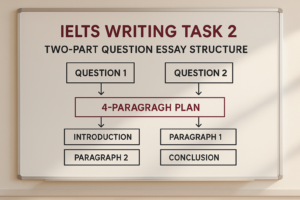
Start each response with a compact plan. For an essay, write the main position and the central point for each body paragraph in a few words. For another task type, list the information or communicative purposes that must appear. A plan is a reminder, not a second draft. If planning becomes a detailed paragraph, shorten it until it supports writing rather than delaying it.
Practise a comfortable, readable handwriting style. You do not need decorative letters. Leave enough space between words and make common endings easy to distinguish. Review a sample the next day without relying on memory: can you read every sentence smoothly? If a particular letter or correction pattern repeatedly causes confusion, work on that small problem separately.
Corrections deserve their own rehearsal. Avoid building a complicated network of arrows and inserted phrases. Where possible, make a brief, clear correction and continue. If a whole sentence needs replacing, consider how to keep the final version easy to follow. Follow the provider's instructions on the day rather than inventing your own marking or annotation system.
Set aside review time during practice, then use it consistently. Check that the answer addresses the prompt, that sentences are complete and that references such as this or they have a clear meaning. The guide to coherence and cohesion in Writing Task 2 can help you examine how ideas connect. Handwriting does not remove the need for logical organisation.
Keep computer Listening and Reading in your preparation
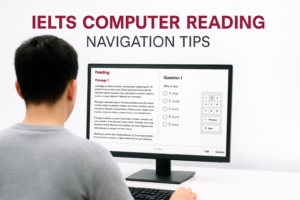
Choosing handwritten Writing is not a reason to stop practising on screen. Include computer-based Listening and Reading sessions in your weekly schedule. Work on the practical habit of reading instructions carefully, noticing answer limits and checking which question you are answering. These habits can be trained independently of how you produce your Writing response.
During Listening practice, notice whether your mistakes come from understanding the recording or from entering the answer. Those are different problems. During Reading, notice whether you lose time finding evidence or navigating between the passage and questions. Keep an error log with a short explanation for each mistake, then choose the next exercise to address that cause.
Our computer Listening interface tips provide a relevant starting point for this part of preparation. Use them alongside hands-on practice rather than treating interface knowledge as a substitute for listening. When you use IELTS mock tests, separate your observations about language ability from your observations about delivery and navigation.
A practical seven-day preparation check
On the first day, confirm the booking details and complete a short diagnostic response using the planned screen-and-paper arrangement. On the second, review that response and identify one priority, such as incomplete explanations or unclear handwriting. On the third, practise that priority in a focused session. Keep the goal specific enough that you can recognise an improvement.
On the fourth day, work on computer Listening or Reading and record navigation issues separately from language errors. On the fifth, complete another handwritten response with a visible clock and your normal planning routine. On the sixth, review the response for task coverage and clarity, not just spelling. On the final day, check logistics and keep practice manageable instead of trying to rebuild your whole approach.
If you need a more structured study sequence, review the preparation options and prices and choose activities that match your diagnostic findings. A format choice can improve comfort, but it does not replace vocabulary, accurate sentences or developed ideas. Judge the week by what you learned about your performance and what you can now do more consistently.
Frequently asked questions
Is Writing on Paper the same as a fully paper-based IELTS test?
No. IELTS Australia describes an option combining handwritten Writing answers with computer Listening and Reading. Prepare for that combination rather than expecting paper booklets for every component. Check the exact booking description at your chosen centre.
Will I see the Writing questions on paper?
The official test-day guidance says the Writing tasks appear on screen while answers are handwritten on the supplied sheets. Practise looking between the screen and your answer so this feels familiar before test day.
Should I choose handwriting if my typing is slow?
Slow typing is a useful reason to compare the options, but it is not the whole decision. Try a timed handwritten response and inspect its clarity, completeness and readability. Base your choice on a realistic practice experience.
Can I assume every Australian test session offers this option?
No. Check the available delivery options for the specific centre and date before booking. Use current provider information, and ask the provider about any unclear conditions rather than relying on a previous candidate's experience.
What should I practise after selecting handwritten Writing?
Practise planning, readable handwriting, straightforward corrections and reviewing your answers. Continue computer Listening and Reading practice too. Match your study materials to the test type you booked and keep the booking instructions available for your final preparation.
Format information checked on 21 October 2026. See the official IELTS Australia test-day explanation for the current description of how the screen and answer sheets are used.