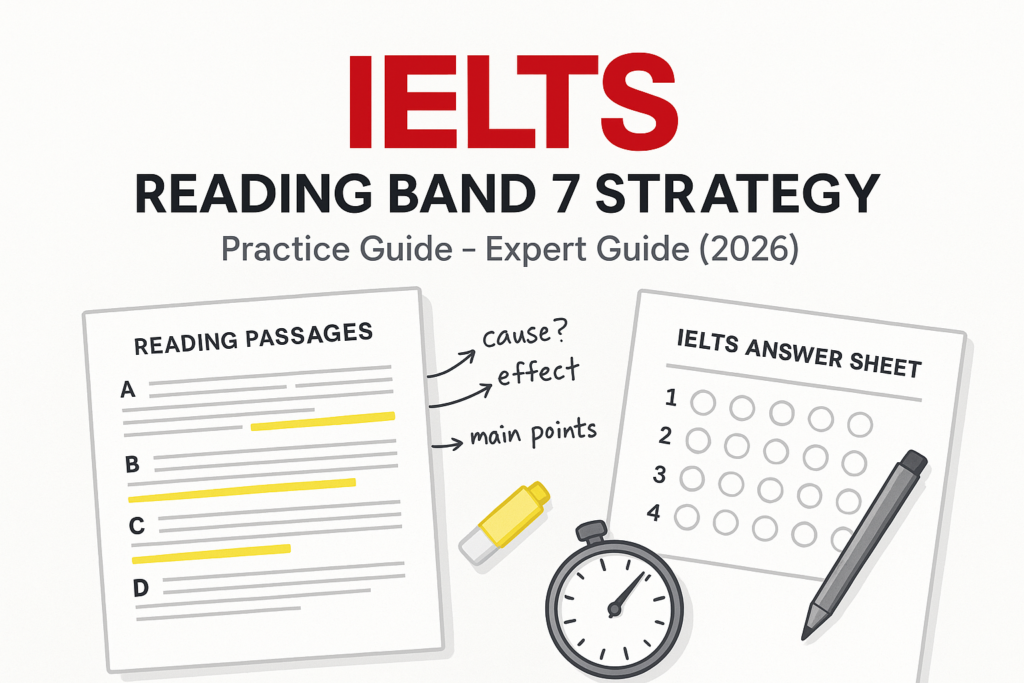
IELTS Reading Band 7 Strategy practice guide is for candidates who already understand most Reading passages, but still miss the score they need because timing, evidence, or question-type control breaks down under pressure. Band 7 Reading is not about reading every line perfectly. It is about making accurate decisions quickly, proving answers from the text, and protecting enough time for all 40 questions. Before you keep doing full tests without a clear baseline, take the IELTS Express Pre-Test to check your current band range and see whether Reading speed, accuracy, or test method is holding you back.
A Band 7 result usually means you can handle unfamiliar topics, recognise paraphrase, manage difficult question types, and avoid avoidable errors such as word-limit mistakes or answers based on memory. This guide gives you a practical system you can use in both Academic and General Training Reading, with adjustments for the different text styles.
What Band 7 Reading Really Requires
Band 7 Reading is not a mystery score. It usually requires strong accuracy across the paper, especially on questions that test meaning rather than simple word matching. You need to find the right part of the text, compare the question with the evidence, and choose an answer only when the meaning is supported.
The mistake many students make is treating Band 7 as a vocabulary target only. Vocabulary matters, but strategy matters just as much. A candidate with decent vocabulary can still lose marks by spending too long on one heading, choosing True when the text only partly supports the statement, or copying too many words into a completion answer.
- Read selectively instead of slowly reading everything.
- Use question types to decide your method.
- Search for evidence, not familiar words only.
- Check word limits, grammar, and spelling before moving on.
- Review mistakes by cause, not just by correct answer.
The Band 7 Timing Problem
You have 60 minutes for 40 questions, with no extra transfer time. That timing pressure changes the whole task. If you read every paragraph at the same careful speed, you may understand more but answer fewer questions. If you rush, you may finish but lose marks through weak evidence checks.
A useful target is to finish the easier early material cleanly while saving enough time for the harder final passages or sections. Academic candidates often use about 15 minutes for Passage 1, 20 minutes for Passage 2, and 23 minutes for Passage 3, leaving a short check. General Training candidates can use about 15 minutes for Section 1, 18 minutes for Section 2, and 27 minutes for Section 3.
For a broader speed and accuracy system, use the IELTS Reading practice speed and accuracy guide alongside this Band 7 routine.
IELTS Reading Band 7 Strategy Practice Guide: The Core Routine
Use the same four-step routine for every passage. First, preview the text for structure. Look at the title, headings, paragraph length, repeated terms, diagrams, names, dates, and any obvious contrast words. Do not try to understand every detail. You are building a map.
Second, diagnose the question type. Completion tasks need exact words and grammar. True False Not Given needs strict evidence. Matching headings needs paragraph purpose. Multiple choice needs careful option comparison. Matching information often jumps around the passage, so it needs a paragraph map.
Third, search with strong clues. Names, numbers, dates, places, technical nouns, and unusual phrases are usually more useful than common words. Once you find the likely area, slow down and read around it. Band 7 answers are often won or lost in the sentence before or after the obvious keyword.
Fourth, check the answer before writing it. Ask whether the text clearly supports the answer, whether the grammar fits, whether the word limit is respected, and whether the answer belongs to the correct question number.
How To Handle True False Not Given
True False Not Given is one of the biggest Band 7 filters because it punishes guessing. True means the text confirms the statement. False means the text says the opposite. Not Given means the text does not give enough information to decide. It is not about what seems logical in real life.
Read the statement in parts. Check the subject, verb, comparison, time phrase, quantity, and condition. A statement can be mostly true but still wrong because one detail is unsupported. Words such as all, only, always, never, mainly, before, after, and more than are especially important.
If you cannot find clear evidence after a proper search, do not force an answer. Mark it, move on, and return later. Sometimes a nearby question gives you a better map of the paragraph.
How To Handle Matching Headings
Matching headings is about paragraph purpose, not isolated vocabulary. Read the whole paragraph quickly and ask what it is mainly doing. Is it introducing a problem, giving an example, explaining a cause, presenting a result, criticising an idea, or describing a solution?
Many wrong headings contain words from the paragraph. That is the trap. A paragraph may mention technology, but its main purpose could be cost, access, risk, or evidence. Write a two- or three-word purpose note beside each paragraph before choosing headings.
If two headings look close, compare their focus. One may describe a cause while the other describes an effect. One may describe a general problem while the other describes one example. Band 7 accuracy comes from that small distinction.
How To Handle Completion Questions
Completion questions look simple, but they create many avoidable errors. Always read the instruction first. If it says no more than two words and/or a number, three words are wrong even if the idea is correct. If the sentence needs a noun, adjective, plural form, or verb form, check that your answer fits grammatically.
Do not copy a whole phrase just because it is near the keyword. Read the sentence with your answer inserted. If it sounds grammatically broken, you probably copied the wrong form or too many words.
For realistic practice under pressure, access unlimited IELTS mock tests and review completion errors by word limit, grammar, spelling, and wrong-location mistakes.
Paraphrase Control For Band 7
IELTS Reading often hides answers behind paraphrase. The question may say reduce, while the passage says cut, lower, limit, or make less common. The question may say young people, while the passage says teenagers, school leavers, or adolescents.
Do not search only for the exact wording in the question. Search for the idea. When you find a similar idea, compare it carefully with the statement or sentence. Band 7 candidates are not just faster readers; they are better meaning checkers.
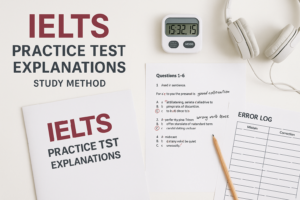
Build a paraphrase notebook from your own practice tests. Write the question wording on one side and the passage wording on the other. Review it weekly. This trains the skill IELTS actually tests.
Evidence Checks Before You Choose An Answer
A Band 7 answer should have evidence. That means you can point to the sentence or paragraph that supports it. If you cannot identify the evidence, the answer may be a guess, even if it feels right.
Use a simple question: where exactly does the text prove this? For multiple choice, check why the wrong options are wrong. They may be too broad, too narrow, contradicted by the text, or based on a detail from the wrong paragraph.
This habit slows you down at first, but it reduces careless errors. Over time, evidence checking becomes faster because you stop rereading irrelevant parts of the passage.
Academic And General Training Adjustments
Academic Reading usually has denser passages and more abstract topics. Spend more effort mapping paragraph roles and tracking argument structure. Look for cause, contrast, result, theory, example, and criticism language.
General Training Reading starts with more practical texts, but do not become casual. Notices, workplace rules, advertisements, and forms often test conditions and exceptions. Words such as must, may, except, only, before, after, and unless can decide the answer.
If you are preparing for migration, the IELTS General Training migration guide can help you connect your Reading preparation with the band score requirements you are working toward.
A Seven-Day Band 7 Reading Practice Plan
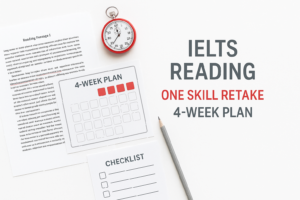
On day one, complete one passage untimed and write evidence for every answer. On day two, practise only True False Not Given and label each wrong answer as evidence missing, opposite meaning, or unsupported detail. On day three, practise completion questions and check word limits carefully.
On day four, practise matching headings with paragraph purpose notes. On day five, complete one timed passage and record where time disappeared. On day six, complete a full Reading test using your timing plan. On day seven, review your error log and repeat the question type that cost the most marks.
If your score is close to Band 7 but inconsistent, see our IELTS preparation plans and choose support that helps you diagnose errors instead of simply doing more tests.
Common Mistakes That Keep Students Below Band 7
The first mistake is reading too much before answering. You need a map, not a full lecture-style understanding. The second mistake is trusting keyword matches without checking meaning. The third mistake is spending five minutes on one hard question and sacrificing easier marks later.
The fourth mistake is weak review. If you only check the correct answer, you learn very little. Ask why your answer was wrong. Was it a distractor, a paraphrase problem, a word-limit error, a grammar issue, or poor timing?
The fifth mistake is changing answers at the end without evidence. Only change an answer if you find a clear reason in the text. Panic changes often turn correct answers into wrong ones.
Final Band 7 Reading Checklist
Before test day, make sure you can preview quickly, identify question types, choose useful search clues, recognise paraphrase, prove answers with evidence, manage the clock, and leave difficult questions without panic.
Band 7 Reading is built through controlled practice. You do not need to feel brilliant in every passage. You need a reliable method that still works when the topic is unfamiliar, the wording changes, and the clock is moving.
Ready to find out your IELTS band score?
Take the IELTS Express Pre-Test for just $4.99 and get your personalised band prediction with a 14-day improvement plan.
FAQ: IELTS Reading Band 7 Strategy Practice Guide
How many answers do I need for Band 7 in IELTS Reading?
The exact raw score can vary slightly by test, but Band 7 usually requires strong accuracy across the paper. Focus on consistent evidence-based answers rather than a fixed guess target.
What is the best strategy for IELTS Reading Band 7?
Preview the passage, identify the question type, search with strong clues, read carefully around the evidence, and check meaning, grammar, spelling, and word limits before writing the answer.
Should I read the passage or questions first?
Do a quick passage preview first, then read the questions. The preview gives you a map, while the questions tell you exactly what evidence you need to find.
How can I improve from Band 6 to Band 7 in Reading?
Review mistakes by cause, practise weak question types, build paraphrase recognition, use a timing plan, and prove each answer from the text instead of relying on memory or instinct.
Is Band 7 Reading possible without advanced vocabulary?
Yes, but you need enough vocabulary to recognise paraphrase and follow meaning. Strategy, timing, evidence checks, and careful review can lift your score even while vocabulary continues to improve.