If you want to improve IELTS Reading Academic from band 5 to 6, you do not need a magic speed-reading trick. Most band 5 candidates already understand more English than they think. The real problem is usually messier than that: weak timing, poor question control, too much re-reading, and easy marks leaking away through panic. Before you keep guessing whether Reading is the section holding you back, take the IELTS Express Pre-Test to get a clearer snapshot of your current band score and your biggest risk areas.
Band 6 in Academic Reading is realistic for a lot of candidates who feel stuck at band 5. The jump is not tiny, but it is also not mysterious. You do not need to become an academic genius overnight. You need a process that helps you finish more questions, make better decisions under time pressure, and stop donating marks to the test through avoidable habits.
What usually keeps band 5 readers stuck
A band 5 Reading score often comes from a mix of problems rather than one dramatic weakness. Some candidates read too slowly because they try to understand every line perfectly. Others move too fast, skim badly, and miss the exact meaning of the question. Quite a few do both in the same test, which is a brutal little combo.
Another common issue is that weaker candidates treat every question as equally important. They spend three minutes wrestling one hard matching item and then rush five simpler questions later. The exam does not reward noble suffering. It rewards answer control. If you want a broader view of the section structure first, this IELTS Reading Academic band score guide helps connect your raw marks to the score you actually need.
What changes between band 5 and band 6
The move from band 5 to band 6 is usually about becoming more reliable. At band 5, candidates often find some correct answers but lose their shape halfway through the test. Passage 1 feels manageable, Passage 2 becomes patchy, and Passage 3 turns into a hostage situation. At band 6, the reading does not suddenly feel easy, but the candidate stays functional for longer.
That means better time decisions, fewer random guesses, and stronger use of text clues such as paraphrasing, contrast words, and paragraph structure. Band 6 candidates still miss questions. They just miss fewer easy ones, and they recover faster when a difficult passage shows up.
Stop reading like every sentence is equally important
This is one of the biggest shifts if you want to improve IELTS Reading Academic from band 5 to 6. Many candidates think careful reading means reading every line with the same intensity. In the test, that habit quietly wrecks timing. Some lines matter a lot. Others are just background, examples, or scene-setting.
You need two reading speeds. First, a lighter skim to understand the topic, paragraph flow, and where key ideas live. Second, a slower close read when a question points you to a likely answer zone. If you use close reading for the entire passage, you will run out of time. If you only skim, you will miss important detail. The trick is switching gears at the right moment.
If your timing still collapses under pressure, it helps to access unlimited IELTS mock tests and track exactly where the minutes disappear instead of only checking the final score.
Learn which question types deserve extra caution
Not all Academic Reading questions hurt in the same way. Matching headings, matching information, and yes no not given style tasks often cause the biggest score drops because they punish vague reading. Sentence completion and summary completion can also be sneaky because even when you find the right idea, you can still lose the mark through word-limit errors or poor copying.
A smarter approach is to know what each task is really asking you to do. Matching headings is about the main idea of a paragraph, not one interesting detail. True false not given and yes no not given are about exact meaning, not shared topic. Completion tasks require both meaning and answer form. Once you stop treating all question types like the same game, your accuracy gets less random.
- Matching headings: focus on the main point of the whole paragraph
- True false not given: compare the exact claim, not just the general topic
- Sentence completion: check word limits before you write anything
- Matching information: expect wider searching and tighter paraphrasing
Build a safer timing plan for the full 60 minutes
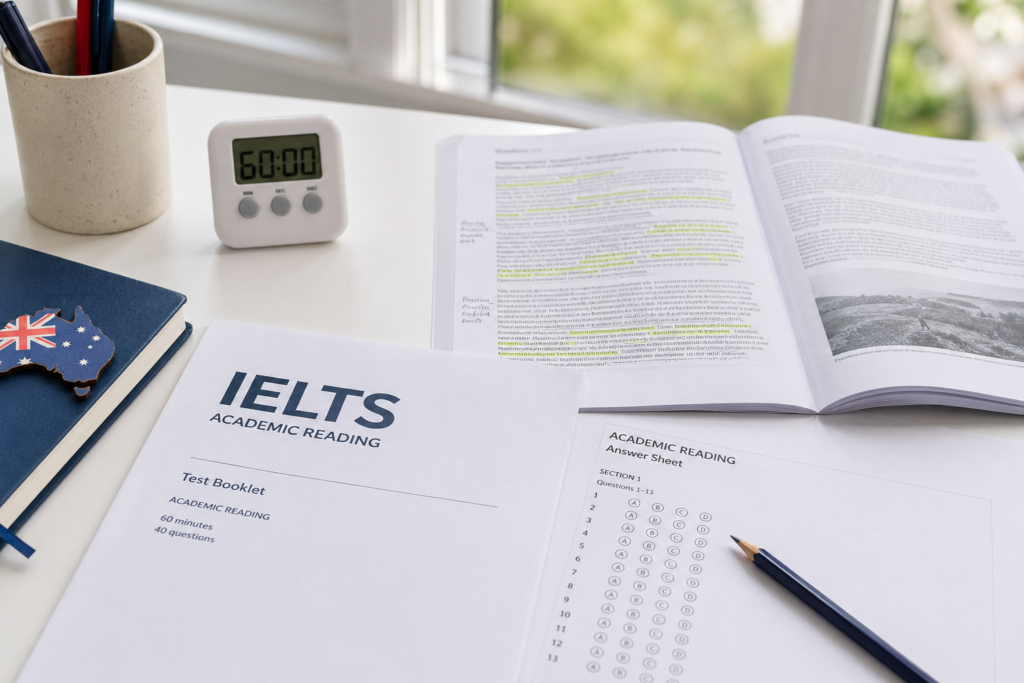
Band 5 candidates often sit the whole paper with good intentions and no timing plan. That usually ends badly. A practical starting split is about 17 minutes for Passage 1, 20 minutes for Passage 2, and 23 minutes for Passage 3. It does not need to be perfect to the second. You just need a structure that stops the early passages from eating the whole test.
Passage 1 should feel controlled, not leisurely. Passage 2 needs discipline because it is where many candidates drift. Passage 3 is supposed to feel harder, so protect time for it. If you spend 25 minutes on Passage 1 because you feel safer there, you are basically stealing from your future self.
A lot of candidates improve once they start checking the clock with purpose rather than fear. The clock is not there to bully you. It is there to stop one messy question from ruining the rest of the paper.
Get better at paraphrasing instead of hunting exact words
One reason band 5 readers get stuck is that they search only for repeated vocabulary. The passage says one thing, the question says the same thing differently, and the candidate misses the connection. IELTS loves paraphrasing because it tests meaning, not just word matching.
For example, the passage might talk about a decline in participation while the question refers to fewer people taking part. Same idea, different clothing. If you train yourself to notice these meaning shifts, more answers start appearing where they looked invisible before.
This is also why post-test review matters. When you check wrong answers, do not just say, “I got it wrong.” Find the paraphrase you missed. That is where the score growth usually hides. If you want a wider system for this, the IELTS Reading practice guide is useful because it connects paraphrasing, timing, and review into one process.
Stop trying to rescue every difficult question
If you want to improve IELTS Reading Academic from band 5 to 6, you need to get less sentimental about hard questions. Some candidates get trapped because an answer feels almost solvable. They re-read the same lines, argue with the wording, and hope the truth will reveal itself if they stare hard enough. Meanwhile, easier marks later in the paper are left exposed.
A better rule is simple: if a question is eating too much time and you are not getting closer, mark it and move on. You can come back later if time remains. That is not quitting. That is triage. Reading is a 40-mark paper, not a one-question loyalty test.
This one habit alone can make a real difference because band 6 usually depends on collecting a healthier spread of marks across all three passages, not “winning” one ugly battle and losing the war.
Use review sessions to diagnose, not just mark answers
A lot of candidates practise hard and still stay stuck because their review is too shallow. They complete a paper, check the score, feel annoyed, and move on. That gives you a result, but not a repair plan.
After each practice test, label every wrong answer by cause. Was it timing, vocabulary, question-type confusion, careless copying, or a paraphrase miss? Then go back and find the proof line in the passage. This feels slower, because it is slower, but it is also where real improvement happens.
If your study plan still feels a bit chaotic, you can see our IELTS preparation plans and follow a more structured path instead of guessing which weakness matters most each week.
A four-week plan to move from band 5 towards band 6
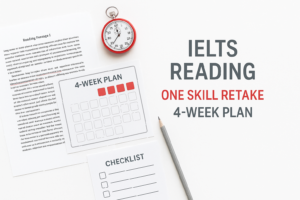
You do not need a heroic study schedule, but you do need consistency. In Week 1, focus on understanding question types and building a timing habit. Do two timed sections and one full test review. In Week 2, target your worst task type, such as matching headings or true false not given, and pair that with one full timed paper.
In Week 3, practise passage control. Set stricter time limits and force yourself to move on from slow questions faster. In Week 4, combine full tests with deeper review and keep a small notebook of repeated paraphrases, contrast words, and instruction errors. The point is not to feel busy. The point is to correct patterns you can actually name.
Small improvements stack up fast in Reading. One or two extra correct answers in each passage can change the whole score picture. That is why band 6 is often closer than it feels once your process stops falling apart under pressure.
Ready to find out your IELTS band score?
Take the IELTS Express Pre-Test for just $4.99 and get your personalised band prediction with a 14-day improvement plan.
FAQ: IELTS Reading Academic improve from band 5 to 6
Is it realistic to improve IELTS Reading Academic from band 5 to 6?
Yes. For many candidates, this jump comes from better timing, stronger question control, and cleaner review rather than dramatic changes in overall English ability. It is a demanding step, but it is very achievable with focused practice.
What is the fastest way to improve from band 5 to 6 in IELTS Reading?
The fastest safe improvement usually comes from fixing repeated process mistakes. That means managing time better, reading for structure before detail, and learning how specific question types work instead of only doing more random practice papers.
Why do I keep running out of time in Academic Reading?
Usually because you are reading too carefully too early, staying too long on difficult questions, or re-reading large parts of the passage without a clear target. A simple passage-by-passage time plan often helps immediately.
Should I try to understand every word in the passage?
No. You need enough understanding to follow the argument, locate answer zones, and read key sentences accurately. Trying to understand every word often slows band 5 candidates down too much.
How many practice tests should I do each week?
Quality matters more than raw volume. One or two full tests each week, plus targeted question-type practice and proper review, usually works better than doing many papers and barely analysing them.
Your next step towards band 6
To improve IELTS Reading Academic from band 5 to 6, stop chasing perfect comfort and start building cleaner habits. Read for structure first, protect your time, respect the instructions, and review mistakes like a diagnosis instead of a punishment.
That is usually the real shift. Band 6 readers are not superhuman. They are just less wasteful. Once you stop leaking easy marks, the score starts looking much more achievable.