
An IELTS Academic practice test online study plan should do more than fill your calendar with mock tests. It should show you what to practise next, why that work matters and whether your approach is improving. If you finish every test, check a score and immediately start another, you can repeat the same mistakes for weeks without noticing the pattern.
This guide sets out a practical four-week cycle for learners who want structured preparation around work or study. You can stretch the cycle over a longer period if needed. The aim is not to promise a particular band score or a fixed improvement deadline. It is to make each practice session useful, with enough review time to turn test results into better decisions.
1. Start with a diagnostic, not a daily test target
Before choosing your weekly workload, complete an unfamiliar Academic practice test under the conditions you intend to use for your preparation. Keep the instructions, timing and available help consistent. Do not pause to look up vocabulary or ask someone to explain a question. A diagnostic is valuable because it captures your current independent performance, including the points where you get stuck.
Record Listening and Reading results separately. For Writing and Speaking, keep the actual work: save your written responses and record a spoken practice session where appropriate. An automated result or your own impression cannot replace informed feedback on these productive skills. Treat any practice score as evidence for planning, not an official IELTS result.
Afterwards, write a short summary in plain language. For example: “I lost my place during longer recordings, rushed the final Reading passage and left too little time to check my essay.” That summary gives you three actionable priorities. “My English is weak” gives you none. If you need practice material to establish this baseline, explore the available IELTS mock tests and check what each option includes before choosing.
2. Choose online practice that fits the job
Not every online exercise is designed for the same purpose. A short vocabulary quiz may help you learn useful words, but it will not tell you how you manage an extended Reading task. A full mock can reveal pacing problems, but it may be inefficient when you need repeated work on one specific question type. Match the resource to the skill you are trying to develop.
For Academic preparation, check that the Reading and Writing material is intended for Academic rather than General Training. Also check whether answers include explanations, whether recordings can be reviewed afterwards and whether Writing or Speaking feedback is included or purchased separately. Do not assume that “instant results” means all four skills receive detailed assessment.
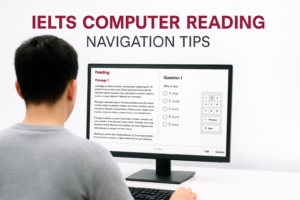
For computer-based preparation, include sessions where you read passages, navigate questions and type responses on a screen. Familiarity with a practice interface is helpful, but avoid assuming that every online platform exactly reproduces your booked test interface. Use it to practise attention and answer management. Our guide to computer Listening interface tips can help you plan that part of your routine.
Before paying for a package, compare its actual features with your diagnostic priorities. Someone who mainly needs feedback on argument development has different needs from someone who needs more timed Reading practice. Compare unlimited IELTS mock test access and review the course package options against those needs rather than buying the largest collection of tests by default.
3. Build a realistic four-week study cycle
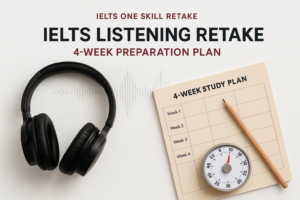
In week one, complete the diagnostic and review it carefully. Then schedule three shorter sessions around your main weaknesses. One session might focus on identifying paraphrases in Reading, another on following changes of direction in Listening and another on developing one clear paragraph. Keep at least one lighter day so the plan remains manageable alongside your other commitments.
In week two, practise the two highest-priority weaknesses using fresh tasks. Start slowly when learning a method, then introduce timing once you can explain your choices. Add a Writing response and a recorded Speaking session so the receptive skills do not crowd out the productive skills. Finish the week by checking whether the original errors are becoming less frequent.
In week three, combine skills in longer sessions. Practise maintaining concentration after one demanding task rather than always starting with your favourite section. Complete a fresh timed practice test when you have enough time afterwards to review it. Compare the result with your baseline, but compare your process too: did you finish more calmly, follow instructions more reliably or make fewer avoidable answer-entry errors?
In week four, act on the latest evidence. Keep useful habits, reduce unnecessary experimentation and spend more time on recurring problems than isolated slips. Include a final unfamiliar practice task to check transfer. Repeating a familiar test can show that you remember it; a new task gives stronger evidence that your method is improving. If you have less time available, use our intensive practice planning guide to think through priorities without simply cramming more tests into each day.
4. Make review the largest part of improvement
A useful review explains the cause of an error. In Reading, return to the passage and identify the evidence that supports the correct answer. Then ask why your answer seemed plausible. Perhaps you matched a familiar word but missed a limitation, confused an opinion with a fact or answered from your own knowledge instead of the passage.
In Listening, first check what you actually heard. Replay a short segment after the timed attempt and use an available transcript to investigate the difficulty. Was the problem an unfamiliar expression, connected speech, a change in the speaker’s answer or losing track of the question? Each cause suggests a different follow-up exercise. Replaying the whole recording without a specific question can turn review into passive listening.
For Writing, choose one or two priorities per response rather than trying to repair everything at once. You might focus on answering every part of the prompt and supporting the central claim with a relevant example. Rewrite the affected paragraph, then apply the same approach to a new topic. Correcting a model answer in isolation does not show whether you can produce the skill independently.
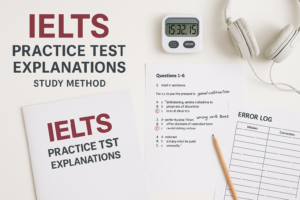
For Speaking, listen to a short recording and note where meaning becomes difficult to follow. Look for incomplete explanations, repeated ideas or long searches for basic phrasing. Repeat the response with a clearer structure, not a memorised script. Keep a compact error log with four columns: task, error, likely cause and next action. Review that log before the next session.
5. Use a weekly timetable you can actually keep
A workable week might contain five focused sessions and two lighter or rest days. On Monday, spend about forty-five minutes reviewing Reading errors and trying a fresh related task. On Tuesday, work on Listening and investigate a small number of difficult segments. On Wednesday, write a response and leave time to assess it or prepare questions for feedback.
On Thursday, practise Speaking with a partner or recording and revisit one Writing priority. Use Friday for a timed mixed session or a longer practice test when your schedule allows. Reserve part of Saturday for review rather than automatically adding another mock. Sunday can be a rest day or a short planning session. These are examples, not requirements: adjust session length to your concentration and circumstances.
If you miss a session, do not double the next day’s workload by default. Move the most important activity forward and remove a lower-priority task. A plan that depends on perfect attendance is fragile. Consistent, attentive work is more useful than a crowded calendar that encourages rushed answers and skipped review.
Track a small set of indicators each week: completion under timing, repeated error types, quality of feedback applied and how well you explain your answer choices. Scores matter, but they fluctuate with task difficulty and familiarity. Combine them with these process measures before deciding that one unusually strong or weak practice result represents your true level.
6. Decide your next step from evidence
At the end of the cycle, compare fresh work with your baseline. Look for improvements that appear across several tasks, not just one familiar exercise. If you still miss the same question type, narrow the next cycle around that problem. If Writing or Speaking remains hard to judge, targeted feedback may be more useful than another bank of automatically marked questions.
Keep preparation decisions separate from booking decisions. Your required scores, deadlines and personal circumstances should guide whether you need more preparation time. No online study plan can guarantee an outcome. Start with the resources and learning options at Career Wise English, then choose the next step that addresses the clearest gap in your current evidence.
Frequently asked questions
How many online practice tests should I complete each week?
There is no single number that suits everyone. Begin with one diagnostic and allow enough time to understand the results. Add full tests when you need to measure pacing, concentration or progress across skills. Between them, use shorter targeted exercises. If you cannot review your mistakes properly, reduce the number of full tests before increasing your study hours.
Can I use the same test more than once?
Yes, particularly for investigating errors or checking whether you understand a difficult passage or recording. Label repeat attempts clearly. A higher score on familiar material may reflect memory as well as learning. Use unfamiliar tasks when you want to assess whether your approach transfers beyond the examples you have already studied.
Is an online practice score the same as an official IELTS score?
No. Practice results can help identify strengths and weaknesses, but they are not official test results. Their usefulness depends on the material, marking method and conditions. Be especially cautious about treating self-assessed Writing or Speaking scores as precise. Use feedback and repeated evidence rather than a single number to guide preparation.
What should I do if my practice results stop improving?
Check the review process before adding more tests. Group recent mistakes by cause, choose the most frequent problem and design a small focused session around it. Seek feedback where you cannot diagnose the issue yourself. Also consider whether fatigue, inconsistent timing or repeated familiar material is making your results difficult to interpret. Change one part of the routine, then check it on fresh work.