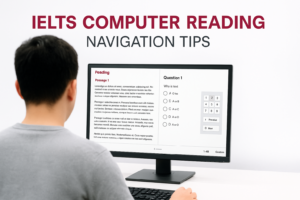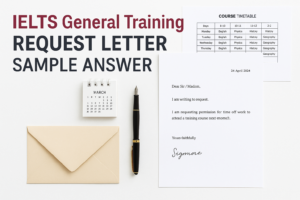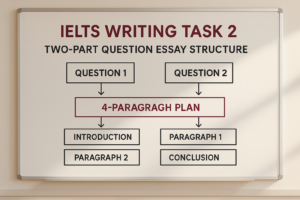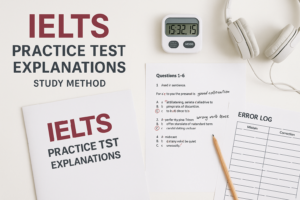
If you are applying for an Australian partner visa, you have probably already discovered that English language testing is part of the process. For most applicants, that means taking the IELTS Reading General for Partner Visa pathway — specifically the IELTS General Training test, not the Academic version. The reading section is where many partner visa applicants lose marks they cannot afford to lose, often because they prepare using the wrong materials or misunderstand what the General Training module actually tests.
Before you spend weeks studying the wrong content, it is worth checking where your current reading level sits. Take the IELTS Express Pre-Test for just $4.99 and get a personalised band prediction that shows exactly how close you are to the score your partner visa requires. Knowing your starting point saves you from wasting time on preparation that does not match your actual gaps.
This guide explains what the IELTS General Training Reading section looks like for partner visa applicants, what score you actually need, how the test is structured, and how to prepare without overcomplicating the process. The goal is to give you a clear, practical plan you can follow even if you have not taken a formal English test before.
What IELTS score do partner visa applicants actually need
The first thing to clear up is the score requirement. For Australian partner visas — including subclasses 309, 100, 820, and 801 — the Department of Home Affairs requires what they call “functional English” at minimum. That means an average band score of 4.5 across all four IELTS skills, with no section falling below that level.
Some applicants aim higher because they want to claim points in other visa pathways, but for a standard partner visa application, 4.5 in each skill is the threshold. That is achievable for most applicants with focused preparation, but it is not a score you can expect to hit without understanding the test format. A 4.5 in IELTS General Training Reading means you can understand straightforward factual texts, locate specific information, and follow simple instructions — but you still need to practise those skills under timed conditions.
The partner visa application process already involves enough paperwork and waiting. Adding a failed IELTS attempt to that list is expensive and stressful. It is far better to prepare properly the first time, understand what the reading section is actually testing, and walk into the exam room knowing what to expect.
- Functional English = IELTS 4.5 average, minimum 4.5 per skill
- General Training is required, not Academic
- The reading section tests practical comprehension, not academic analysis
- Preparation should match the actual test format
How IELTS General Training Reading differs from Academic Reading
This distinction matters because many preparation books and online resources focus on the Academic module. If you are preparing for IELTS Reading General for Partner Visa, using Academic materials will train you for the wrong skills and waste your time.
General Training Reading uses shorter, more practical texts drawn from everyday life and work contexts. You might read a workplace memo, a public notice, a product description, or a set of instructions. The vocabulary is more accessible. The questions focus on finding information, understanding main ideas, and following logical sequences rather than analysing complex arguments or identifying writer attitudes.
Academic Reading, by contrast, uses longer passages from books, journals, and magazines. The vocabulary is more advanced. The questions require you to infer meaning, evaluate arguments, and understand detailed technical content. None of that is relevant to your partner visa requirements.
The practical difference is this: General Training Reading rewards speed, accuracy, and the ability to scan for specific information. Academic Reading rewards deep comprehension and analytical skill. If you are a partner visa applicant, you need the first set of skills, not the second.
For a broader look at how General Training fits into the overall IELTS structure, see our IELTS General Training Migration Guide.
The structure of the IELTS General Training Reading test
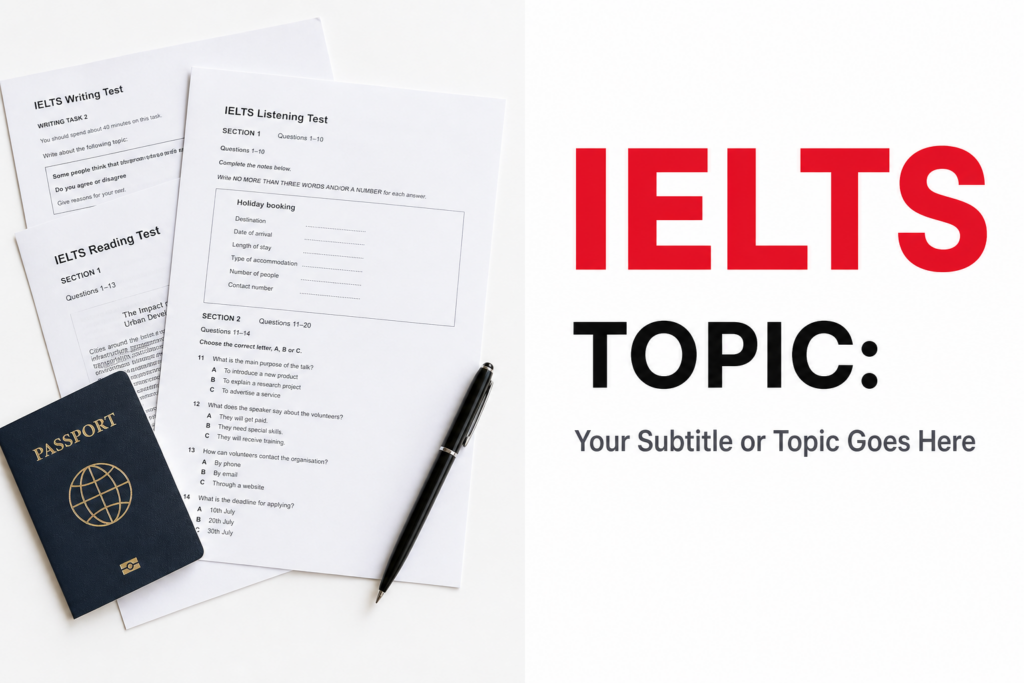
The General Training Reading paper has three sections, and you have 60 minutes to complete all 40 questions. The sections increase in difficulty, but even the final section is more practical than academic.
Section 1 usually contains two or three short texts related to everyday survival or social needs. These might include timetables, advertisements, public notices, or application forms. The questions here test your ability to locate specific facts quickly.
Section 2 focuses on workplace contexts. You might read a job description, a workplace policy, a training manual excerpt, or instructions for using equipment. The questions here test your ability to follow instructions, understand sequences, and identify main points in practical documents.
Section 3 contains one longer text on a general interest topic. This is the most challenging section, but it is still more accessible than Academic Reading passages. The questions here test your ability to understand main ideas, locate detailed information, and recognise opinion or attitude — though at a simpler level than the Academic module.
The time limit is tight. Many applicants who could answer the questions correctly in unlimited time make mistakes because they run out of time in the exam room. That is why practising with a timer is non-negotiable.
- Three sections, 40 questions, 60 minutes
- Section 1: everyday social survival texts
- Section 2: workplace and training contexts
- Section 3: general interest topic, longer passage
- Time pressure is the hidden challenge
Why partner visa applicants often struggle with General Training Reading
There are a few predictable reasons why partner visa applicants lose marks in the reading section. Understanding these reasons helps you avoid them.
The first is preparation with the wrong materials. If you are practising with Academic Reading tests or advanced vocabulary lists, you are building skills you do not need while neglecting the ones you do. General Training Reading requires fast, accurate scanning and the ability to match information across different formats. Academic preparation trains you to read slowly and analyse deeply. Those are opposite skills.
The second reason is unfamiliarity with British English conventions. IELTS uses British spelling, vocabulary, and phrasing. If you are more used to American English, you might miss small differences in spelling or phrasing that affect your answers. This is not a major problem, but it is worth practising with British English materials so the test language feels normal.
The third reason is poor time management. Many applicants spend too long on early questions and then rush the final section, where the marks are often easier to lose. A better strategy is to move through the test at a steady pace, skipping questions that take too long and returning to them if time allows.
The fourth reason is not understanding question types. True/False/Not Given questions confuse many applicants because they do not grasp the difference between “false” and “not given.” Matching heading questions require you to distinguish between main ideas and supporting details. These question types have specific techniques that you can learn quickly if you practise them deliberately.
If you want a complete overview of the IELTS test format and timing across all sections, see our IELTS Test Format Guide.
A practical preparation plan for partner visa applicants
You do not need months of study to reach a 4.5 or higher in General Training Reading. What you need is focused practice that matches the actual test. Here is a practical plan that works for most partner visa applicants.
Week 1: Learn the test format. Do two full General Training Reading papers under timed conditions. Do not worry about your score yet. The goal is to understand what the sections look like, what the question types feel like, and where you naturally slow down.
Week 2: Focus on question types. Practise True/False/Not Given, matching headings, sentence completion, and short-answer questions separately. Learn the technique for each type. For True/False/Not Given, remember that “False” means the text contradicts the statement, while “Not Given” means the text does not mention it at all. That distinction alone can save you several marks.
Week 3: Build speed. Do one full timed paper every two days. Focus on finishing within 55 minutes so you have a buffer in the real test. After each paper, review your wrong answers carefully. Ask yourself whether the mistake was a reading error, a timing error, or a technique error. Fix the pattern, not just the individual question.
Week 4: Simulate the real test. Do full practice tests including listening, reading, and writing in one sitting. This builds stamina and helps you manage the mental shift between sections. The reading section is the second paper in the test, so you need to stay focused even after the listening section has used some of your concentration.
Throughout this plan, use only General Training materials. Do not mix in Academic papers. If you are unsure whether a practice test is General Training or Academic, check the passage topics. If they include scientific research, academic debates, or journal articles, it is Academic. If they include notices, job ads, and workplace documents, it is General Training.
If you want structured practice tests with detailed feedback, access unlimited IELTS mock tests and track your progress across all four skills.
Key techniques that improve General Training Reading scores
Beyond general preparation, there are specific techniques that raise your score quickly. These are not advanced skills. They are habits that most applicants ignore.
First, read the questions before the passage. In General Training Reading, you usually do not need to understand the entire text deeply. You need to find specific answers. Reading the questions first tells you what information to look for, which saves time and improves accuracy.
Second, use keywords to locate answers. Each question contains one or two words that will appear in the passage, either exactly or in a paraphrased form. Train yourself to spot those keywords quickly and scan the text for them rather than reading every sentence carefully.
Third, pay attention to sequence. In most General Training Reading sections, the questions follow the order of the text. That means if you have found the answer to question 3 somewhere in the middle of the passage, the answer to question 4 is likely to appear after that point, not before it. Using this sequence knowledge helps you scan more efficiently.
Fourth, do not leave blanks. There is no penalty for wrong answers in IELTS, so guessing is always better than leaving a question empty. If you run out of time, fill in any remaining answers with your best guess. Even random guessing gives you a chance of picking up extra marks.
Fifth, practise with British English spelling. If you are writing answers rather than selecting them, use British conventions. “Colour” not “color.” “Centre” not “center.” “Organise” not “organize.” These small differences matter if your answer is marked strictly.
- Read questions before passages
- Scan for keywords rather than reading every word
- Use question sequence to guide your search
- Never leave an answer blank
- Use British English spelling in written answers
FAQ: IELTS Reading General for Partner Visa
Can I use IELTS Academic for a partner visa application?
No. The Australian Department of Home Affairs specifies IELTS General Training for partner visa functional English requirements. Academic results are not accepted for this visa category. Make sure you book the correct module when you register for your test.
Is IELTS 4.5 in reading difficult to achieve?
For most applicants with basic English education, a 4.5 is achievable with two to four weeks of focused preparation. The key is using General Training materials, not Academic ones, and practising under timed conditions. A 4.5 means you can understand straightforward factual texts and locate specific information. It does not require advanced vocabulary or complex analysis.
What if I have taken IELTS before and scored below 4.5 in reading?
A low reading score usually means one of three things: you used Academic preparation materials, you ran out of time, or you were unfamiliar with specific question types. All three problems are fixable. Switch to General Training practice tests, practise with a strict 60-minute timer, and spend focused time learning the techniques for True/False/Not Given and matching headings. Most applicants see improvement within two to three weeks.
How long are IELTS results valid for partner visa applications?
IELTS results are valid for two years from the test date. If your results expire before your partner visa is granted, you may need to retake the test. Plan your test date carefully so your results remain valid throughout the visa processing period, which can take 12 to 24 months depending on the subclass and your circumstances.
Can I prepare for IELTS Reading General without a teacher?
Yes. Many partner visa applicants prepare independently using official practice materials, online resources, and timed self-tests. The most important factor is using the right materials and practising consistently. If you prefer guided preparation, structured courses can help, but self-study is entirely viable if you are disciplined about timing and review.
Do I need to study academic vocabulary for General Training Reading?
No. General Training Reading uses everyday and workplace vocabulary. Focusing on academic word lists will not help you and may confuse you. Instead, practise reading real notices, advertisements, job descriptions, and public information documents. The vocabulary in these texts is far more relevant to your test than advanced academic terminology.
Ready to find out your IELTS band score?
Take the IELTS Express Pre-Test for just $4.99 and get your personalised band prediction with a 14-day improvement plan.
Prepare efficiently and pass the reading requirement
The IELTS Reading General for Partner Visa requirement is not a test of advanced English. It is a test of practical reading skills under time pressure. If you prepare with the right materials, practise the correct techniques, and understand what the General Training module actually tests, a 4.5 or higher is within reach for most applicants.
The biggest mistakes partner visa applicants make are using Academic preparation materials, ignoring the time limit, and not learning the specific techniques for General Training question types. Avoid those three errors and you will already be ahead of most candidates.
Start with a diagnostic test to see your current level, then follow a focused four-week plan using only General Training materials. Practise scanning for keywords, manage your time carefully, and never leave an answer blank. With consistent practice, the reading section becomes a straightforward hurdle rather than a source of stress.
If you want a clearer picture of the support and preparation plans that fit your timeline, see our IELTS preparation plans and compare the level of feedback and practice that matches your target band score.