If you are preparing an IELTS Writing Task 2 Animal Rights band 7 answer, the safest approach is to treat animal rights as an ethical and practical issue, not only as a question about whether you like animals. Animal rights questions can ask about food, scientific research, zoos, pets, farming, conservation, education, or the law. Before you write full essays, take the IELTS Express Pre-Test to check your current writing band and see which part of your essay needs the most work.
Animal rights is a common IELTS topic because it lets you discuss values, responsibility, human needs, and limits. A Band 7 answer does not need expert knowledge of biology or philosophy. It needs a clear position, relevant examples, logical paragraphing, accurate grammar, and vocabulary that fits the question. The best answers avoid extreme claims such as “animals are exactly the same as humans” or “humans can do anything they want with animals”. Instead, they explain where protection is needed and where limited human use may still be justified.
What An Animal Rights Essay Needs To Do
An IELTS Task 2 essay about animal rights should first identify the exact task. If the question asks whether animals should have the same rights as humans, you need a clear judgement. If it asks whether animal testing should be banned, your essay should focus on medical benefit, suffering, alternatives, and regulation. If it asks about zoos, your answer should discuss animal welfare, education, conservation, and whether captivity can be justified.
Many candidates lose marks because they write emotional sentences without development. They say animals are innocent or humans are cruel, but they do not build an argument. A stronger answer chooses two or three serious ideas and explains them with balanced reasoning.
- Read the question type before choosing your position.
- Decide whether the essay is mainly about ethics, science, food, conservation, or law.
- Use examples that a general reader can understand.
- Keep your opinion consistent from the introduction to the conclusion.
IELTS Writing Task 2 Animal Rights Band 7 Answer Structure
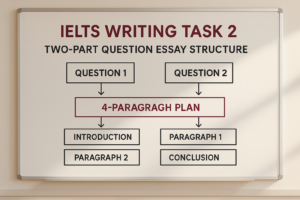
A reliable Band 7 structure has four paragraphs: introduction, body paragraph one, body paragraph two, and conclusion. For animal rights essays, body paragraph one can explain why animals deserve protection from unnecessary suffering. Body paragraph two can discuss cases where human interests, such as medical research or food production, may require careful regulation rather than a total ban.
If the question asks for your opinion, make your position clear in the introduction. For example, you might argue that animals should not be treated as objects, but that they do not need exactly the same legal rights as humans. This gives you room to discuss compassion and practical limits while still maintaining a clear answer.
If you want to test this structure under exam timing, use unlimited IELTS mock tests and practise several animal rights, environment, and science essays in one week. Timed practice shows whether your argument stays clear when the topic changes.
Sample Question For An Animal Rights Essay
Here is a realistic IELTS Writing Task 2 question:
Some people believe that animals should have the same rights as humans, while others think humans may use animals for food, research, and other purposes. Discuss both views and give your own opinion.
This is a discuss both views and give your opinion question. You need to explain both positions, not only the one you prefer. A safe Band 7 position is that animals deserve strong protection from cruelty and unnecessary suffering, but they do not need exactly the same rights as humans because people still have legitimate needs in areas such as health, food, and safety.
Band 7 Sample Answer: Animal Rights
People have different views about how animals should be treated. Some argue that animals should have the same rights as human beings because they can feel pain and fear. Others believe that humans may use animals for food, medical research, and work, as long as this is done responsibly. In my view, animals should be protected from unnecessary suffering, but giving them exactly the same rights as humans is not practical.
On the one hand, there is a strong ethical argument for giving animals greater protection. Many animals are capable of feeling pain, stress, and fear, so it is wrong to treat them as objects. For example, keeping animals in very small cages, using cruel training methods, or killing them for entertainment cannot be justified simply because humans are more powerful. A civilised society should have laws that prevent cruelty and require farmers, researchers, pet owners, and businesses to meet basic welfare standards. This position is reasonable because it recognises that human convenience should not automatically be more important than animal suffering.
On the other hand, some human use of animals may still be necessary or acceptable under strict conditions. Medical research, for instance, has sometimes helped scientists understand diseases and develop treatments. In some regions, animal farming is also part of food supply, employment, and cultural tradition. If all use of animals were banned immediately, it could create serious problems for health care, farming communities, and food access. However, this does not mean there should be no limits. Human benefit should be clear, and animals should not suffer when alternatives are available.
I believe the best approach is to protect animals strongly without pretending that their social role is identical to that of humans. Animals should have legal protection against cruelty, neglect, painful entertainment, and careless industrial practices. At the same time, societies may allow limited animal use where there is a genuine need and where strict welfare rules are followed. For example, research should use non-animal alternatives whenever possible, and farming should avoid overcrowding, unnecessary pain, and poor living conditions.
In conclusion, animals should not have exactly the same rights as humans, but they deserve serious moral and legal protection. The most balanced position is to reduce suffering, ban cruelty, and allow limited human use only when it is necessary and properly regulated.
Why This Sample Answer Reaches Band 7
This sample answer reaches a Band 7 style because it answers all parts of the question. The introduction presents both sides and gives a clear opinion. The first body paragraph explains the argument for animal protection with specific examples. The second body paragraph explains the practical argument for limited human use. The final body paragraph gives a balanced personal view instead of repeating one side.
The answer also uses controlled topic vocabulary. Phrases such as unnecessary suffering, animal welfare, ethical argument, legal protection, strict conditions, non-animal alternatives, and properly regulated are useful because they fit the topic naturally. Band 7 writing is usually precise rather than dramatic.
Useful Vocabulary For Animal Rights Essays
Animal rights essays need vocabulary for ethics, welfare, research, farming, and law. Do not memorise rare words. Learn flexible phrases that can be used accurately in several question types.
- animal welfare: the physical and mental wellbeing of animals.
- unnecessary suffering: pain or distress that could reasonably be avoided.
- ethical responsibility: the duty to act in a morally acceptable way.
- medical research: scientific study used to understand illness or develop treatment.
- strict regulation: clear rules that limit harmful behaviour and require standards.
- non-animal alternatives: testing or research methods that do not use live animals.
Use these phrases inside full sentences. For example, you could write, “Animal welfare laws should prevent unnecessary suffering in farming and research.” That sentence is simple, accurate, and directly relevant.
Common Mistakes In Animal Rights Essays
The first mistake is writing only from emotion. It is natural to care about animals, but IELTS Task 2 rewards argument, not just feeling. Instead of saying “animal testing is terrible”, explain why some testing causes suffering, when alternatives exist, and how governments can regulate it.
The second mistake is ignoring one side of the question. If the task asks you to discuss both views, you must present both views fairly. Even if you strongly support animal rights, explain why some people defend animal use in medicine, farming, or safety. If your ideas often become too one-sided, compare your writing with the IELTS Writing Task 2 band score guide and check whether your task response is complete.
The third mistake is using vague examples. A sentence such as “animals should be protected” is true but undeveloped. Explain which animals, which situations, what kind of harm, and what rule would help. Specific development is more important than listing many points.
Planning An Animal Rights Band 7 Answer In Five Minutes
Use the first five minutes to decide the question type, your position, and two main ideas. For the sample question above, your plan could be: animals can suffer and deserve protection; humans may need limited animal use for health and food; my opinion is that strong welfare laws are better than giving animals identical rights to humans.
This plan is enough. Do not write six different ideas before you start. Too many points can make your essay rushed and shallow. A Band 7 answer usually develops a small number of relevant ideas with clear examples and explanations.
- Minute one: identify the question type.
- Minute two: choose your overall opinion.
- Minute three: choose the strongest animal protection argument.
- Minute four: choose the strongest practical limitation.
- Minute five: decide your example and conclusion line.
How To Adapt This Answer To Other Animal Rights Questions
You can adapt the same ideas to several question types. For an agree or disagree question about banning animal testing, discuss medical benefit, animal suffering, alternatives, and strict regulation. For a zoo question, discuss conservation, education, space, stress, and whether animals can live naturally. For a farming question, discuss food supply, cost, cruelty, and welfare standards.
Be careful with memorisation. You can reuse ideas, but you must change the answer to fit the wording. If the question focuses on testing, spend more time on medicine and alternatives. If it focuses on food, write about farming, diet, affordability, culture, and humane standards. For more topic-based models, read the IELTS Writing Task 2 sample answers page and compare how each essay develops its argument.
Final Tips Before You Write Your Own Answer
Before writing your own animal rights essay, decide whether the question is mainly about cruelty, research, food, zoos, pets, or the law. That decision will help you choose examples quickly. Then write a clear introduction and make sure each body paragraph supports your position.
Do not chase difficult vocabulary. A clear sentence with accurate grammar is better than a complicated sentence that loses meaning. If your test date is close and you need a structured preparation plan, see our IELTS preparation plans and choose support that matches your target band and deadline.
Ready to find out your IELTS band score?
Take the IELTS Express Pre-Test for just $4.99 and get your personalised band prediction with a 14-day improvement plan.
FAQ: IELTS Writing Task 2 Animal Rights Band 7 Answer
Is animal rights a common IELTS Writing Task 2 topic?
Yes. Animal rights can appear under ethics, science, farming, environment, zoos, government policy, or consumer behaviour. Prepare flexible ideas rather than one memorised essay.
What opinion is safest for an animal rights essay?
A balanced opinion is often safest. You can argue that animals deserve strong protection from cruelty, but that limited human use may be acceptable when it is necessary and carefully regulated.
Can I say animal testing should be banned?
Yes, if the question allows that position and you can support it clearly. A stronger answer usually mentions alternatives, unnecessary suffering, medical need, and strict rules rather than only making an emotional claim.
Do I need advanced vocabulary for Band 7?
No. You need accurate vocabulary used naturally. Terms such as animal welfare, unnecessary suffering, ethical responsibility, strict regulation, and non-animal alternatives are useful if they fit the sentence.
How many examples should I include?
One clear example in each main body paragraph is usually enough. Examples should support explanation, not replace it.