If you are preparing an IELTS Writing Task 2 Space Exploration band 7 answer, the safest approach is to treat space exploration as a question about public spending, scientific progress, human priorities, and long-term risk. Before you write full essays, take the IELTS Express Pre-Test to check your current writing band and see which part of your essay needs the most work.
Space exploration is a strong IELTS topic because it is easy to have an opinion, but harder to develop that opinion clearly. Some candidates write only that space travel is exciting, while others write only that poverty is more important. A Band 7 answer needs a more controlled position. You should explain why space research can be useful, while also recognising that governments have urgent responsibilities on Earth.
What A Space Exploration Essay Needs To Do
An IELTS Task 2 essay about space exploration should first identify the exact task. If the question asks whether governments should spend money on space research, your answer should discuss public money and priorities. If it asks whether space exploration benefits ordinary people, your essay should explain practical outcomes such as technology, communication, weather forecasting, science education, and international cooperation.
Many candidates lose marks because they make the issue too simple. They say space exploration is a waste of money, but they do not explain opportunity cost. Or they say it is important for the future, but they do not explain how it helps society. A stronger answer gives a clear judgement and supports it with realistic examples.
- Read the question type before choosing your position.
- Decide whether the essay is mainly about money, science, survival, technology, or social needs.
- Use examples that a general reader can understand.
- Keep your opinion consistent from the introduction to the conclusion.
IELTS Writing Task 2 Space Exploration Band 7 Answer Structure
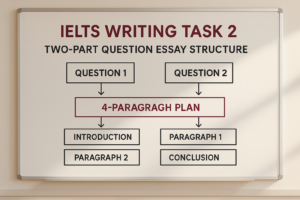
A reliable Band 7 structure has four paragraphs: introduction, body paragraph one, body paragraph two, and conclusion. For space exploration essays, body paragraph one can explain the benefits of research and discovery. Body paragraph two can discuss cost, inequality, and whether public spending should focus on health, education, housing, or climate problems first.
If the question asks for your opinion, make your position clear in the introduction. A safe position is that space exploration has value, but it should not receive unlimited funding when basic public services are weak. This gives you room to discuss both sides without sounding extreme.
If you want to test this structure under exam timing, use unlimited IELTS mock tests and practise several science, technology, environment, and government spending essays in one week. Timed practice shows whether your argument stays clear when the topic changes.
Sample Question For A Space Exploration Essay
Here is a realistic IELTS Writing Task 2 question:
Some people believe that governments should spend money on space exploration because it benefits humanity. Others think this money should be used to solve problems on Earth. Discuss both views and give your own opinion.
This is a discuss both views and give your opinion question. You need to explain both positions, not only the one you prefer. A safe Band 7 position is that space research can produce knowledge and useful technology, but public funding should be balanced against urgent social needs.
Band 7 Sample Answer: Space Exploration
People have different views about whether governments should fund space exploration. Some argue that it leads to scientific progress and may help humanity in the future. Others believe that public money should be spent on immediate problems such as poverty, health care, education, and climate change. In my view, space exploration is valuable, but it should be funded carefully and should not take priority over basic human needs.
On the one hand, space exploration can bring important benefits. Research connected to satellites, communication systems, navigation, weather prediction, and materials science can improve life on Earth. For example, satellites help governments monitor storms, track environmental damage, and provide communication in remote areas. Space programmes can also encourage young people to study science and engineering, which may support innovation in other industries. From this perspective, spending money on space is not only about visiting other planets; it can also create knowledge and technology that society can use.
On the other hand, there is a strong argument that governments should focus first on urgent problems on Earth. Many countries still struggle with poor hospitals, overcrowded schools, expensive housing, unemployment, and pollution. If a government spends huge amounts of public money on space missions while citizens cannot access basic services, people may see that spending as unfair. This concern is especially serious because space projects are often extremely expensive and their benefits may take many years to appear. Public money should therefore be judged by both long-term value and immediate social need.
I believe the best approach is balanced funding. Governments should continue some space research, especially projects that have clear scientific, environmental, or communication benefits. However, they should avoid treating space exploration as a prestige project. Funding should be transparent, limited, and connected to practical outcomes. At the same time, essential services such as health, education, disaster preparation, and environmental protection should receive priority when budgets are tight.
In conclusion, space exploration can benefit humanity through science and technology, but it should not be funded without limits. A responsible government should support useful research while ensuring that urgent problems on Earth are not ignored.
Why This Sample Answer Reaches Band 7
This sample answer reaches a Band 7 style because it answers all parts of the question. The introduction presents both views and gives a clear opinion. The first body paragraph explains the benefits of space research with practical examples. The second body paragraph explains the opportunity cost of public spending. The final body paragraph gives a balanced personal view rather than repeating one side.
The answer also uses controlled topic vocabulary. Phrases such as scientific progress, public money, urgent problems, practical outcomes, long-term value, and balanced funding are useful because they fit the topic naturally. Band 7 writing is usually precise rather than dramatic.
Useful Vocabulary For Space Exploration Essays
Space exploration essays need vocabulary for science, money, technology, and public priorities. Do not memorise rare technical words. Learn flexible phrases that can be used accurately in several question types.
- space exploration: scientific activity connected to studying space, planets, satellites, and future missions.
- public funding: money spent by governments from taxes or public budgets.
- scientific progress: new knowledge or discoveries that improve understanding.
- practical benefits: useful outcomes that affect everyday life.
- opportunity cost: what society gives up when money is spent on one priority instead of another.
- long-term investment: spending that may produce benefits in the future rather than immediately.
Use these phrases inside full sentences. For example, you could write, “Space exploration may be justified when it produces practical benefits such as better communication and weather forecasting.” That sentence is simple, accurate, and directly relevant.
Common Mistakes In Space Exploration Essays
The first mistake is writing an emotional argument without development. Saying that space travel is amazing does not answer the question. Explain the benefit: better satellites, stronger scientific education, environmental monitoring, international cooperation, or preparation for future risks.
The second mistake is saying the money should all go to poverty without explaining priorities. This idea can be strong, but it needs development. Explain that governments have limited budgets and that health, education, housing, and climate adaptation may produce more immediate public benefit. If your Task 2 arguments often feel underdeveloped, compare your writing with the IELTS Writing Task 2 band score guide.
The third mistake is using unrealistic examples. You do not need to discuss complex astrophysics. IELTS rewards clear communication. Satellites, weather forecasts, GPS, disaster monitoring, science education, and public budgets are enough for a strong answer.
Planning A Space Exploration Band 7 Answer In Five Minutes
Use the first five minutes to decide the question type, your position, and two main ideas. For the sample question above, your plan could be: space research brings scientific and technological benefits; governments also have urgent social responsibilities; my opinion is that limited, practical space funding is reasonable, but basic services should come first.
This plan is enough. Do not write six different ideas before you start. Too many points can make your essay rushed and shallow. A Band 7 answer usually develops a small number of relevant ideas with clear examples and explanations.
- Minute one: identify the question type.
- Minute two: choose your overall opinion.
- Minute three: choose the strongest benefit of space research.
- Minute four: choose the strongest concern about public spending.
- Minute five: decide your example and conclusion line.
How To Adapt This Answer To Other Space Questions
You can adapt the same ideas to several question types. For an agree or disagree question about whether space exploration is a waste of money, discuss useful technology, scientific education, and the need to protect basic services. For a question about private companies in space, discuss innovation, regulation, safety, inequality, and whether profit should control access to space.
Be careful with memorisation. You can reuse ideas, but you must change the answer to fit the wording. If the question focuses on government spending, write more about public budgets. If it focuses on future survival, write more about research, risk, and long-term planning. For more topic-based models, read the IELTS Writing Task 2 sample answers page and compare how each essay develops its argument.
Final Tips Before You Write Your Own Answer
Before writing your own space exploration essay, decide whether the question is mainly about science, spending, society, technology, the environment, or the future. That decision will help you choose examples quickly. Then write a clear introduction and make sure each body paragraph supports your position.
Do not chase difficult vocabulary. A clear sentence with accurate grammar is better than a complicated sentence that loses meaning. If your test date is close and you need a structured preparation plan, see our IELTS preparation plans and choose support that matches your target band and deadline.
Ready to find out your IELTS band score?
Take the IELTS Express Pre-Test for just $4.99 and get your personalised band prediction with a 14-day improvement plan.
FAQ: IELTS Writing Task 2 Space Exploration Band 7 Answer
Is space exploration a common IELTS Writing Task 2 topic?
Yes. It can appear under science, technology, government spending, education, environment, or future planning. Prepare flexible ideas rather than one memorised essay.
What opinion is safest for a space exploration essay?
A balanced opinion is often safest. You can argue that space research has value, but that it should be funded carefully and should not replace urgent spending on basic needs.
Can I say space exploration is a waste of money?
Yes, if the question allows that position and you support it clearly. A stronger answer usually explains opportunity cost, public budgets, and immediate social needs rather than only saying space is too expensive.
Do I need scientific vocabulary for Band 7?
No. You need accurate academic language, not specialist science terms. Phrases such as public funding, scientific progress, practical benefits, satellites, and long-term investment are usually enough.
How many examples should I include?
One clear example in each main body paragraph is usually enough. Examples should support explanation, not replace it.