If you are searching for IELTS Writing Task 2 for Engineering Australia, you are probably not looking for generic essay advice. You need writing that is strong enough to protect your overall IELTS target while fitting a broader migration or skills assessment plan. For many engineers, the pressure is not only about getting a decent score. It is about reaching a result that supports registration, points, employment goals, or the next visa step without losing months to another retake.
Before you keep guessing whether Writing is the section putting your pathway at risk, take the IELTS Express Pre-Test to get a quick band prediction and see where your current writing performance becomes unstable.
Why IELTS Writing Task 2 matters for Engineering Australia applicants
Engineering Australia does not mark your essay itself, but IELTS Writing Task 2 still matters because writing is often the section that drags down otherwise strong English results. Many engineering candidates read technical material well and communicate effectively at work, but Task 2 asks for a different kind of control. You need to take a position, organise ideas clearly, explain cause and effect, and support your argument in formal written English under time pressure.
That is why this task feels frustrating. Engineers are usually trained to be accurate and analytical, yet the exam rewards more than technical accuracy. It rewards relevance to the question, logical paragraphing, clear progression, and language range without losing clarity. If one of those parts breaks down, the score can slip even when your ideas are sensible.
If you need the wider score picture, the IELTS for Engineering Australia complete guide helps explain how English targets fit the larger pathway.
What IELTS Writing Task 2 for Engineering Australia is really testing
Task 2 is not a test of specialist engineering knowledge. You are not being asked to write like a civil engineer, software engineer, or mechanical engineer preparing a formal report. You are being tested on four writing criteria, task response, coherence and cohesion, lexical resource, and grammatical range and accuracy.
In practice, that means the examiner wants to see whether you answer the exact question, organise the essay logically, use vocabulary with enough precision, and control sentence structures well enough for your ideas to stay easy to follow. Candidates often lose marks because they confuse intelligence with scoring. A smart argument does not help much if the structure is weak, the position is unclear, or the language becomes repetitive.
For engineering candidates, this is good news. The task becomes easier once you stop treating it like a mystery and start treating it like a repeatable writing process.
Typical score targets engineers aim for
The exact score you need depends on your migration plan, employer requirements, registration context, and whether you are chasing extra points rather than only meeting a minimum. Some candidates only need to stay balanced across all four skills. Others need a stronger result because one weak band can affect a broader application strategy.
That means your target for IELTS Writing Task 2 for Engineering Australia should be practical, not emotional. Instead of saying, “I need a high score,” define the real requirement. Are you trying to avoid one section dragging down your profile? Are you aiming for a points threshold? Are you protecting a deadline? The answer changes how aggressively you need to train writing.
Many candidates make the mistake of over-investing in reading tips while under-practising full essays. If your timeline is tight, that is risky. Writing usually improves through repetition, review, and correction, not through passive study alone.
The essay types most relevant to engineering candidates
IELTS Writing Task 2 topics can cover education, technology, transport, the environment, cities, work, government, and social change. That often suits engineers because these themes are not far from real-world problem solving. Still, familiarity with a topic does not guarantee a high score. You need to adapt your ideas to the exact essay type.
The most common Task 2 types include:
- Opinion essays: agree or disagree with a clear position
- Discussion essays: discuss both views and give your opinion
- Advantages and disadvantages essays: weigh benefits and drawbacks
- Problem and solution essays: explain causes and propose practical responses
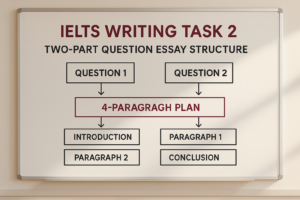
- Two-part questions: answer both questions fully without neglecting one side
Engineering candidates often do well when the topic feels analytical, but they can still lose marks by writing a broad technical discussion instead of directly answering the prompt. The exam rewards focus more than expertise.
A reliable structure for IELTS Writing Task 2 for Engineering Australia
If your writing score is inconsistent, structure is usually the first thing to fix. A reliable essay frame makes the task less stressful and reduces the chance of drifting away from the question.
A simple high-value structure looks like this:
- Introduction: paraphrase the topic and state your position clearly
- Body paragraph 1: present your strongest main idea with explanation and example
- Body paragraph 2: add a second clear idea, comparison, or opposing point if needed
- Conclusion: summarise your position without repeating the full essay word for word
This sounds basic because it is. Under exam pressure, simple structures survive. Candidates usually get into trouble when they try to sound sophisticated before they have made the essay easy to follow. If you want to practise that structure under real timing rather than just reading samples, access unlimited IELTS mock tests and build a habit of writing complete answers.
Common mistakes engineers make in Task 2
One common problem is over-explaining background detail. Engineers often like precision, which is useful, but the essay is not a design brief. If you spend too many words defining the issue, your position becomes blurry and the essay starts to feel slow.
Another problem is writing in a report-like style. Task 2 needs an argument, not a passive technical summary. Sentences that sound detached or mechanical can weaken the flow. You need clear claims, direct explanation, and examples that support the paragraph rather than bury it.
A third mistake is using memorised phrases that do not fit naturally. Some candidates learn long introductions or formal linking expressions because they want to sound advanced. The result can feel stiff. Clear, accurate English usually scores better than inflated language.
A fourth issue is weak paragraph control. If each paragraph contains too many small ideas, the argument loses force. It is usually better to develop one idea properly than list three ideas briefly.
How to develop ideas without sounding repetitive
Many candidates feel they have “run out of content” halfway through the essay. Usually the real problem is not lack of ideas. It is weak development. After making a point, you need one or two layers that explain it.
Useful development moves include:
- Cause: explain why this happens
- Effect: show what result it creates
- Example: give a realistic illustration
- Comparison: show how one option is stronger or weaker than another
- Qualification: add a limit or condition so the idea sounds balanced
For example, if the essay is about technology replacing human jobs, do not stop at saying automation is efficient. Explain why it is efficient, which sectors are affected, and what that means for workers or training. That creates a fuller paragraph without forcing unnatural vocabulary.
If you are also trying to stabilise your argument quality more generally, the IELTS Writing Task 2 band score guide is a useful companion because it shows what stronger essays actually sound like.
The vocabulary approach that works better than memorising big words
Vocabulary matters, but not in the way many candidates think. You do not need to fill IELTS Writing Task 2 for Engineering Australia with highly technical words or academic phrases you would never normally use. You need precise language that fits the topic naturally and supports clear argument development.
That means choosing words such as efficient, practical, sustainable, costly, workforce, infrastructure, or training when they genuinely suit the sentence. It also means avoiding vague words like good, bad, or important when a more exact option would make the meaning sharper.
Just as important, vary sentence patterns without forcing complexity. A mix of shorter and longer sentences usually works better than trying to make every sentence look advanced. Clear control beats showy grammar.
How to practise if your exam date is close
If your test date is near, do not try to improve everything at once. Choose the parts that are actually lowering your score. For many engineering candidates, the biggest gains come from clearer structure, stronger paragraph development, and better time control.
A practical one-week cycle could look like this:
- Day 1: write one full essay and mark where your position becomes unclear
- Day 2: rewrite only the introduction and topic sentences for three prompts
- Day 3: practise body paragraph development using cause, effect, and example
- Day 4: write one essay under time pressure and review repetition
- Day 5: focus on grammar patterns that often break when you write quickly
- Day 6: write a second timed essay on a different task type
- Day 7: compare both essays and note one pattern to fix next week
If you need a more structured pathway instead of guessing what to do next, see our IELTS preparation plans and choose the level of support that matches your deadline.
Ready to find out your IELTS band score?
Take the IELTS Express Pre-Test for just $4.99 and get your personalised band prediction with a 14-day improvement plan.
Frequently Asked Questions
Is IELTS Writing Task 2 for Engineering Australia different from normal IELTS Writing Task 2?
No. The task format and scoring criteria are the same. The difference is the pressure around the score because engineering applicants often need writing results that fit a larger migration or professional pathway.
Do I need engineering vocabulary in Task 2?
Only when it fits the topic naturally. The examiner is not rewarding specialist jargon. Clear, accurate English that answers the question directly is much more important.
Why is writing often the weakest section for engineers?
Many engineers are strong analytical thinkers, but Task 2 requires a timed academic argument rather than technical explanation alone. Structure, position, and paragraph development often matter more than raw knowledge.
How many essays should I write each week?
That depends on your deadline, but even two or three full timed essays per week can be useful if you review them properly. Passive reading rarely improves writing fast enough on its own.
What is the fastest way to lift my Task 2 score?
The fastest gains usually come from fixing structure, answering the exact question more directly, and developing each paragraph with one clear supporting layer instead of several thin points.
Your next step
IELTS Writing Task 2 for Engineering Australia becomes much more manageable when you stop treating it like a talent test and start treating it like a system. Know your real score target, use a stable structure, develop each paragraph properly, and review your essays with cold honesty.
If you do that consistently, Writing becomes less unpredictable, which is exactly what most engineering applicants need. The goal is not a beautiful essay. The goal is a reliable score that keeps your wider plan moving.