
If your IELTS result is below the score you need, an Enquiry on Results can feel like an obvious next step. However, a remark and a retake solve different problems. A remark reviews the performance you already produced; a retake gives you another opportunity to demonstrate your ability. This IELTS Enquiry on Results Australia guide helps you organise that decision without assuming that an unexpected score must be incorrect.
Start by writing down your required scores, the scores you received and your application deadline. Keep these three facts separate from how disappointed you feel. You can explore preparation options at Career Wise English, but only your IELTS provider can process a remark request. Your receiving organisation decides whether a result meets its requirements.
What an IELTS Enquiry on Results actually reviews
An Enquiry on Results, often shortened to EOR, is the official route for asking IELTS to review your scores. It is not an extra speaking interview or an opportunity to submit a better essay. The review concerns your original test performance. That distinction matters because preparation completed after the test cannot change what you wrote or said during it.
Think of the decision as two separate questions. First, do you have a reasonable basis for questioning how your existing performance was assessed? Second, if the score remains the same, what will you do next? Answering both questions prevents a remark from becoming your only plan. An EOR is a review process, not a guaranteed route to a higher band.
A difference between your Writing score and your other skills is not, by itself, proof of an assessment problem. Different skills can develop at different rates. Likewise, feeling fluent during Speaking does not tell you exactly how consistently you met every assessment criterion. Use evidence from timed work and qualified feedback rather than confidence alone.
Check the application window and your own deadline
The official Australian IELTS information says a remark request must be made within six weeks of sitting the test. Check the deadline and application instructions for your particular booking immediately, especially if your Speaking appointment was on a different day. Do not assume that six weeks starts when you finally open your results email.
IELTS also says an EOR outcome may be available on the day of application or take up to 21 days. That range is not a promise that your individual review will be quick. If an application closes soon, contact the receiving organisation to establish what evidence it needs and when. Ask about its actual policy rather than relying on another candidate's experience.
Distinguish the release of your original score from the processing of a remark. Our article on how long IELTS computer test results take explains the first stage. Once you have your result, an EOR is a separate process with its own timing. Put both stages in your calendar if you are planning around a university intake or professional application.
Understand the fee before choosing a remark
An EOR involves an upfront fee. Confirm the current amount with the provider handling your booking before paying; do not assume an old screenshot or a fee from another country applies to you. Official Australian guidance states that the fee is refunded if your band score changes. Read the provider's current wording and ask how any refund will be processed.
Your budget should allow for an unchanged result. A useful question is whether you would still consider the decision reasonable if you paid the fee and received no score increase. If the answer is no, pause and examine what evidence is driving the application. The cost should not be justified by a supposed success rate that nobody has established for your situation.
Also distinguish a score change from meeting your target. For example, a change in one component may still leave another component below the receiving organisation's minimum. Review the full requirement, including individual skill thresholds, before deciding what outcome would actually solve your problem. Do not evaluate the remark solely through the overall band.
Compare your result with meaningful performance evidence
Collect your recent timed practice, feedback and score breakdown in one place. Strong evidence is specific: repeated teacher feedback on complete essays written under test conditions is more useful than a friend saying your English sounds excellent. If your practice was untimed, heavily edited or completed with assistance, it may not predict performance in the real test.
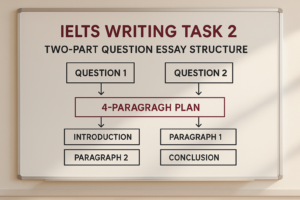
For Writing, examine task response, organisation, vocabulary and grammatical control separately. A sophisticated vocabulary list does not compensate for an essay that only partly answers the question. Our explanation of IELTS Writing Task 2 lexical resource at Band 7 can help you identify what vocabulary evidence looks like in a complete response, rather than treating rare words as a score guarantee.
For Speaking, reflect on how you developed answers and handled unfamiliar questions, not just whether the conversation felt friendly. For Reading and Listening, reconstruct your test-day process: time management, missed instructions and unanswered items may explain a gap between practice and the final result. These reflections cannot prove a marking error, but they can improve the quality of your next decision.
Write a short, factual rationale for requesting a review. Then write the strongest reasonable explanation for the score being accurate. Considering both possibilities helps you avoid making a costly choice purely because one outcome is more comfortable to imagine.
Choose between EOR, One Skill Retake and a full retake
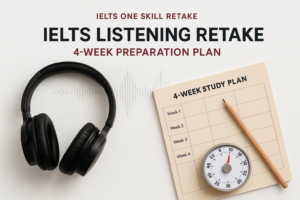
A remark asks for another assessment of existing work. One Skill Retake, where available and accepted, means taking a new test in one skill. A full retake means sitting the test again. These are not interchangeable services. Check your booking eligibility and the receiving organisation's acceptance rules before spending money on any alternative.
If you believe the performance you already produced met the required standard, an EOR may be worth considering. If your own review reveals a clear weakness, preparation followed by a new performance may address the problem more directly. Where several skill scores fall short, focus on the complete score profile rather than assuming one small change will resolve everything.
Make a simple comparison on paper. For each option, record the fee quoted to you, the expected timing, the requirements it could satisfy and what happens if it does not work. Leave unknown details marked as unknown until you confirm them. A neat comparison with guessed facts is less useful than an incomplete comparison that accurately identifies the questions you still need answered.
Career Wise English's IELTS Express pre-test can support a preparation starting point. It is not an official IELTS result, an EOR assessment or evidence that a provider should change your score. Use preparation tools to identify study priorities, while keeping official administrative decisions with the relevant organisations.
Apply carefully and keep a practical backup plan
Use the provider associated with your original test booking. Follow its current EOR instructions, confirm the test details and select the components you want reviewed according to the available process. Keep your payment receipt and application confirmation. If something is unclear, ask the provider before submitting rather than trying to resolve a mistaken assumption after the deadline.
Record the submission date and the stated processing window. Check the email address and account linked to your booking, including spam folders, so that you do not miss a request or outcome. If the processing window passes without an update, contact the provider with your reference details and confirmation. Repeated applications or duplicate payments are not a substitute for checking the status of the original request.
While waiting, continue a manageable preparation routine. This does not mean assuming the remark will fail. It means protecting your next option. Use short, focused sessions: analyse a timed essay, practise explaining an unfamiliar topic aloud or review why you selected incorrect Reading answers. Choose activities that respond to evidence rather than restarting every resource you own.
If you need a structured next stage, review the IELTS preparation pricing and options and compare their scope with your actual weaknesses. Preparation is most useful when you can name the skill you need to improve and measure progress with fresh timed work.
Frequently asked questions about IELTS remarks in Australia
Can I apply because I missed my target by half a band?
Being close to your target explains why you are considering an EOR, but it does not establish that the original assessment was wrong. Compare the score with reliable evidence of your performance, check the current application rules and budget for the possibility that nothing changes. There is no guaranteed half-band increase.
Will a remark give me another chance to answer the questions?
No. An EOR reviews the original performance. If you want to produce new work, investigate an eligible retake option instead. Keep that distinction clear when weighing the fee and the time available, because more study after your original test cannot add material to that original performance.
Should I wait for the outcome before studying again?
You can continue studying while a review is pending. A modest routine preserves momentum without committing you immediately to another booking. Concentrate on weaknesses identified through feedback and timed practice. If the review meets your target, that study still strengthens the English you will use after the test.
What should I do when the EOR outcome arrives?
Read the provider's instructions, check the component scores and establish whether the result now meets every requirement of your receiving organisation. If there is a change, follow the official process for updated documentation and any applicable refund. If the result is unchanged, return to your backup plan and choose the next step using your deadline and evidence.
Before applying, verify the current details on the official IELTS Australia Enquiry on Results page and the IELTS re-mark policy page. This guide was checked on 30 October 2026; your provider's current instructions govern your application.