If you are preparing an IELTS Writing Task 2 Poverty band 7 answer, the safest approach is to treat poverty as a social problem with causes, effects, and realistic solutions. Before you write full essays, take the IELTS Express Pre-Test to check your current writing band and see which part of your essay needs the most work.
Poverty is a common IELTS topic because it connects to education, health, unemployment, housing, crime, government spending, technology, and global inequality. Many candidates understand the topic, but their answers become too general. A Band 7 essay needs a clear position, well-developed paragraphs, specific examples, and language that stays calm and precise.
What A Poverty Essay Needs To Do
An IELTS Task 2 essay about poverty should first identify the exact task. If the question asks about causes, your answer should explain why people remain poor. If it asks about solutions, your answer should focus on practical action by governments, communities, employers, or international organisations. If it asks whether poverty is mainly an individual or social problem, your position needs to recognise both personal effort and structural barriers.
Many candidates lose marks because they write only that poverty is bad and governments should help. That is true, but it is not enough. A stronger answer explains how poverty affects education, health, housing, employment, safety, and long-term opportunity.
- Read the question type before choosing your position.
- Decide whether the essay is mainly about causes, effects, solutions, or responsibility.
- Use examples that a general reader can understand.
- Keep your opinion consistent from the introduction to the conclusion.
IELTS Writing Task 2 Poverty Band 7 Answer Structure
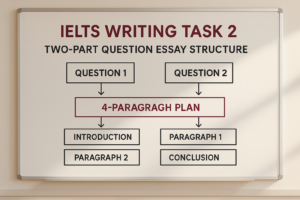
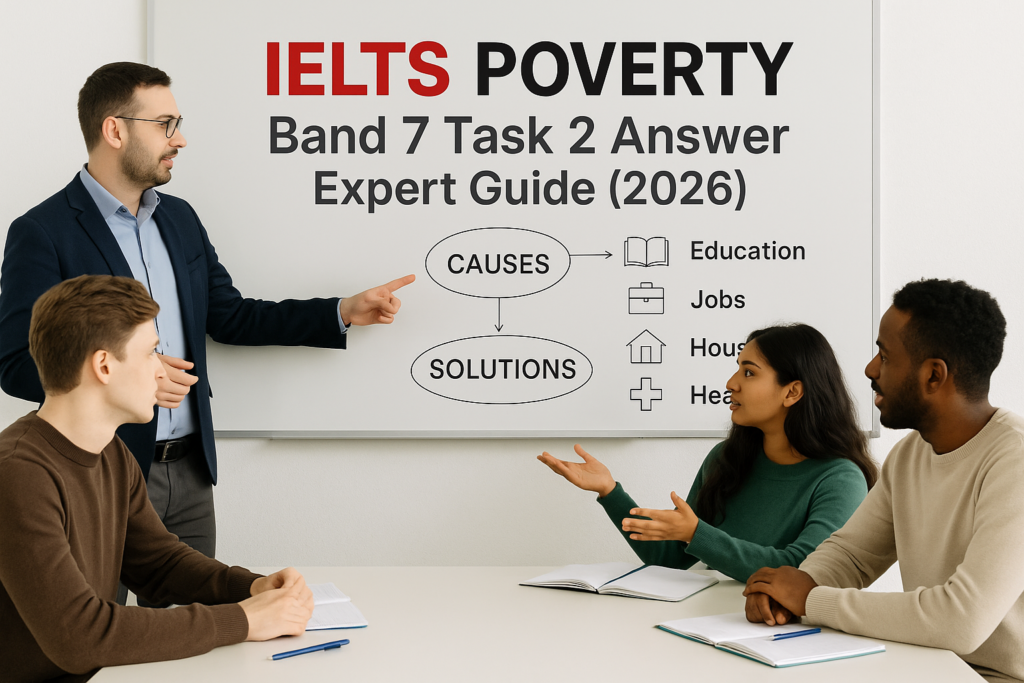
A reliable Band 7 structure has four paragraphs: introduction, body paragraph one, body paragraph two, and conclusion. For poverty essays, body paragraph one can explain the main causes, such as poor education, unemployment, low wages, illness, conflict, or weak public services. Body paragraph two can discuss solutions, such as better schools, job training, healthcare, housing support, and targeted welfare.
If the question asks for your opinion, make your position clear in the introduction. A safe position is that individual effort matters, but poverty is often made worse by social and economic conditions that individuals cannot solve alone. This gives you room to write a balanced answer without blaming poor people or ignoring personal responsibility.
If you want to test this structure under exam timing, use unlimited IELTS mock tests and practise several government spending, education, health, and social problem essays in one week. Timed practice shows whether your argument stays clear when the topic changes.
Sample Question For A Poverty Essay
Here is a realistic IELTS Writing Task 2 question:
In many countries, poverty remains a serious problem despite economic growth. What are the main causes of poverty, and what measures can governments take to reduce it?
This is a causes and solutions question. You need to explain why poverty continues, then suggest realistic measures. A safe Band 7 position is that poverty is caused by limited education, insecure work, high living costs, and weak public services, so governments should invest in skills, employment, housing, healthcare, and targeted support.
Band 7 Sample Answer: Poverty
Poverty remains a serious issue in many countries, even where the economy is growing. This is because economic growth does not always reach people who have poor education, unstable work, high rent, or limited access to healthcare. In my view, poverty is caused by both personal and structural factors, and governments can reduce it by improving education, creating secure work, and protecting basic living standards.
One major cause of poverty is limited access to quality education and job training. People who leave school early or study in weak education systems often find it difficult to get stable employment. As a result, they may depend on low-paid casual work that does not provide enough income for rent, food, transport, and healthcare. Poverty can then continue from one generation to the next because children in poor families may also have fewer learning resources, less private study space, and weaker support at home.
Another cause is the rising cost of living. In many cities, wages have not increased as quickly as housing, electricity, transport, and medical costs. A person may work full time and still struggle if rent takes most of their income. Illness can make the problem worse, especially in countries where healthcare is expensive. When families must choose between paying bills and paying for education or treatment, poverty becomes harder to escape.
Governments can reduce poverty by investing in practical education and employment programmes. Schools should give students strong basic skills in reading, writing, maths, and digital technology. Adults also need access to affordable vocational training so they can move into better jobs. At the same time, governments can support industries that create stable employment, especially in areas where unemployment is high. These policies are more useful than short-term payments alone because they help people earn a reliable income.
However, income support is still necessary for people who cannot work or who face temporary hardship. For example, older people, people with disabilities, single parents, and families affected by illness may need direct assistance. Governments should also improve affordable housing and public healthcare because these services reduce pressure on low-income households. The aim should not be to make people dependent on welfare, but to stop temporary hardship from becoming long-term poverty.
In conclusion, poverty continues because many people face poor education, insecure work, high living costs, and limited public services. Governments can reduce it through better schools, job training, stable employment, affordable housing, healthcare, and carefully targeted support. Economic growth is useful, but it must be connected to real opportunities for low-income people.
Why This Sample Answer Reaches Band 7
This sample answer reaches a Band 7 style because it answers both parts of the question. It explains causes before giving solutions, and each paragraph has a clear main idea. The answer does not simply say that governments should spend more money. It explains which services matter and why they reduce poverty.
The sample also avoids extreme claims. It does not blame poor people, and it does not suggest that government support alone can solve every problem. A mature IELTS answer can recognise complexity while still giving a clear and practical position.
Useful Vocabulary For Poverty Essays
Poverty essays need vocabulary for income, work, education, housing, health, and government policy. Do not memorise rare economic terms if you cannot use them naturally. Learn flexible phrases that can fit several question types.
- low-income households: families or individuals with limited money for basic needs.
- stable employment: regular work that provides reliable income.
- cost of living: the price of essentials such as rent, food, transport, and healthcare.
- targeted welfare: support given to people who need it most.
- vocational training: practical training for a specific job or industry.
- cycle of poverty: a situation where poverty continues from one generation to the next.
Use these phrases inside full sentences. For example, you could write, “Vocational training can help low-income workers move into stable employment.” That sentence is clear, relevant, and easy for the examiner to follow.
Common Mistakes In Poverty Essays
The first mistake is writing only moral statements. Saying that poverty is unfair is reasonable, but IELTS Task 2 needs explanation. Show how poverty limits education, health, housing, safety, and employment.
The second mistake is giving solutions that are too vague. A sentence such as “the government should help poor people” does not show Band 7 development. Explain what the government should do, such as fund schools, subsidise healthcare, build affordable housing, improve job training, or provide targeted welfare. If your ideas often stay too general, compare your writing with the IELTS Writing Task 2 band score guide.
The third mistake is blaming poverty only on individual behaviour. Personal choices can matter, but many people are affected by low wages, weak schools, expensive housing, illness, discrimination, or regional unemployment. A stronger essay discusses both individual and social factors where the question allows it.
Planning A Poverty Band 7 Answer In Five Minutes
Use the first five minutes to decide the question type, your position, and two main ideas. For the sample question above, your plan could be: poverty continues because of poor education and high living costs; governments should improve skills, jobs, housing, healthcare, and targeted support.
This plan is enough. Do not write six different ideas before you start. Too many points can make your essay rushed and shallow. A Band 7 answer usually develops a small number of relevant ideas with clear examples and explanations.
- Minute one: identify the question type.
- Minute two: choose your overall position.
- Minute three: choose the strongest cause.
- Minute four: choose the strongest solution.
- Minute five: decide your example and conclusion line.
How To Adapt This Answer To Other Poverty Questions
You can adapt the same ideas to several question types. For an agree or disagree question about government responsibility, discuss public services and individual effort. For a problem and solution question, discuss unemployment, housing, education, and health. For a global poverty question, write about trade, conflict, debt, climate change, aid, and education.
Be careful with memorisation. You can reuse ideas, but you must change the answer to fit the wording. If the question focuses on children, spend more time on schools, nutrition, family support, and safe housing. If it focuses on cities, write more about rent, transport, wages, and access to services. For more topic-based models, read the IELTS Writing Task 2 sample answers page and compare how each essay develops its argument.
Final Tips Before You Write Your Own Answer
Before writing your own poverty essay, decide whether the question is mainly about causes, effects, solutions, government responsibility, or global inequality. That decision will help you choose examples quickly. Then write a clear introduction and make sure each body paragraph supports your position.
Do not chase difficult vocabulary. A clear sentence with accurate grammar is better than a complicated sentence that loses meaning. If your test date is close and you need a structured preparation plan, see our IELTS preparation plans and choose support that matches your target band and deadline.
Ready to find out your IELTS band score?
Take the IELTS Express Pre-Test for just $4.99 and get your personalised band prediction with a 14-day improvement plan.
FAQ: IELTS Writing Task 2 Poverty Band 7 Answer
Is poverty a common IELTS Writing Task 2 topic?
Yes. Poverty can appear under education, employment, health, housing, government spending, crime, inequality, or international development. Prepare flexible ideas rather than one memorised essay.
What opinion is safest for a poverty essay?
A balanced opinion is often safest. You can argue that individual effort matters, but poverty is strongly affected by education, employment, housing, healthcare, and public policy.
Can I say governments should give money to poor people?
Yes, but develop the idea carefully. Direct support may be necessary for people in hardship, but stronger answers also discuss education, job training, healthcare, housing, and stable work.
Do I need advanced vocabulary for Band 7?
No. You need accurate vocabulary used naturally. Terms such as low-income households, stable employment, cost of living, targeted welfare, and vocational training are useful if they fit the sentence.
How many examples should I include?
One clear example in each main body paragraph is usually enough. Examples should support explanation, not replace it.