If you are preparing an IELTS Writing Task 2 Tourism band 7 answer, the safest approach is to write about tourism as a real social and economic issue, not only as a holiday topic. Tourism questions can ask about jobs, local culture, the environment, transport, prices, heritage, and government planning. Before you write full essays, take the IELTS Express Pre-Test to check your current writing band and see which part of your essay needs the most work.
Tourism is a strong IELTS topic because it lets you discuss both benefits and problems. A Band 7 answer does not need specialist knowledge of the travel industry. It needs a clear position, relevant examples, logical paragraphing, accurate grammar, and vocabulary that fits the question. The best answers avoid emotional claims such as “tourism destroys culture” or “tourism is always good for the economy”. Instead, they explain conditions, effects, and limits.
What A Tourism Essay Needs To Do
An IELTS Task 2 essay about tourism should first identify the exact task. If the question asks whether international tourism is positive or negative, you need a clear judgement. If it asks about advantages and disadvantages, both sides must be covered. If it asks whether governments should limit tourism, your answer should focus on regulation, public benefit, environmental protection, and practical consequences.
Many candidates lose marks because they write a travel advertisement. They describe beautiful beaches, famous cities, and enjoyable holidays, but they do not answer the question. A stronger answer chooses two or three serious ideas and develops them properly.
- Read the question type before choosing your position.
- Decide whether the essay is mainly about economy, culture, environment, or government policy.
- Use examples that a general reader can understand.
- Keep your opinion consistent from the introduction to the conclusion.
IELTS Writing Task 2 Tourism Band 7 Answer Structure
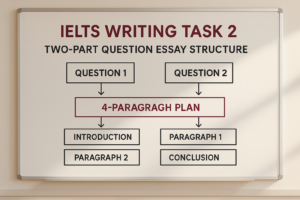
A reliable Band 7 structure has four paragraphs: introduction, body paragraph one, body paragraph two, and conclusion. For tourism essays, body paragraph one can explain benefits such as employment, business income, and cultural exchange. Body paragraph two can discuss problems such as overcrowding, higher prices, and damage to natural or historical sites.
If the question asks for your opinion, make your position clear in the introduction. For example, you might argue that tourism is beneficial when it is managed carefully, but harmful when governments and businesses focus only on short-term income. This gives you room to discuss both sides while still maintaining a clear answer.
If you want to test this structure under exam timing, use unlimited IELTS mock tests and practise several tourism, transport, and environment essays in one week. Timed practice shows whether your plan stays clear when the topic changes.
Sample Question For A Tourism Essay
Here is a realistic IELTS Writing Task 2 question:
International tourism has become a major source of income for many countries. However, some people believe it can also damage local culture and the environment. Do the advantages of international tourism outweigh the disadvantages?
This is an advantages outweigh disadvantages question. You need to discuss both benefits and problems, then give a clear judgement. A safe Band 7 position is that tourism can bring strong economic benefits, but only outweighs the disadvantages when it is managed with environmental and cultural protection in mind.
Band 7 Sample Answer: Tourism
International tourism is now an important part of many national economies. It creates jobs, supports local businesses, and allows people from different cultures to meet. However, it can also put pressure on local communities, historical places, and natural environments. In my view, the advantages of tourism can outweigh the disadvantages, but only when governments manage visitor numbers and protect the places that attract tourists in the first place.
The main advantage of international tourism is economic. When tourists visit a country, they spend money on hotels, restaurants, transport, guides, attractions, and local products. This creates employment for people with different skill levels, from hotel managers to drivers and market sellers. Tourism can be especially valuable in regions where there are few other industries. For example, a coastal town may depend on visitors to support restaurants, small shops, and tour companies. If tourism is stable, it can improve income and encourage investment in better roads, airports, and public facilities.
Another benefit is cultural exchange. Visitors can learn about local food, history, language, art, and traditions, while local people can gain a wider understanding of other countries. In some cases, tourism also gives communities a reason to preserve old buildings, museums, festivals, and traditional crafts because these become valuable to both residents and visitors. This can strengthen local pride if the community remains in control of how its culture is presented.
Despite these benefits, tourism can cause serious problems when it grows too quickly. Popular cities and natural sites may become overcrowded, making daily life more difficult for residents. House prices and rents can rise if accommodation is converted into short-term tourist rentals. The environment can also suffer when beaches, reefs, mountains, or national parks receive more visitors than they can handle. In addition, local culture may become commercialised if traditions are changed mainly to entertain tourists rather than to serve the community.
For this reason, I believe tourism should be encouraged, but not without limits. Governments can protect local areas by charging entrance fees for fragile sites, limiting visitor numbers in crowded places, supporting local businesses, and investing tourism income into conservation. They can also require hotels and tour companies to follow environmental standards. If these policies are in place, tourism can provide income without destroying the culture and environment that make a destination attractive.
In conclusion, international tourism brings important economic and cultural benefits, but it can also damage communities and natural places if it is unmanaged. Overall, I think the advantages outweigh the disadvantages when tourism is planned responsibly and when local people benefit from it directly.
Why This Sample Answer Reaches Band 7
This sample answer reaches a Band 7 style because it answers the exact question and develops both sides. The introduction gives a clear position. The first body paragraph explains economic benefits with specific industries and a realistic example. The second body paragraph adds cultural exchange. The third paragraph explains disadvantages, and the final body paragraph gives practical conditions for the writer’s opinion.
The answer also uses controlled topic vocabulary. Phrases such as visitor numbers, local communities, cultural exchange, historical places, short-term rentals, conservation, environmental standards, and tourism income are useful because they fit the topic naturally. Band 7 writing is usually precise rather than dramatic.
Useful Vocabulary For Tourism Essays
Tourism essays need vocabulary for money, culture, environment, and government control. Do not memorise rare words. Learn flexible phrases that can be used accurately in several question types.
- tourism income: money earned from visitors through accommodation, food, transport, and attractions.
- local community: the residents who live in the area affected by tourism.
- cultural exchange: learning between people from different countries or backgrounds.
- overcrowding: a situation where too many people visit or use the same place.
- environmental damage: harm to land, water, wildlife, or natural attractions.
- sustainable tourism: tourism that supports the economy while protecting local culture and the environment.
Use these phrases inside full sentences. For example, you could write, “Sustainable tourism allows a country to earn income while protecting the natural sites that attract visitors.” That sentence is clear and directly relevant.
Common Mistakes In Tourism Essays
The first mistake is writing only about personal travel. IELTS Task 2 is not asking whether you enjoy holidays. It is asking you to discuss wider effects on countries, cities, communities, businesses, and natural places. Personal experience can help you think of examples, but the essay should stay general.
The second mistake is giving an unbalanced answer. If the question asks whether advantages outweigh disadvantages, you should not ignore one side. Even if your opinion is strongly positive, mention the main risk and explain why your view is still stronger. If your ideas often become too one-sided, compare your writing with the IELTS Writing Task 2 band score guide and check whether your task response is complete.
The third mistake is using vague examples. A sentence such as “tourism helps the economy” is true but undeveloped. Explain which businesses benefit, who gets work, and what public improvements may follow. Specific development is more important than listing many points.
Planning A Tourism Band 7 Answer In Five Minutes
Use the first five minutes to decide the question type, your position, and two main ideas. For the sample question above, your plan could be: tourism creates jobs and business income; tourism can damage culture and the environment; my opinion is that the benefits are stronger if tourism is managed responsibly.
This plan is enough. Do not write six different ideas before you start. Too many points can make your essay rushed and shallow. A Band 7 answer usually develops a small number of relevant ideas with clear examples and explanations.
- Minute one: identify the question type.
- Minute two: choose your overall opinion.
- Minute three: choose the strongest benefit.
- Minute four: choose the strongest drawback.
- Minute five: decide your example and conclusion line.
How To Adapt This Answer To Other Tourism Questions
You can adapt the same ideas to several question types. For an agree or disagree question about limiting tourism, discuss overcrowding and environmental protection, then decide whether limits are necessary. For an advantages and disadvantages question, discuss employment and cultural exchange as benefits, then overcrowding and environmental damage as drawbacks. For a government spending question, discuss whether tourism income should be reinvested in transport, conservation, and local services.
Be careful with memorisation. You can reuse ideas, but you must change the answer to fit the wording. If the question focuses on local culture, spend more time on traditions, language, festivals, and community control. If it focuses on the environment, write about beaches, wildlife, waste, transport emissions, and visitor limits. For more topic-based models, read the IELTS Writing Task 2 sample answers page and compare how each essay develops its argument.
Final Tips Before You Write Your Own Answer
Before writing your own tourism essay, decide whether the question is mainly about money, culture, environment, local residents, or government policy. That decision will help you choose examples quickly. Then write a clear introduction and make sure each body paragraph supports your position.
Do not chase difficult vocabulary. A clear sentence with accurate grammar is better than a complicated sentence that loses meaning. If your test date is close and you need a structured preparation plan, see our IELTS preparation plans and choose support that matches your target band and deadline.
Ready to find out your IELTS band score?
Take the IELTS Express Pre-Test for just $4.99 and get your personalised band prediction with a 14-day improvement plan.
FAQ: IELTS Writing Task 2 Tourism Band 7 Answer
Is tourism a common IELTS Writing Task 2 topic?
Yes. Tourism can appear under economy, culture, environment, transport, globalisation, government policy, or local communities. Prepare flexible ideas rather than one memorised essay.
What opinion is safest for a tourism essay?
A balanced opinion is often safest. You can argue that tourism is beneficial because it creates income and jobs, but it must be managed to protect local culture and natural places.
Can I use examples from my own country?
Yes, but keep the example general and relevant. You can mention a tourist city, beach area, heritage site, or national park without giving too much personal detail.
Do I need advanced vocabulary for Band 7?
No. You need accurate vocabulary used naturally. Terms such as sustainable tourism, overcrowding, local community, tourism income, conservation, and cultural exchange are useful if they fit the sentence.
How many examples should I include?
One clear example in each main body paragraph is usually enough. Examples should support explanation, not replace it.