If you are looking for an IELTS Writing Task 2 Urbanisation band 7 answer, you probably want more than a model essay that sounds polished on the page. What usually helps more is a realistic answer you could actually adapt under exam pressure, plus a clear explanation of why that answer feels solid enough for Band 7. In this guide, you will see a full urbanisation sample essay, a paragraph-by-paragraph breakdown, useful vocabulary, and practical advice for writing a controlled response on test day.
Before you depend too heavily on sample essays, take the IELTS Express Pre-Test to get a clearer idea of your current band score. A strong sample can teach structure, but it cannot show whether your own writing is already meeting the Band 7 standard for task response, cohesion, vocabulary, and grammar control.
Urbanisation is a common IELTS Writing Task 2 topic because it connects to housing, transport, employment, public services, and quality of life. The theme feels familiar, but many essays go off track because candidates write broadly about cities without answering the exact question. A stronger Band 7 response stays disciplined. It identifies the real issue in the prompt, chooses a clear line of argument, and develops each point with enough detail to sound complete rather than rushed.
What examiners want in a Band 7 urbanisation essay
A Band 7 essay does not need perfect grammar or highly original social theory. It needs control. The examiner wants to see that you understood the prompt, took a clear position, and developed that position in a way that stays relevant from beginning to end. On an urbanisation topic, this matters because the issue can become too wide very quickly. A weak response may mention overcrowding, pollution, traffic, jobs, housing costs, and crime all in one paragraph without building a real argument.
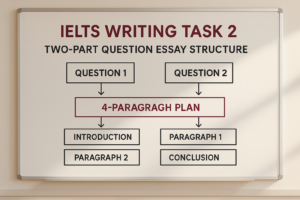
A better Band 7 approach is to give every paragraph one job. The introduction paraphrases the issue and states the writer’s view. One body paragraph explains the first main side of the discussion. The next body paragraph handles the second side or the main counterpoint. The conclusion closes the argument cleanly without introducing a new idea at the last second.
- The opinion is clear and consistent.
- Each paragraph develops one main idea properly.
- Examples support the argument instead of distracting from it.
- Linking words feel natural rather than memorised.
If your essays often feel organised at sentence level but weak at argument level, our IELTS Writing Task 2 Band Score Strategy is a useful companion because it shows how examiners separate a structured response from a vague one.
The kind of urbanisation question you may see
Urbanisation questions in IELTS Writing Task 2 usually ask you to weigh benefits against drawbacks or compare city growth with quality-of-life concerns. One prompt may focus on whether urbanisation improves living standards. Another may ask whether the problems created by growing cities outweigh the advantages. The examiner is not testing whether you can write like an urban planner. The examiner is testing whether you can identify the key issue, compare ideas logically, and support a clear judgement in formal English.
Here is a realistic practice question:
In many countries, more people are moving from rural areas to cities.
Do the advantages of this trend outweigh the disadvantages?
This question is narrower than many candidates think. You do not need to explain every problem large cities have ever faced. You need to evaluate the trend of movement to cities and decide whether its benefits are stronger overall. That means your essay should keep returning to the comparison instead of turning into a general complaint about modern life.
IELTS Writing Task 2 Urbanisation band 7 answer sample
Here is a realistic Band 7 style sample answer:
In many parts of the world, an increasing number of people are leaving rural areas and moving to cities. This trend can bring clear benefits, especially in terms of employment, education, and access to services. However, it also creates serious problems such as overcrowding and pressure on infrastructure. In my opinion, although urbanisation has some major disadvantages, the advantages generally outweigh them because cities offer better long-term opportunities for most people.
One significant benefit of urbanisation is that people who move to cities usually gain access to a wider range of jobs and better educational opportunities. In rural areas, employment options may be limited to agriculture or a small number of local industries, whereas cities often provide work in business, technology, healthcare, and other sectors. Urban residents also tend to benefit from better schools, universities, and training centres, which can improve their future career prospects. As a result, moving to a city can lead to greater financial stability and social mobility.
On the other hand, rapid urban growth can create major social and environmental challenges. Large cities often struggle with traffic congestion, rising housing costs, pollution, and pressure on public transport and healthcare systems. In some cases, people move to cities expecting a better life but instead face crowded living conditions and high daily expenses. These issues can reduce quality of life, particularly when urban development is poorly managed.
Overall, I believe the advantages of urbanisation are stronger because the opportunities available in cities can improve people’s lives in lasting ways. While the disadvantages are real and should not be ignored, they can be reduced through better planning and investment in infrastructure.
This sample does not try to sound dramatic. It tries to stay balanced and easy to control. The writer recognises both sides of the issue, but the judgement remains clear and consistent. That is one of the main reasons the essay feels closer to Band 7 than to a lower band.
If you want more topic-specific models to compare against this one, the IELTS Writing Task 2 Urbanisation essay sample gives you another angle on the same theme.
Why this sample is around Band 7
The first reason is task response. The answer addresses both the benefits and the drawbacks, then makes a clear judgement about which side is stronger overall. That sounds obvious, but many candidates lose marks by describing city life in general without directly answering the question about whether the advantages outweigh the disadvantages.
The second reason is coherence. The introduction sets up the topic and the writer’s position. The first body paragraph explains the advantages. The second body paragraph explains the disadvantages. The conclusion returns to the overall judgement and adds a realistic final point about planning. That structure is easy for an examiner to follow, which matters more than sounding especially sophisticated.
The third reason is language control. The essay uses topic-relevant vocabulary such as employment options, social mobility, traffic congestion, public transport, and urban development, but it does not force difficult phrases into every sentence. Band 7 writing usually sounds clear first and impressive second.
- Task Response: both sides are covered and the judgement stays clear.
- Coherence and Cohesion: ideas move in a logical, steady order.
- Lexical Resource: vocabulary matches the topic without feeling memorised.
- Grammar Range and Accuracy: sentence structures vary enough to show control, even if the writing is not perfect.
If you want to test whether your own essays stay this stable under pressure, use unlimited IELTS mock tests instead of judging yourself by one carefully edited practice response.
Paragraph-by-paragraph breakdown of the answer
The introduction works because it does three things efficiently. It paraphrases the trend, signals that there are advantages and disadvantages, and states the writer’s opinion. A weaker introduction often wastes time on background comments about how the world is changing quickly, which adds words without adding value.
The first body paragraph focuses on opportunity. That is important because it gives the essay a strong positive case rather than a vague statement that cities are modern. The paragraph explains why people move, what they gain, and how those gains may improve their future. This progression makes the argument feel developed rather than listed.
The second body paragraph handles the disadvantages without sounding exaggerated. Instead of saying urbanisation is disastrous, it names specific problems such as congestion, expensive housing, pollution, and pressure on services. That makes the paragraph more believable. A Band 7 response often sounds stronger because it stays measured.
The conclusion is short, which is usually the right choice in IELTS. It confirms the final judgement and avoids introducing a surprise idea about rural policy, migration law, or government budgets. Under exam conditions, a concise conclusion is normally safer than an ambitious one.
- Keep the introduction to two or three sentences.
- Give each body paragraph one clear purpose.
- Develop each main point with explanation before adding examples.
- Keep the conclusion brief and aligned with the opinion already given.
Useful vocabulary for an urbanisation topic
Vocabulary helps when it gives you precision. It hurts when you use advanced words that do not fit naturally. In an urbanisation essay, the goal is not to sound like an academic journal. The goal is to explain social change clearly and accurately in a short essay.
Useful vocabulary for this topic includes phrases such as urban growth, rural areas, job opportunities, public services, housing shortages, transport infrastructure, cost of living, quality of life, and economic mobility. These expressions are flexible because they can support either side of the argument.
You should also be careful with extreme wording. If you write that city life is always better or that urbanisation destroys society, the argument becomes too absolute. Stronger Band 7 writing usually leaves room for complexity. It can say that cities create opportunity while also creating pressure, which feels more realistic and persuasive.
- Use topic words you can explain confidently.
- Prefer precise phrases over rare vocabulary.
- Avoid extreme claims unless you can support them properly.
- Repeat key terms consistently instead of chasing clever synonyms.
If your vocabulary is improving but your ideas still feel thin, the problem is often essay development rather than word choice. In that case, reviewing our IELTS preparation plans may help you decide whether you need structured feedback rather than more random practice.
Common mistakes candidates make on this topic
The most common mistake is writing too broadly. Urbanisation covers work, education, housing, transport, lifestyle, health, and the environment, so candidates often try to mention everything. That creates a busy paragraph with very little development. A stronger answer chooses a small number of key ideas and explains them properly.
The second mistake is hiding the opinion. In an advantages-versus-disadvantages essay, you still need to show which side you find stronger overall. If you present both sides equally but never make a judgement, task response becomes weaker even if the grammar looks accurate.
The third mistake is using examples that sound memorised. Some candidates insert unrelated examples about technology, climate policy, or crime because they remember them from another essay topic. If the example does not support the urbanisation argument naturally, it usually weakens the response rather than improving it.
- Do not turn the essay into a list of city problems.
- Do not avoid the final judgement just to sound balanced.
- Do not use memorised examples that do not fit the question.
- Do not let one body paragraph become much longer than the other.
How to write your own Band 7 version in the exam
You do not need to memorise the sample essay above sentence by sentence. What you need is a repeatable framework. Spend the first few minutes identifying the exact question type, deciding whether the advantages or disadvantages are stronger, and planning one main idea for each body paragraph. That small planning step protects the whole essay.
A practical structure is to write a two-sentence introduction, then one body paragraph explaining the stronger side and one body paragraph explaining the weaker side or the main counterpoint. After that, finish with a short conclusion that restates your judgement. This keeps the essay organised even when the topic feels broad.
It also helps to think like an examiner. Ask yourself whether each sentence is doing useful work. Is it explaining why people move to cities, showing a consequence of that movement, or comparing the two sides? Or is it just filling space? Band 7 essays usually feel efficient because most sentences have a clear job.
- Plan before you write.
- Choose a clear overall judgement.
- Use simple structure before chasing advanced vocabulary.
- Leave two minutes to check grammar, articles, and sentence endings.
Ready to find out your IELTS band score?
Take the IELTS Express Pre-Test for just $4.99 and get your personalised band prediction with a 14-day improvement plan.
FAQ: IELTS Writing Task 2 Urbanisation band 7 answer
Can I memorise this IELTS Writing Task 2 Urbanisation band 7 answer for the real test?
Memorising the whole essay is a weak strategy. The actual question may change, and memorised language often sounds unnatural when you try to force it into a different prompt. It is much better to learn the structure, the way the opinion is stated, and the pattern used to develop each paragraph.
How long should an urbanisation essay be in IELTS Writing Task 2?
You need at least 250 words, but a strong Band 7 answer is often around 270 to 320 words in the exam. That is usually enough space to compare both sides, explain your view clearly, and support your argument without losing control.
Is urbanisation a difficult IELTS Writing Task 2 topic?
It can be difficult because it is broad. The danger is not the vocabulary alone. The danger is answering too generally. Once you narrow the issue to a specific comparison between benefits and drawbacks, the topic becomes much easier to handle.
What should I practise after reading a Band 7 sample answer?
Practise planning two or three urbanisation questions in five minutes each, then write one full essay under timed conditions. After that, review where your argument became repetitive, unclear, or too broad. That kind of practice improves your real exam performance much faster than passive reading.
A practical final takeaway
A strong urbanisation essay is usually built on discipline more than brilliance. If you understand the question, choose a clear judgement, and develop each paragraph with enough explanation, you are already doing the things that many weaker scripts fail to do. The sample in this guide works because it stays controlled from start to finish.
Your next step should be practical. Try writing a fresh urbanisation essay under time pressure, then compare your structure to the sample above. Pay special attention to whether your opinion is clear, whether your body paragraphs have distinct jobs, and whether your conclusion simply closes the argument instead of opening a new one.