An IELTS practice test is one of the most effective ways to prepare for the exam. Many candidates feel confident in their English ability but still underperform on test day because they haven’t practised under realistic conditions or with the specific question types used in IELTS.
If your goal is migration, university admission, or professional registration, your IELTS score is more than just proof of English proficiency. It reflects your ability to perform under timed pressure, follow specific task instructions, and demonstrate language skills across four different test components. A structured approach to practice testing helps you identify weaknesses, build confidence, and improve performance in a measurable way.
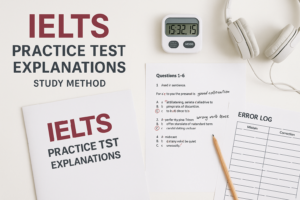
Definition: An IELTS practice test is a full or partial simulation of the official IELTS exam, designed to replicate the format, question types, timing, and difficulty of the real test. It helps you assess your current level, build familiarity with the exam structure, and focus your study efforts on areas that need the most improvement.
Why an IELTS practice test is essential for exam preparation
Practice tests are not optional extras. They are a core part of effective IELTS preparation because they expose gaps that passive study cannot reveal.
An IELTS practice test helps you in several ways. It shows your current band level across all four skills, builds familiarity with question formats and task types, trains you to manage time effectively under pressure, reduces anxiety by making the test environment feel familiar, and highlights specific weaknesses so you can focus your study where it matters most.
Without regular practice testing, you may feel prepared but still struggle with timing, misunderstand instructions, or fail to meet task requirements on exam day.
IELTS practice test vs mock test: what is the difference?
The terms are often used interchangeably, but there is a subtle difference in how they are typically used in IELTS preparation.
Practice test
A practice test usually refers to individual sections or shorter exercises designed to build skills incrementally. You might practise just the Listening section, or complete a single Reading passage with questions. Practice tests are ideal for targeted skill-building and early-stage preparation when you are still learning the format.
Mock test
A mock test typically refers to a full, timed simulation of all four IELTS components in one sitting. It replicates exam day conditions as closely as possible and is best used in the later stages of preparation to assess readiness and build stamina.
Both are valuable, but they serve different purposes. Practice tests help you learn and improve. Mock tests help you perform and measure.
How to use an IELTS practice test effectively (step by step)
Simply doing practice tests without a clear strategy is not enough. The way you use them determines how much you improve.
Step 1: Choose the correct test version (Academic or General Training)
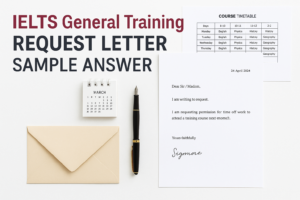
IELTS has two versions. Make sure you are practising the right one.
- IELTS Academic: for university study and professional registration in fields such as medicine, nursing, or engineering
- IELTS General Training: often required for migration and workplace contexts
Listening and Speaking are the same for both versions, but Reading and Writing differ significantly. Practising the wrong version wastes time and creates bad habits.
Step 2: Take the test under realistic conditions
To get meaningful results, you need to replicate exam conditions as closely as possible.
For Listening:
- Play the audio only once (no pausing or rewinding)
- Follow the exact timing for each section
- Transfer answers within the allocated time
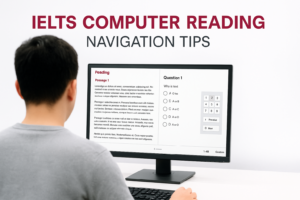
For Reading:
- Strict 60-minute time limit
- No dictionary or external help
- Answer all questions even if you are unsure
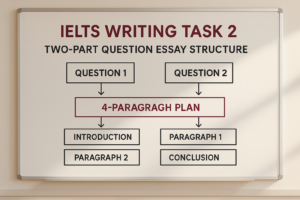
For Writing:
- Task 1: 20 minutes
- Task 2: 40 minutes
- Write by hand if possible (to replicate exam conditions)
For Speaking:
- If possible, record yourself or practise with a partner
- Follow the three-part structure (introduction, long turn, discussion)
Step 3: Mark your answers honestly
Use official IELTS answer keys where available. For Listening and Reading, marking is objective and straightforward. For Writing and Speaking, use official band descriptors or seek feedback from a qualified teacher or online platform.
Do not ignore mistakes or assume you were “close enough.” Accurate self-assessment is essential for improvement.
Step 4: Analyse your mistakes
This is where the real learning happens. After marking your test, identify patterns in your errors.
Ask yourself:
- Which question types caused the most mistakes?
- Did you run out of time on any section?
- Did you misunderstand instructions?
- Were your errors due to vocabulary, grammar, or task mismanagement?
For Writing and Speaking, review the four assessment criteria:
- Task achievement (or task response for Writing Task 2)
- Coherence and cohesion
- Lexical resource
- Grammatical range and accuracy
Step 5: Build a targeted study plan based on results
Your practice test results should directly inform your study priorities. If you struggle with Listening Section 3, practise academic discussions. If you lose marks in Writing Task 2 for coherence, focus on paragraph structure and linking devices.
Create a simple weekly plan:
- Target your weakest question types
- Practise one timed section per day
- Review mistakes before moving on
- Retest the same question type after focused practice
Step 6: Retest at the right frequency
How often should you take a full practice test? It depends on your stage of preparation.
- Early stage (first 2–4 weeks): one practice test every two weeks
- Mid stage (4–8 weeks out): one practice test per week
- Final stage (1–2 weeks before exam): one full mock test per week, plus targeted section practice
Do not over-test. Taking too many practice tests without reviewing mistakes leads to burnout and wasted time.
Common mistakes people make with IELTS practice tests
Even motivated candidates often undermine their progress by using practice tests incorrectly. Avoid these common pitfalls.
Taking tests without reviewing mistakes. Simply doing more tests does not improve your score. The improvement comes from analysing errors and adjusting your approach.
Using unrealistic conditions. Pausing Listening audio, extending time limits, or looking up answers during the test gives you false confidence and does not prepare you for exam day.
Ignoring Writing and Speaking feedback. Listening and Reading have clear right or wrong answers. Writing and Speaking require structured feedback. Without it, you may reinforce bad habits.
Focusing only on overall band score. Many visa and university applications require minimum scores in each skill. If you need Band 7 overall with no skill below 6.5, you must track individual section performance, not just the average.
Where to find quality IELTS practice tests
Not all practice tests are created equal. The best resources replicate the official IELTS format, timing, and difficulty as closely as possible.
Official IELTS practice materials (from IDP, British Council, or Cambridge) are the gold standard. They are written by the same people who create the real exam.
Reputable online platforms that provide instant scoring, detailed feedback, and realistic question types are also valuable. Look for platforms that offer:
- Timed practice with realistic difficulty
- Clear explanations for answers
- Feedback on Writing and Speaking (not just automated scoring)
- Progress tracking over time
Avoid free practice tests from unknown sources. They often contain errors, unrealistic question types, or poor-quality audio that do not reflect the real exam.
FAQ
How accurate is an IELTS practice test band score?
Practice test scores for Listening and Reading are usually accurate because marking is objective. Writing and Speaking scores are estimates unless assessed by a qualified examiner or feedback service. Use practice test results as a guide, not a guarantee.
How many IELTS practice tests should I do before the exam?
Most candidates benefit from 6 to 10 full practice tests during their preparation, plus additional section-specific practice. The key is reviewing mistakes after each test and targeting weak areas before moving on.
Should I take an IELTS practice test before I start studying?
Yes. A baseline practice test helps you understand where you are now, avoid wasting time on areas you already know, and set realistic goals based on your current level.
Can I improve my IELTS score with practice tests alone?
Practice tests are essential, but they are not enough on their own. You also need to build vocabulary, improve grammar accuracy, develop task-specific strategies, and seek feedback on productive skills (Writing and Speaking).
Are free IELTS practice tests reliable?
Some are, but many are not. Free tests from official IELTS providers (IDP, British Council) are reliable. Free tests from unknown websites often contain errors or unrealistic content. Always verify the source.
Conclusion
An IELTS practice test is one of the most powerful tools in your exam preparation. It helps you measure progress, identify weaknesses, build confidence, and improve performance under timed pressure. But the real value comes from how you use it.
Take tests under realistic conditions, analyse your mistakes carefully, and adjust your study plan based on results. Combine practice tests with targeted skill-building, feedback on Writing and Speaking, and regular review of weak areas.
If you want a fast, structured starting point, take the IELTS Express Pre Test to get an estimated band score and identify your weakest areas before you commit to a full study plan. You can also practise full mock exams and work through targeted exercises to build the skills you need most.
Start your preparation early, stay consistent, and use practice testing as a strategic tool for improvement—not just a box to tick.