If you are searching for an IELTS Writing Task 2 Transport band 7 answer, you probably want more than a polished essay that looks impressive only after heavy editing. What usually helps more is a realistic sample you could adapt under exam conditions, plus a clear explanation of why it feels strong enough for Band 7. In this guide, you will see a full sample answer, a paragraph breakdown, useful vocabulary, and practical advice you can apply in your own writing. Before you rely too much on model essays, take the IELTS Express Pre-Test to see whether your current writing is already close to the score you need.
Transport is a common IELTS topic because it allows the examiner to test how well you discuss public policy, daily life, cities, and environmental choices in a balanced way. Many candidates understand the topic generally, but their essays still lose marks because the argument becomes too broad. They move from traffic jams to pollution, then to government budgets, then to private cars, all inside one paragraph. A stronger Band 7 response stays controlled. It answers the exact question, develops one main idea at a time, and avoids turning the essay into a loose discussion about modern life.
What examiners want in a Band 7 transport essay
A Band 7 essay does not need perfect grammar or unusually original ideas. It needs control. The examiner wants to see that you understood the task, took a clear position, and developed that position with relevant support. On a transport topic, this matters because the issue can easily become emotional. Some candidates strongly criticise cars and congestion, while others praise public transport without admitting its limits. Both approaches can weaken the score if the essay stops being analytical.
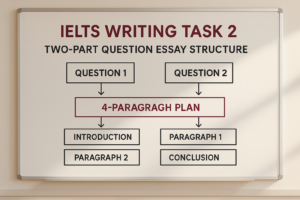
A more reliable Band 7 approach is to give each paragraph one job. The introduction paraphrases the issue and states the position. One body paragraph explains the first reason. The next body paragraph explains the second reason or the strongest counterpoint. The conclusion closes the argument without adding a new idea. That structure sounds simple, but it protects the essay from drifting away from the question.
- The opinion is clear from the beginning.
- Each paragraph develops one main idea properly.
- Examples support the argument instead of distracting from it.
- Linking words sound natural instead of memorised.
If your essays are tidy at sentence level but still feel weak overall, the IELTS Writing Task 2 Band Score Strategy can help you see what separates a merely organised answer from a genuinely stronger one.
A common transport question type
IELTS Writing Task 2 questions about transport often ask whether governments should invest more in public transport, whether private cars should be restricted, or whether transport problems can be solved by building more roads. The examiner is not testing whether you are an engineer or an urban planner. The real test is whether you can compare ideas logically and support a clear judgement in formal English.
Here is a realistic practice question for this topic:
In many cities, traffic congestion is becoming worse. Some people think the best way to solve this problem is to invest in public transport, while others believe building more roads is a better solution.
Discuss both views and give your own opinion.
This type of question is narrower than it first appears. You do not need to discuss every transport problem in the world. You need to compare two approaches, decide which one is more effective, and support that judgement clearly. A Band 7 answer keeps returning to that judgement instead of listing every complaint about city life.
IELTS Writing Task 2 Transport band 7 answer sample
Here is a realistic Band 7 style sample answer:
Traffic congestion has become a serious problem in many urban areas, leading to longer travel times, higher pollution levels, and daily frustration for commuters. While some people argue that constructing more roads is the most effective way to deal with this issue, I believe that greater investment in public transport is a better long-term solution because it can move more people efficiently and reduce dependence on private cars.
Those who support road construction often argue that wider roads and new highways can improve traffic flow. In the short term, this may be true, especially in areas where the existing road network is clearly inadequate. Additional roads can reduce pressure on busy routes and make it easier for goods and emergency services to move around the city. For this reason, building more roads may appear to be a practical response to congestion.
However, expanding road infrastructure does not usually solve the problem for long. When roads become wider or faster, more people choose to drive, and the congestion often returns. By contrast, reliable public transport systems such as trains, buses, and metro services can carry large numbers of people using less space. If these systems are affordable, frequent, and well connected, many commuters will leave their cars at home. This can reduce traffic, lower emissions, and improve the overall quality of life in cities.
In my opinion, although road building can provide limited short-term relief, governments should prioritise public transport because it addresses the root of the problem rather than only its surface effects. Better transport planning should therefore focus on creating efficient alternatives to private car use instead of simply adding more road capacity.
In conclusion, both approaches can play a role in dealing with congestion, but investment in public transport is the more effective solution overall. It offers longer-lasting benefits for mobility, the environment, and the liveability of cities.
This sample feels close to Band 7 because it stays measured. It does not try to sound academic for the sake of it. Instead, it gives a clear opinion, develops that opinion in a logical order, and uses vocabulary that fits the topic without becoming forced.
If you want to test whether your own writing can stay this stable under time pressure, use unlimited IELTS mock tests rather than judging your level from one carefully edited practice essay.
Why this sample is around Band 7
The first reason is task response. The essay answers the exact question by discussing both views and then giving a clear opinion. Many weaker essays discuss roads and public transport in general terms but never make the overall judgement strong enough. Others choose one side in the introduction and then forget to support it properly in the body paragraphs.
The second reason is coherence. The introduction frames the issue and states the position. The first body paragraph explains why some people support new roads. The next body paragraph shows why public transport is a stronger long-term solution. The conclusion returns to that judgement and closes the argument cleanly. An examiner can follow that sequence without effort.
The third reason is language control. The sample uses topic-relevant expressions such as traffic congestion, road infrastructure, private car use, public transport systems, and quality of life. These phrases are useful, but they do not sound memorised. Band 7 writing usually sounds clear first and impressive second.
- Task Response: both sides are covered and the opinion stays consistent.
- Coherence and Cohesion: ideas move in a steady and logical order.
- Lexical Resource: vocabulary suits the topic without overreaching.
- Grammar Range and Accuracy: sentence patterns vary enough to show control, even if the writing is not flawless.
Paragraph-by-paragraph breakdown
The introduction works because it does three things quickly. It paraphrases the issue, acknowledges the debate, and states the writer’s position. A weaker introduction often wastes time on empty comments about how transport is important in modern society. That may be true, but it does not directly improve the answer.
The first body paragraph focuses on the case for building more roads. This is useful because it shows the writer understands the alternative position instead of pretending it has no logic. A Band 7 discussion usually sounds more mature when it presents the other side fairly before disagreeing with it.
The second body paragraph is where the essay becomes stronger. It explains why public transport deals with congestion more effectively over time. Instead of only saying buses and trains are better, the paragraph shows why they use space more efficiently and why people may choose them if the service is reliable. That kind of explanation pushes the answer beyond simple opinion.
The conclusion is short, which is usually the right choice in the exam. It restates the judgement and ends the essay cleanly. In a timed test, the conclusion is not the place to add new ideas about cycling lanes, fuel prices, or climate policy. That usually weakens the structure rather than improving it.
- Keep the introduction to two or three sentences.
- Give each body paragraph one clear purpose.
- Explain why each point matters before adding examples.
- Use the conclusion to close the argument, not restart it.
If your body paragraphs often feel thin or repetitive, reviewing our IELTS preparation plans may help you decide whether you need structured feedback rather than more unguided practice.
Useful vocabulary for transport essays
Vocabulary helps when it makes your meaning more precise. It hurts when you try to sound advanced with words you cannot control. In a transport essay, you do not need specialist engineering language. You need accurate phrases that let you discuss congestion, infrastructure, commuting, and planning clearly.
Useful vocabulary for this topic includes expressions such as traffic congestion, public transport network, road capacity, urban mobility, commuter demand, air pollution, sustainable transport, travel time, and infrastructure investment. These are practical phrases because they can support both positive and negative arguments.
You also need to be careful with extreme language. If you write that building roads never works, your claim becomes too absolute. If you write that trains and buses can solve every urban problem, that sounds unrealistic too. Stronger Band 7 writing usually leaves room for nuance. It can recognise that roads may help in the short term while still judging public transport as the better overall strategy.
- Use topic vocabulary you can explain confidently.
- Prefer precise phrases over rare words.
- Avoid extreme claims unless you can support them properly.
- Repeat key terms consistently instead of chasing clever synonyms.
Common mistakes on this topic
The most common mistake is writing too broadly. Transport connects to pollution, city design, commuting, government budgets, and public health, so many candidates try to mention everything. That creates busy paragraphs with very little development. A stronger answer chooses a small number of key ideas and explains them properly.
The second mistake is giving a vague judgement. Some writers say both public transport and new roads are important, then stop there. That sounds balanced, but in a discuss-both-views essay you still need to make it clear which side you find more convincing.
The third mistake is relying on memorised examples that do not fit. Candidates sometimes insert examples about electric cars, bicycles, or free buses simply because they remember them from another lesson. If the example does not support the exact point being made, it usually weakens the essay rather than strengthening it.
- Do not turn the essay into a list of unrelated city problems.
- Do not hide your judgement just to sound balanced.
- Do not use memorised examples that do not fit the argument.
- Do not let one body paragraph become much longer than the others.
How to write your own Band 7 version in the exam
You do not need to memorise the sample essay word for word. What you need is a repeatable framework. Spend the first few minutes identifying the exact question, deciding on your overall position, and planning one main idea for each body paragraph. That short planning stage protects the whole essay.
A practical structure is to write a compact introduction, then one body paragraph for each main side of the discussion, followed by a short conclusion that restates your view. This keeps the essay organised even when the transport topic feels familiar enough to tempt you into writing too fast. Familiarity can be dangerous if it makes you assume the question is simpler than it really is.
It also helps to think like an examiner. Ask whether each sentence is doing useful work. Is it explaining why one transport solution is more effective? Is it linking your point to the exact question? Or is it simply filling space? Band 7 essays usually feel efficient because most sentences have a clear purpose.
- Plan before you write.
- Choose a clear overall judgement.
- Use simple structure before chasing advanced vocabulary.
- Leave two minutes to check grammar, articles, and sentence endings.
Ready to find out your IELTS band score?
Take the IELTS Express Pre-Test for just $4.99 and get your personalised band prediction with a 14-day improvement plan.
FAQ: IELTS Writing Task 2 Transport band 7 answer
Can I memorise this IELTS Writing Task 2 Transport band 7 answer for the real test?
Memorising the whole essay is a weak strategy. Examiners can usually recognise writing that sounds rehearsed, and memorised sentences often break when the real question changes slightly. It is much better to learn the structure, the way the opinion is stated, and the pattern used to develop each body paragraph.
How long should a transport essay be in IELTS Writing Task 2?
You need at least 250 words, but a strong Band 7 style response is often around 270 to 320 words in the exam itself. In a teaching article like this one, the discussion is much longer because it includes analysis, vocabulary, mistakes, and FAQs. In the real test, the goal is not to write the longest essay possible. It is to write a focused one.
Should I support public transport or new roads in a transport essay?
Either position can work if you support it clearly. IELTS does not reward one opinion over another. It rewards clear task response, logical development, and accurate language. What matters is whether your reasons connect directly to the question.
What vocabulary is useful for transport topics?
Phrases such as traffic congestion, public transport network, road capacity, and sustainable transport are useful because they are clear and flexible. They help you discuss causes, solutions, and long-term effects without sounding unnatural.
How can I practise this topic more effectively?
Start by planning a few transport essay answers without writing them in full, then write one timed version and review whether your opinion stayed clear from introduction to conclusion. If you want more structured practice, compare your result with model answers and then test yourself under exam conditions again.
A practical final takeaway
A strong transport essay is usually built on discipline more than brilliance. If you understand the question, choose a side, and develop each paragraph properly, you are already doing the things that many weaker scripts fail to do. The sample in this guide works because it stays controlled from beginning to end.
Your next step should be practical. Test whether you can reproduce this structure on a fresh question under time pressure, then review where your argument becomes thin or repetitive. That is the kind of practice that actually lifts a Writing score.