If you are asking How Long Does Ielts Test Take, the short answer is that the core test usually takes about 2 hours and 45 minutes, with the Speaking test adding another 11 to 14 minutes. That sounds simple, but the real test-day timeline can feel longer because check-in, identity checks, instructions, and the scheduling of the Speaking interview can stretch the day. If you know exactly how the timing works, it becomes much easier to plan your energy, food, travel, and pacing.
Before you book another test or build a rushed study plan, take the IELTS Express Pre-Test. It gives you a clearer sense of your current level and helps you decide whether you need more exam practice, more language work, or simply a better test-day strategy.
This guide breaks down the real IELTS timing for each section, the difference between paper-based and computer-based formats, when the Speaking test happens, and what candidates often misunderstand. The goal is not only to tell you the official numbers. The goal is to help you use those numbers well, so the day feels controlled rather than rushed.
How long does the IELTS test take overall?
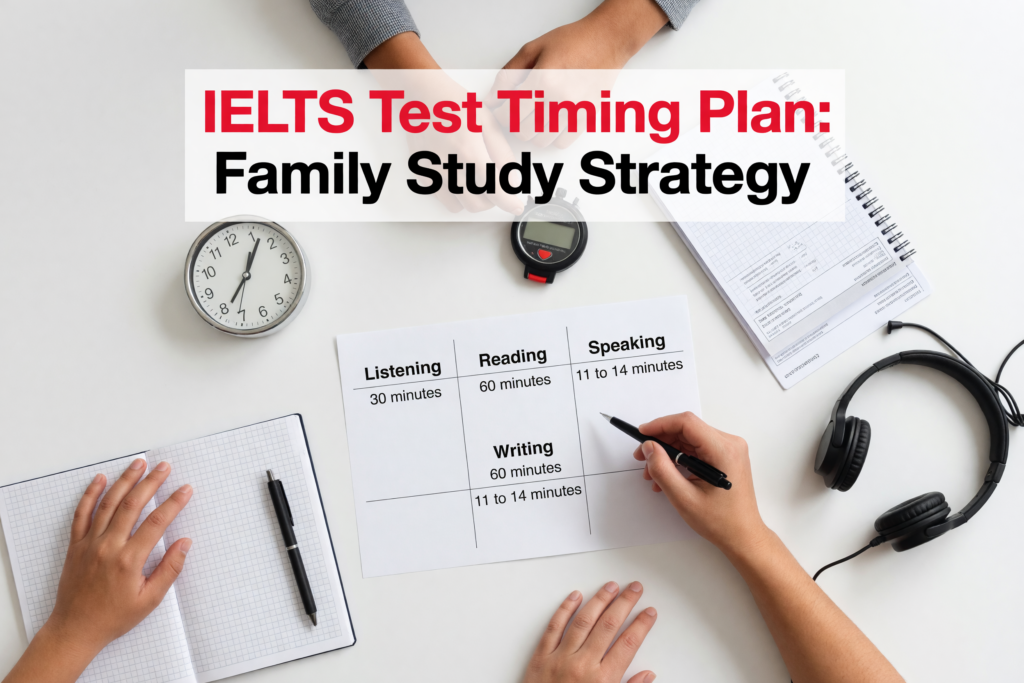
For most candidates, the headline figure is straightforward: Listening, Reading, and Writing together take 2 hours and 45 minutes. The Speaking test is a separate interview that lasts 11 to 14 minutes. In some centres, Speaking happens on the same day. In others, it may happen on a nearby date, depending on local scheduling.
This matters because many people hear that IELTS takes under three hours and assume the entire appointment will be finished in that time. In reality, you should allow more room around the test itself. You may need to arrive early for check-in, store personal items, wait for instructions, and move between rooms. If your Speaking test is on the same day, your total time commitment can be longer than the official exam duration suggests.
- Listening, Reading, and Writing: 2 hours 45 minutes in total
- Speaking: 11 to 14 minutes
- Check-in and admin time: varies by centre
- Total appointment time: usually longer than the exam itself
IELTS section timing breakdown
The clearest way to understand the test is to break it into its four parts. Each section has a fixed job, and the timing shapes how you should prepare.
Listening usually takes around 30 minutes. In paper-based IELTS, candidates traditionally also have time at the end to transfer answers to the answer sheet. In computer-based IELTS, the process is different because you type directly, so the experience feels tighter and more immediate.
Reading takes 60 minutes. There is no extra transfer time built in, which is why pacing matters so much. Many candidates know enough English to answer correctly, but still lose marks because they spend too long on one passage and rush the last section.
Writing also takes 60 minutes. That hour covers both tasks, and it often feels shorter than candidates expect. Time pressure is one of the main reasons otherwise capable candidates underperform in Writing.
Speaking takes 11 to 14 minutes. The interview is short, but it is intense because there is very little time to recover if your answers start weakly. If you want a broader view of how the exam is structured, our IELTS Test Format Guide explains how timing and scoring work together across all four skills.
Paper-based vs computer-based timing differences
One reason this keyword creates confusion is that candidates mix up the official section lengths with the format-specific experience. The broad timing is similar in both formats, but the way the test feels can be different.
In paper-based IELTS, the day can feel slower at first because of the physical materials, answer sheets, and room procedures. Some candidates like that because it feels familiar. Others find it harder because they must manage handwriting, answer transfer, and paper navigation under time pressure.
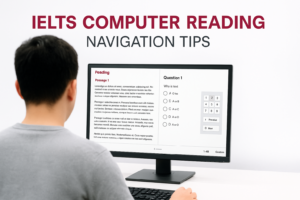
In computer-based IELTS, the test can feel faster and cleaner. You type your Writing answers, click directly on Listening and Reading questions, and move through the interface without paper transfer steps. That is useful for candidates who type comfortably and want a more efficient experience. However, it also means timing mistakes become obvious very quickly. If you fall behind, the screen does not hide it.
The smart question is not which format is theoretically better. The smart question is which format lets you control your pace more reliably. If you are unsure, practice under realistic conditions with unlimited IELTS mock tests instead of guessing from one untimed session at home.
- Paper-based can feel more familiar if you prefer writing by hand
- Computer-based can feel more efficient if you type well
- Both formats still reward strong pacing and concentration
- Your best format is the one that protects your timing under pressure
When does the Speaking test happen?
The Speaking test causes more confusion than the other sections because it is not always attached to the same block of time. The interview itself lasts only 11 to 14 minutes, but the scheduling can vary by centre. Some candidates sit Speaking on the same day as the other sections. Others have it scheduled within a short window around the main test date.
This matters for practical reasons. If your Speaking interview is on the same day, you need to protect your energy and voice. If it is on a separate day, you need to plan travel and mental preparation twice. Neither option is automatically worse, but each one changes how the overall time commitment feels.
It also changes how you should prepare in the final week. Candidates often spend too much energy on Reading and Writing timing, then treat Speaking as if it will take care of itself because it is short. That is a mistake. A short interview does not mean a small impact. In many pathways, one weak Speaking result can still damage an otherwise decent overall score.
What does test day usually feel like from arrival to finish?
The official exam time is one thing. The lived experience is another. On a real test day, you are not simply walking in, starting immediately, and leaving exactly 2 hours and 45 minutes later. You may need to arrive early, prove your identity, wait with other candidates, store belongings, listen to instructions, and settle into the room before the test begins.
That extra structure is normal, but it catches people off guard when they prepare too narrowly. A candidate may know every section length perfectly and still have a bad day because they did not sleep enough, brought the wrong expectations, or assumed there would be a break. There usually is not a comfortable mid-test pause where you can fully reset. You need to treat the session as one sustained effort.
If you are travelling across a city, especially in Australia where test centres may not be close to home, add a buffer. A rushed arrival burns concentration before the first question even appears. The candidates who usually look calm are not magically less nervous. They simply removed avoidable friction before the test started.
Common timing mistakes candidates make
The first mistake is focusing on total duration and ignoring section pacing. Saying “IELTS takes about three hours” is technically useful, but it does not help if you still spend too long on Reading Passage 1 or Writing Task 1. Strong candidates think in smaller timing blocks, not just the overall headline.
The second mistake is treating Listening as easy because the section is only about 30 minutes. Listening is fast, one-directional, and unforgiving. If your attention breaks for a few seconds, the clock does not slow down for you.
The third mistake is underestimating Writing. Many candidates know it lasts 60 minutes, but they still begin too slowly, over-plan, or rewrite sentences excessively. The result is predictable: Task 2 gets squeezed, Task 1 gets rushed, or both lose clarity.
The fourth mistake is preparing in a way that never matches real timing. Untimed practice has a place, especially when you are learning strategy. But if all your practice is comfortable and open-ended, the test will feel harsher than expected. That is why a full IELTS practice test becomes useful once your basic methods are in place.
- Knowing the total exam length is not enough
- Reading and Writing usually create the biggest pacing problems
- Listening punishes small concentration lapses
- Timed practice matters because the real test does not wait for you
How to prepare for a test that lasts nearly three hours
Preparation for IELTS should not only be about language. It should also be about stamina, rhythm, and decision-making under pressure. A candidate who can solve questions calmly at home may still fade halfway through the real exam if they are not used to sustained concentration.
The first step is to practise in realistic blocks. You do not need a full mock every day, and in fact that can become wasteful. But you do need regular timed sessions that force you to manage attention across long stretches. This is especially important for candidates balancing work, family, and study, because mental fatigue often shows up more than language weakness.
The second step is to learn where your timing leaks happen. Maybe you reread Reading passages too often. Maybe you take too long planning Writing Task 2. Maybe you freeze for a few seconds in Speaking Part 2 because the one-minute note time was used badly. Once you know the leak, the fix becomes much more practical.
The third step is to rehearse the day itself. Eat sensibly, sleep properly, arrive early, and use the same rough timing habits in practice that you want on test day. None of this sounds glamorous, but it protects scores. IELTS is not only a language test. It is a performance under constraints.
Who should allow extra time around the exam?
Some candidates can treat IELTS as a neat appointment. Others should plan more generously. If you are travelling a long distance, sitting the test in an unfamiliar city, managing childcare, or fitting the exam around shift work, the practical timing matters almost as much as the section timing.
The same is true if you are naturally anxious under exam conditions. In that case, the issue is not weakness. The issue is load. When too many small pressures stack up around the exam, simple tasks start draining energy that should be reserved for the test itself.
If you know this applies to you, act early. Confirm the test centre location, understand the format you booked, and leave more room than you think you need. That is not over-cautious. It is sensible exam management.
Ready to find out your IELTS band score?
Take the IELTS Express Pre-Test for just $4.99 and get your personalised band prediction with a 14-day improvement plan.
FAQ: How Long Does Ielts Test Take
Is IELTS really only 2 hours and 45 minutes?
The Listening, Reading, and Writing sections together usually take 2 hours and 45 minutes. The Speaking test is separate and lasts 11 to 14 minutes, so your full appointment can feel longer once check-in and waiting time are included.
Does computer-based IELTS take less time than paper-based IELTS?
The official section lengths are broadly similar, but the experience can feel faster on a computer because you type directly and move through the interface without paper handling. The best format depends on which one helps you control your pace more reliably.
Can the Speaking test be on a different day?
Yes. Many centres schedule Speaking on the same day, but some place it within a nearby window around the main test date. You should always check your booking details carefully so there are no surprises.
Which IELTS section feels longest for most candidates?
Writing often feels longest because the 60 minutes disappear quickly, especially if planning and editing take too much time. Reading also feels long for candidates who lose pace early and then rush the final passage.