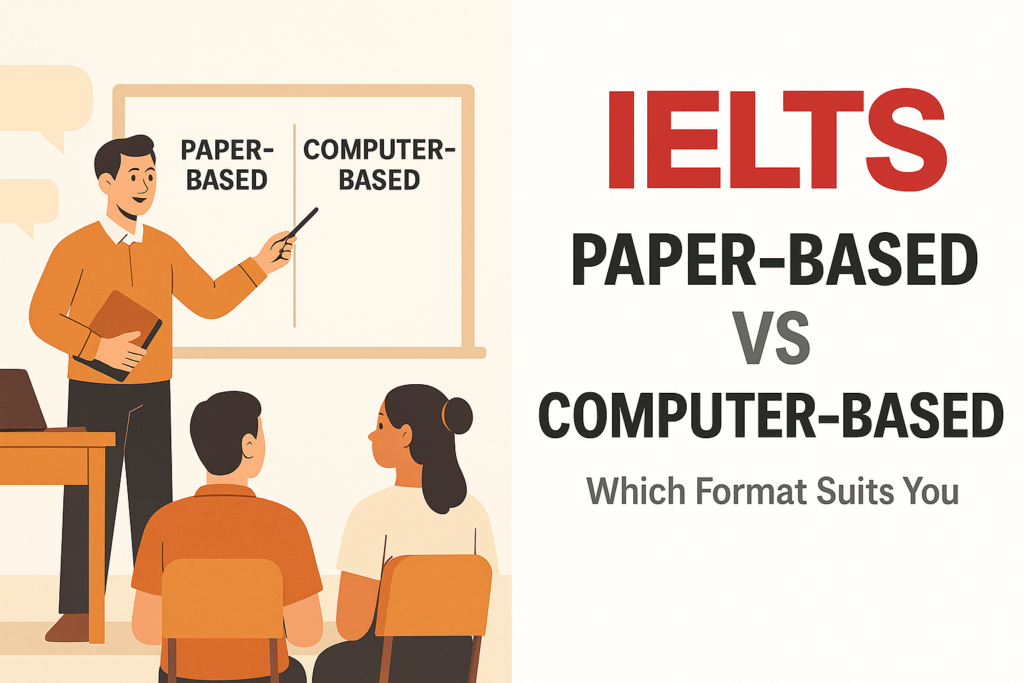
If you’re preparing for the IELTS test in Australia, one of the first decisions you’ll face is whether to sit the paper based or computer based version. Both formats test the same skills and are scored identically, but the experience on test day is quite different. Your choice can affect everything from how quickly you get results to how comfortable you feel during the exam.
This guide breaks down the real differences between IELTS paper based and computer based so you can pick the format that works best for you. Not sure where your English level sits right now? The IELTS Express Pre-Test gives you a band estimate in under 30 minutes for just $4.99.
What Is the Difference Between Paper Based and Computer Based IELTS?
The content of both tests is identical. You’ll answer the same types of questions across Listening, Reading, Writing, and Speaking. The band score descriptors and marking criteria don’t change between formats. What does change is how you interact with the test material.
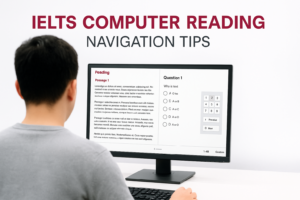
In the paper based test, you write all your answers by hand on printed answer sheets. You read from a physical booklet and use a pencil to fill in answers or write essays. In the computer based test, you type your answers on a desktop computer, read passages on screen, and listen through headphones.
The Speaking test is conducted face-to-face with an examiner in both formats. That part stays exactly the same regardless of which version you choose.
For a full breakdown of every section, check the IELTS Test Format Guide.
Test Day Experience: What to Expect
Paper based: You’ll sit in a room with other candidates. An invigilator plays the Listening audio through speakers for the whole room. You write on printed question papers and transfer answers to an answer sheet. For Writing, you use a pencil and paper. If you need to change an answer, you erase it. The test runs in a fixed order: Listening, Reading, then Writing, with no breaks between sections (though there is a short break before Speaking, which is usually scheduled on a different day).
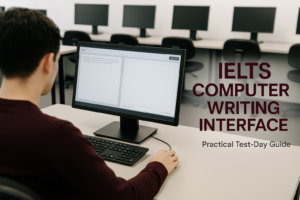
Computer based: You sit at an individual workstation with headphones. The Listening audio plays directly through your headset, so external noise is less of a factor. You click, type, and scroll through questions on screen. Writing tasks are typed, and you can easily cut, paste, and rearrange text. A built-in word counter shows your essay length in real time. The Reading, Writing, and Listening sections are completed on the same day, and Speaking may be on the same day or within a few days before or after.
Results and Scheduling
This is where the two formats differ most noticeably.
Paper based results take 13 calendar days to arrive. Test dates are typically offered a few times per month, and seats fill up weeks in advance. If you need to book a specific date, plan ahead.
Computer based results are available in 3 to 5 days. Test sessions run almost daily at most centres in Australian cities. This makes it much easier to find a date that suits your schedule, and if you need to retake the test quickly, the turnaround is significantly faster.
If you’re working toward a visa deadline or university intake, the faster results from computer based IELTS can give you more flexibility. You can also book closer to the date, which helps if your preparation timeline shifts.
Which Format Suits Different Learning Styles?
Your personal preferences matter more than most people expect. Here’s a practical breakdown:
Choose paper based if you:
- Prefer writing by hand and feel more comfortable with a pencil
- Find it easier to annotate, underline, and mark up printed reading passages
- Get distracted or fatigued looking at screens for long periods
- Are used to handwritten exams from your previous education
- Want a quieter room with no keyboard sounds from other candidates
Choose computer based if you:
- Type faster than you write by hand
- Want to easily edit, cut, and paste your Writing responses
- Prefer a word counter to track essay length while writing
- Need results quickly (3–5 days vs 13 days)
- Want more flexibility in choosing your test date
- Are comfortable reading long passages on a screen
Neither format is inherently easier. The difficulty level and question types are the same. The difference is purely in how you prefer to work.
Want to practise under timed conditions before your test? Unlimited IELTS Mock Tests let you simulate both formats with full-length practice exams.
Scoring and Marking: Is There Any Difference?
No. Both versions are marked by trained IELTS examiners using the same band descriptors. Your Writing and Speaking responses are assessed by human markers in both formats. The Listening and Reading sections are marked against the same answer keys.
There’s a common concern that typed essays might be judged differently from handwritten ones. They’re not. Examiners assess content, coherence, vocabulary, and grammar regardless of how the text was produced. Handwriting legibility isn’t scored, but if an examiner can’t read your writing in the paper test, they can only mark what they can decipher.
One practical point: typed responses tend to be longer because most people type faster than they write. This doesn’t automatically mean a higher score, but it can give you more room to develop your ideas fully within the time limit.
Availability and Cost in Australia
Both formats are widely available across Australia. IDP and the British Council operate test centres in all major cities including Sydney, Melbourne, Brisbane, Perth, Adelaide, and Canberra.
Computer based sessions run almost every day in capital cities, with multiple time slots. Regional areas may have fewer options, so check your nearest centre.
Paper based sessions are offered several times a month but fill up faster due to limited seating. Booking 4 to 6 weeks in advance is common for popular dates.
The test fee is the same for both formats in Australia, currently around AUD $410 for IELTS Academic or General Training. Some centres may charge a small additional fee, so confirm the exact cost when booking.
If you’re still building your study plan, the IELTS Preparation Complete Guide covers everything from registration to test day strategies.
Common Concerns About Computer Based IELTS
“I’m not a fast typist.” You don’t need to be. The time limits are the same, and even moderate typing speed is usually enough. If you can type around 30–40 words per minute, you’ll be fine for the Writing section. Practise a few timed essays on a computer beforehand to get comfortable.
“What if the computer crashes?” Test centres use dedicated systems with backup protocols. Technical failures during IELTS are rare, and if something does go wrong, your progress is saved and the centre will resolve it. This is not something worth worrying about.
“Can I make notes on the screen?” You’ll receive a notepad or erasable booklet for rough notes during the computer based test. You can’t highlight text on screen in the Reading section the way you might on paper, but you can scroll back and forth freely.
“Is the Listening section different on computer?” Slightly. You wear headphones and control your own volume. The audio quality is generally better and more consistent than room speakers. However, the transfer time at the end of the Listening section is shorter on computer (2 minutes instead of 10), because you type answers directly as you go rather than transferring them to a separate sheet.
Making Your Decision
Here’s a simple way to decide. Ask yourself three questions:
- How urgent are my results? If you need scores fast, computer based is the clear choice.
- Am I more comfortable typing or writing by hand? Go with whichever feels natural. Comfort reduces test anxiety.
- Do I need a specific test date? Computer based offers more dates and last-minute availability.
If you answered “fast results,” “typing,” and “flexible dates,” computer based is probably your best option. If you prefer the tactile feel of paper, aren’t in a rush, and like the traditional exam setting, paper based will serve you well.
Either way, the most important factor is your preparation, not the format. A well-prepared candidate will perform well on both versions.
Ready to find out your IELTS band score?
Take the IELTS Express Pre-Test for just $4.99 and get your personalised band prediction with a 14-day improvement plan.
Frequently Asked Questions
Is computer based IELTS easier than paper based?
No. The questions, difficulty level, and marking criteria are identical. The only difference is how you interact with the test material. Some people find typing easier; others prefer writing by hand. Neither version gives a scoring advantage.
Can I choose between paper based and computer based IELTS in Australia?
Yes. When you book your IELTS test through IDP or the British Council, you select your preferred format. Both are available in all major Australian cities. Computer based sessions are offered more frequently.
How long do computer based IELTS results take?
Computer based results are typically available within 3 to 5 days. Paper based results take 13 calendar days. Both are accessible online through your test provider’s portal.
Do universities and immigration accept both IELTS formats?
Yes. Both paper based and computer based IELTS are recognised equally by Australian universities, TAFE institutions, professional bodies, and the Department of Home Affairs for visa applications. There is no difference in how your score is treated.
Is the Speaking test different in computer based IELTS?
No. The Speaking test is always conducted face-to-face with a trained examiner, regardless of whether you sit the paper or computer based version. It follows the same three-part format and lasts 11 to 14 minutes.
What happens if I make a mistake during the computer based test?
You can easily correct mistakes by backspacing, cutting, or pasting text. In the Writing section, you can rearrange paragraphs and edit freely. In the Listening and Reading sections, you can change your selected answers at any time before the section ends. This is one of the practical advantages of the computer format.
Should I practise on a computer before sitting computer based IELTS?
Yes, definitely. Even if you’re comfortable with computers generally, practising under timed conditions helps you get familiar with the test interface. Try a few full-length IELTS practice tests on screen before your real test date to build confidence with the format.