Why IELTS Test Dates in Australia Matter More Than You Think
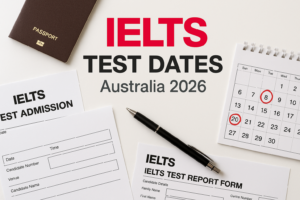
Choosing the right IELTS test date is not just a scheduling task — it is a strategic decision that can affect your visa application, university offer, or professional registration deadline. In Australia, IELTS tests run year-round at hundreds of centres across every state, but seats fill fast for popular dates, particularly in the weeks before university intake periods and visa application cutoffs.
Whether you are sitting the IELTS Academic or IELTS General Training, knowing how the booking system works — and picking the right date for your situation — can save you months of delay. Before you book, it is worth taking the IELTS Express Pre-Test to benchmark your current band score so you choose a test date that gives you enough preparation time, not too little and not too much.
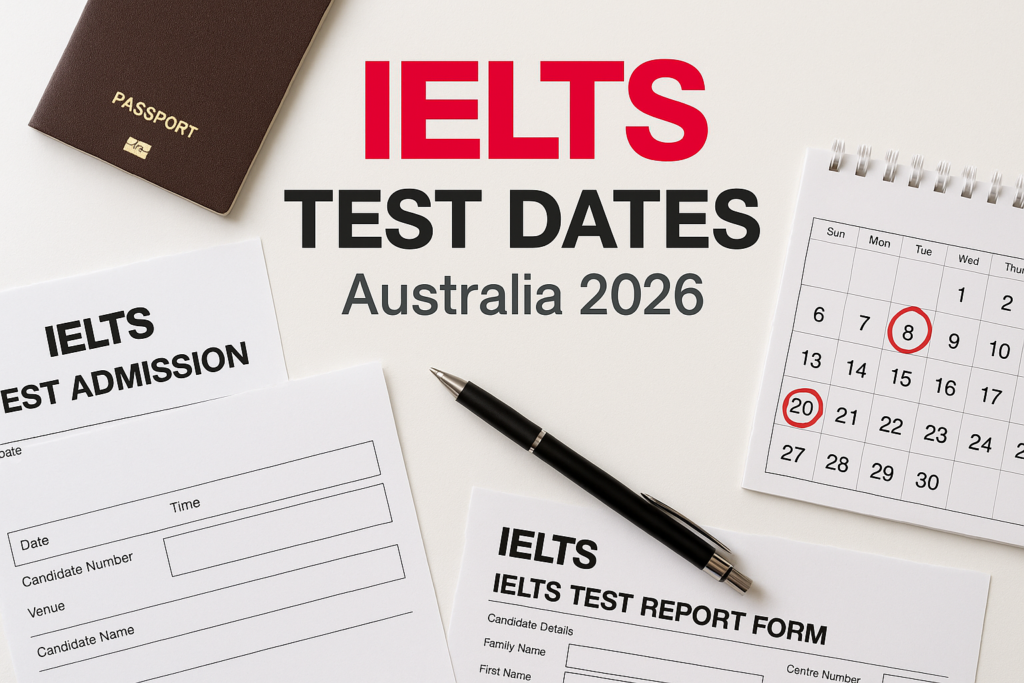
How IELTS Test Dates Work in Australia in 2026
In Australia, IELTS is administered by two official partners: IDP IELTS Australia and the British Council. Both organisations offer the same test with the same marking standards, and your score from either provider is accepted by all institutions and visa bodies worldwide.
Tests are available in two formats:
- Computer-delivered IELTS (CD IELTS): Available almost every day at participating centres. Results are typically returned within three to five days.
- Paper-based IELTS: Held on specific dates, usually once or twice a month per centre. Results take around thirteen days.
For most candidates in 2026, computer-delivered IELTS is the practical choice. The flexibility in scheduling means you can find a date that fits your timeline without waiting weeks for the next paper session. However, some candidates prefer paper-based for familiarity — both formats produce the same score and are equally accepted.
IELTS Test Centres Across Australia in 2026
Australia has a well-distributed network of IELTS test centres, making it accessible from all major population centres and many regional cities. Here is a snapshot of where tests are available:
- New South Wales: Sydney CBD, Parramatta, Newcastle, Wollongong
- Victoria: Melbourne CBD, Doncaster, Geelong, Ballarat
- Queensland: Brisbane CBD, Sunshine Coast, Gold Coast, Cairns, Townsville
- Western Australia: Perth CBD, Fremantle, Bunbury
- South Australia: Adelaide CBD, Mount Gambier
- Australian Capital Territory: Canberra
- Tasmania: Hobart, Launceston
- Northern Territory: Darwin
For computer-delivered tests, IDP and the British Council both list available dates on their respective booking portals. Availability varies by centre, so check both providers if your preferred centre is fully booked — the same test date may be available at a centre nearby.
How Far in Advance Should You Book Your IELTS Test?
This is one of the most common questions candidates ask, and the answer depends on your target deadline.
As a general rule:
- Minimum lead time: Book at least three to four weeks before your required result date. This accounts for processing time and gives you a small buffer if you need to reschedule.
- Recommended lead time: Six to eight weeks. This gives you preparation time and allows you to resit if needed while still meeting your deadline.
- Visa and migration deadlines: For Australian visa applications, aim for ten to twelve weeks of lead time. Department of Home Affairs processing can be affected by delays you cannot control — do not cut it close.
- University intake periods: February, July, and November intake deadlines drive heavy demand at test centres in January, May/June, and September/October. Book earlier during these peak windows.
Seats at popular inner-city centres (Sydney CBD, Melbourne CBD, Brisbane CBD) fill fastest. Regional centres often have more availability. If you are flexible on location, a short drive to a less-congested centre can mean the difference between securing your ideal date or waiting two to three weeks longer.
To make the most of your preparation window, pair your target test date with a structured study plan. The unlimited IELTS mock tests platform lets you practise full-length tests under timed conditions so your preparation is realistic and measurable.
Choosing the Right Test Date for Your Situation
Not all test dates are created equal. Here is how to pick strategically based on your circumstances:
If You Have a Firm Deadline
Work backwards from your deadline. Add thirteen days for paper-based results (or five days for computer-delivered), then add the time your institution or visa authority needs to receive and process your results. Book the latest date that still gives you a margin — and register for a contingency date two to three weeks earlier in case you want a practice run or a resit.
If You Are Aiming for a Specific Band Score
Do not book a test until you are consistently hitting your target band in IELTS practice tests. Sitting before you are ready wastes money and time. The IELTS Express Pre-Test is designed for this exact purpose — it identifies where you currently sit and flags which sections need the most work before you commit to a test date.
If You Are Unsure Which Test Type to Sit
Academic IELTS is required for university admission and most professional registration bodies (medical, nursing, engineering). General Training IELTS is used for skilled migration visas, permanent residency applications, and some trade qualifications. When in doubt, check the exact requirement with the institution or body you are applying to before booking.
What to Expect on Test Day in 2026
Arriving prepared for test day logistics reduces anxiety and helps you perform at your best. Here is what to expect:
- Identification: Bring the same ID used during registration (passport is standard). No match — no entry.
- Arrival time: Plan to arrive at least thirty minutes before your session. Late arrivals are not admitted.
- Computer test format: The Reading, Writing, and Listening components are completed on a computer. Speaking is face-to-face with a certified examiner, usually on the same day or within a day or two.
- What you cannot bring: Mobile phones, notes, food (unless medically required), or unauthorised electronic devices.
- Results delivery: Computer-delivered results are available online within three to five days. Paper-based results arrive thirteen days after the test date. Both can be sent to an unlimited number of receiving organisations at no extra charge on the day of registration.
IELTS Test Fees in Australia 2026
Test fees vary slightly between providers and states, but the approximate cost in 2026 is AUD $395–$430 per sitting. This includes sending your results to up to five organisations. Additional TRF (Test Report Form) copies are available for a fee.
Given the cost per sitting, preparation before booking matters. Candidates who go in underprepared often need a resit — effectively doubling their spend. Investing in structured preparation, including mock tests that simulate actual exam conditions, consistently reduces the number of sittings needed to hit your target band.
Ready to find out your IELTS band score?
Take the IELTS Express Pre-Test for just $4.99 and get your personalised band prediction with a 14-day improvement plan.
Frequently Asked Questions About IELTS Test Dates in Australia
How often are IELTS tests held in Australia?
Computer-delivered IELTS is available almost every day at participating centres across Australia. Paper-based tests run on specific dates, typically once or twice per month at each centre. The combined availability means most candidates can find a suitable date within two to four weeks of deciding to sit.
Can I reschedule my IELTS test after booking?
Yes, but conditions apply. IDP and the British Council both allow rescheduling up to five weeks before the test date without a fee. Changes within five weeks may incur a fee, and changes within seven days of the test are generally not permitted. Check your provider’s specific policy at the time of booking.
How do I know which IELTS test dates are available in my city?
Visit the IDP Australia website (ielts.idp.com/australia) or the British Council Australia website (britishcouncil.org.au/ielts) and use the date and centre search tools. For computer-delivered tests, availability updates frequently as seats are released and filled.
Do I need to sit Academic or General Training IELTS for an Australian migration visa?
For most skilled migration visas under Australia’s points-tested stream, IELTS General Training is required. IELTS Academic is typically required for university admission and certain professional registration bodies. Always verify the exact requirement directly with the Department of Home Affairs, your institution, or your professional registration authority before booking.
How long is an IELTS score valid in Australia?
IELTS results are valid for two years from the test date. After two years, most institutions and visa bodies will not accept the score, and you will need to resit. If your deadline is more than eighteen months away, consider whether it is worth sitting early or whether waiting closer to your deadline makes more strategic sense.