For anyone planning to live and work in an English-speaking country, the IELTS test is more than an exam – it’s the gateway to your migration journey. Governments, employers, and professional bodies use your IELTS results to measure English proficiency and assess your ability to integrate and communicate effectively. Understanding how the IELTS system works, what score you need, and how to reach it is essential for a successful visa or residency application.
Why IELTS Matters for Migration
The International English Language Testing System (IELTS) is accepted by immigration departments in countries including Australia, Canada, the United Kingdom, and New Zealand. For skilled migration, IELTS General Training is most commonly required, while IELTS Academic is preferred for study or professional registration in fields such as nursing or engineering.
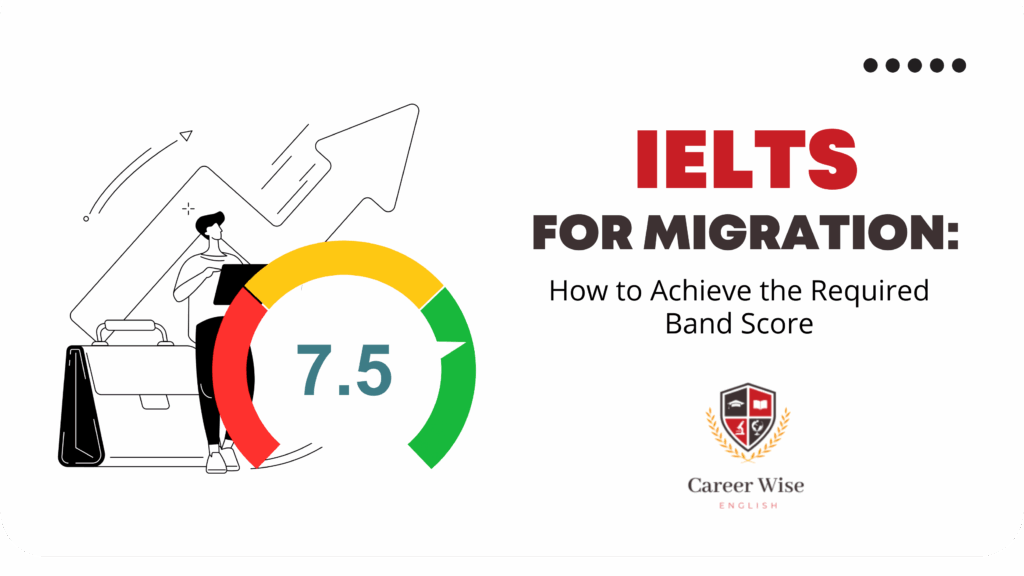
The IELTS score, known as a band score, ranges from 1 to 9. A higher band reflects greater language fluency and comprehension. Each country sets its own minimum requirements. For example, Australian permanent residency programmes generally expect a minimum of Band 6 in each skill, while higher-tier visas and occupations often demand Band 7 or above.
Understanding Band Score Requirements
Band score expectations vary depending on the visa type and profession. A Band 6 indicates a competent user, capable of basic communication in most situations. A Band 7 represents a good user who can handle complex language with occasional errors, while Band 8 and 9 demonstrate very good to expert command of English.
For skilled professionals such as nurses, engineers, and teachers, migration authorities and accreditation bodies often set higher benchmarks. Healthcare professionals, for instance, typically need at least Band 7 in each section, including Writing and Speaking. Checking the specific band score required for your visa subclass or occupational registration is the first step before starting your IELTS preparation.
How to Prepare Effectively for Migration IELTS
Success in IELTS requires more than general English ability. It demands familiarity with the test format, question types, and timing. A well-structured preparation plan should include full practice tests, examiner feedback, and targeted study in weaker areas.
Online IELTS platforms like Career Wise English make this process straightforward by providing IELTS practice tests with instant band score feedback. These mock exams simulate the real experience, helping you measure progress and focus on improvement. Whether you’re preparing for IELTS Academic or General Training, regular practice with realistic questions is the fastest way to build confidence.
Focus on Each Skill Area
Migration applicants must perform consistently across all four IELTS sections – Listening, Reading, Writing, and Speaking.
Listening: Learn to recognise key details and paraphrasing in everyday and workplace conversations. Regularly practise with audio recordings similar to those in the test.
Reading: Develop scanning and skimming skills to identify information quickly. General Training reading focuses more on workplace and social topics, so use real-world examples such as notices or company documents.
Writing: Focus on structure, clarity, and task completion. In General Training, Task 1 usually involves writing a formal or semi-formal letter, while Task 2 is an essay on a social issue. Academic candidates should practise describing data, charts, or research findings.
Speaking: Improve fluency and pronunciation by recording practice interviews. Many candidates find success by practising with a qualified examiner or teacher who can provide professional feedback.
Common Mistakes to Avoid
Many candidates underestimate the importance of test timing and fail to complete all questions. Skipping full-length mock tests is another major error. Practising under timed conditions is the best way to train your concentration and stamina.
Overusing memorised phrases can also limit your score. Examiners look for natural, accurate language rather than rehearsed responses. Focus on understanding question intent, using precise vocabulary, and expressing ideas clearly.
Finally, neglecting weaker skills can prevent you from achieving your desired overall band. A high score in Listening or Reading will not compensate for a poor Writing or Speaking score when applying for migration.
Building Confidence for Migration Success
IELTS preparation should not feel overwhelming. Breaking it down into achievable goals makes progress easier. Take one full mock test each week, review your instant band score, and identify areas to improve. Set realistic weekly targets for each skill and track your results over time.
Career Wise English helps you do this efficiently with structured IELTS Academic and General Training courses, section-specific exercises, and personalised examiner feedback. By using your practice results to guide your study, you’ll strengthen the areas that matter most for migration success.
Your IELTS band score plays a crucial role in your migration application, but achieving it is completely possible with the right approach. Consistent practice, familiarity with the test, and guided feedback can make the difference between an average score and the result you need to unlock a new life abroad.
With focus and strategy, you can achieve your migration goals and begin your journey towards living and working confidently in an English-speaking country.
If you are preparing for IELTS for migration, start with the IELTS Express Pre Test to find out your current estimated band score. You can also practise with full mock tests or read our guide on how to use IELTS practice tests effectivel