If you are searching for Ielts Academic Vs General Training Differences, you are probably trying to avoid a very expensive mistake. Booking the wrong IELTS test can waste money, delay your plans, and create stress you did not need. The good news is that the two versions share the same overall exam family, so the decision becomes much easier once you understand what actually changes. Before you book, take the IELTS Express Pre-Test to see whether your current level already matches the score profile you need.
Most confusion starts because people hear that IELTS is just one test with two names. That is only partly true. Listening and Speaking are broadly the same across both versions, but Reading and Writing change in purpose, tone, and task demands. Those differences matter because the right test depends on what you need the score for, not simply which paper looks easier on a good day.
What Ielts Academic Vs General Training Differences really mean
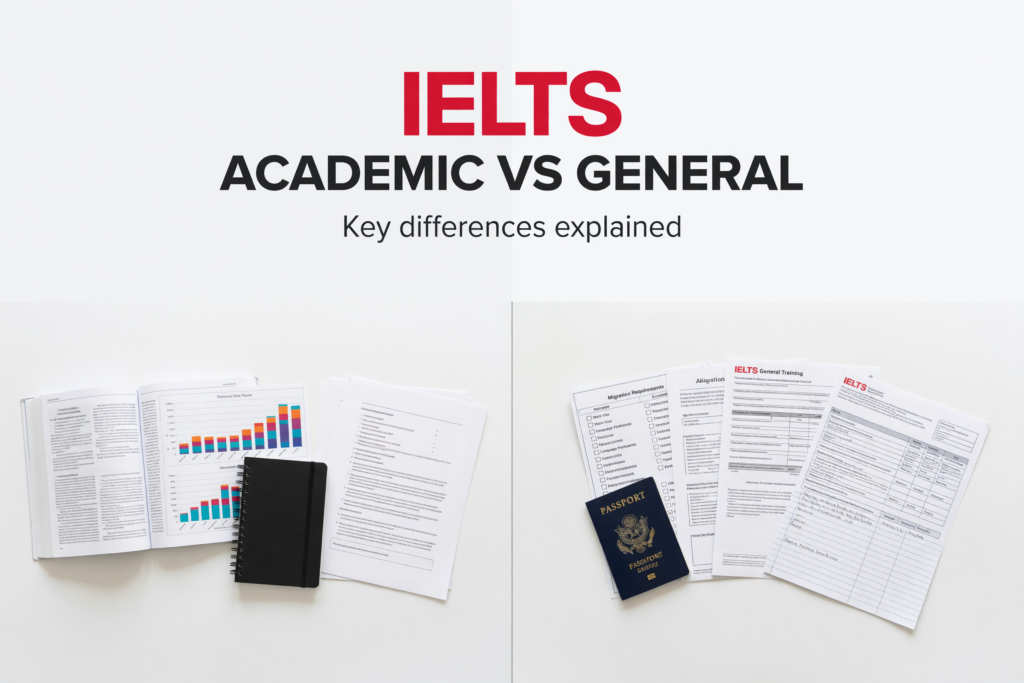
At the simplest level, IELTS Academic is designed for people who want to study in English at a higher level or prove academic-style language ability. IELTS General Training is designed for more practical everyday English contexts, especially migration, work, and some training pathways. That distinction shapes the content of the Reading and Writing sections.
Many candidates assume General Training is always the easier option. That can be misleading. General Training often uses more everyday topics, but the score you need, your personal strengths, and the purpose of your application matter far more than internet rumours. The better question is not which version sounds easier in theory. It is which version matches the requirement attached to your goal.
- Academic usually aligns with university and professional study pathways
- General Training usually aligns with migration, work, and practical everyday contexts
- Listening and Speaking are similar, but Reading and Writing are not the same
- The wrong booking can delay an application even if your score looks strong
Who should take IELTS Academic and who should take General Training
The first decision should come from your destination rather than your personal preference. If a university, registration body, visa pathway, or employer specifies one version, that ends the debate. You should always follow the official requirement for that pathway. If you are aiming for a university program, Academic is often required because it measures how well you handle more formal reading and writing tasks.
General Training is often the correct choice for candidates focused on migration or work-related requirements where practical communication matters more than academic-style argument. If your pathway is Australia migration focused, make sure you compare the accepted test version with the band score outcome you actually need.
In short, choose the version your goal accepts, then prepare for that exact version. Do not choose based only on comfort if the official requirement points elsewhere.
How the Reading sections differ
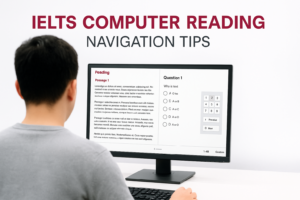
Reading is one of the biggest areas where candidates notice the split. IELTS Academic Reading usually uses longer texts taken from books, journals, magazines, or articles. The tone is more analytical, and the passages often feel denser. You may need to track an argument, understand a writer’s view, and interpret more formal vocabulary.
IELTS General Training Reading is built around more practical texts. These can include notices, workplace instructions, advertisements, policy information, short factual passages, and one longer text later in the paper. The language is often more direct, but that does not automatically make the section easy. Candidates still lose marks through timing, assumptions, and careless answer form.
- Academic Reading usually feels more text-heavy and concept-driven
- General Training Reading usually feels more practical and task-based
- Both versions still reward precision, not guesswork
- Your stronger format depends on whether you handle dense ideas or practical scanning better
If Reading is already your weak point, it is worth comparing your habits against the IELTS test format guide before you book.
How the Writing sections differ
Writing creates even more confusion because both versions still have Task 1 and Task 2, but the task style changes. In Academic Writing Task 1, you usually describe visual information such as a chart, graph, table, process, or map. That means you need to summarise key features clearly and compare data accurately. The language is formal and organised around trends, stages, or categories.
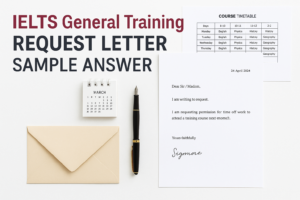
In General Training Writing Task 1, you write a letter. The situation may be formal, semi-formal, or informal, depending on the prompt. Instead of analysing data, you need to respond to a practical situation clearly and with the right tone. That sounds easier to many candidates, but it can still go badly if they misread the purpose, choose the wrong register, or forget to cover all bullet points.
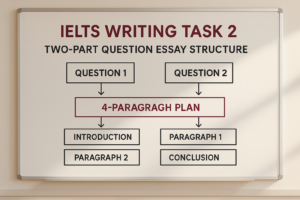
Task 2 in both versions is an essay, but the surrounding exam context affects how candidates experience it. Academic candidates often expect more formal language overall, while General Training candidates may feel more comfortable after the letter task. If you want to improve your wider preparation structure rather than guessing from one practice session, see our IELTS preparation plans and compare the support that matches your timeline.
Listening and Speaking: more similar than different
One helpful point is that Listening and Speaking do not create a major split between the two versions. Both Academic and General Training candidates face similar Listening demands, including note completion, multiple choice, and answer accuracy under time pressure. Speaking is also broadly the same interview-style test, so your fluency, clarity, pronunciation, and ability to develop answers matter in either pathway.
This matters because some candidates over-focus on the Academic versus General Training label and forget that two sections remain broadly shared. If Listening or Speaking is your weak area, choosing the right version will not magically solve that problem. You still need stable preparation, timed practice, and honest diagnosis of your performance.
- Changing version will not remove weak Listening habits
- Speaking still rewards natural, clear communication in both tests
- The version choice matters most in Reading and Writing
- Your preparation plan should cover all four skills, not only the different ones
Scoring differences and why band targets still matter more
Candidates often ask whether one version is scored more generously than the other. In practical terms, both versions still use the same band scale. What changes is the text type and task demand, especially in Reading and Writing. That means the better scoring path is not about chasing a mythical easy version. It is about taking the version your goal accepts and building a score profile that holds up across all four sections.
For example, a migration-focused candidate may believe General Training is safer, but the real issue may be that Writing or Reading is unstable. Likewise, an Academic candidate may fear data description tasks, yet still perform better there than in a letter format they have never practised properly. The score outcome comes from fit plus preparation, not label alone.
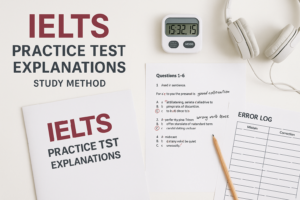
If you want a clearer sense of how your current level translates into a likely band outcome, compare your results across timed mock tests and compare whether your results stay repeatable across more than one attempt.
Which version feels easier for different candidate profiles
General Training often feels easier for candidates who are comfortable with practical texts, everyday situations, and direct-purpose writing. Academic often feels easier for candidates who already study in English, read formal materials regularly, and feel comfortable describing graphs or explaining trends. Neither version is universally easier. Each one rewards a different kind of familiarity.
A useful way to think about it is this: if your English is strongest in structured study contexts, Academic may feel more natural than people expect. If your English is strongest in practical, workplace, or migration-style communication, General Training may feel more manageable. But that personal comfort should still come second to the official requirement of your pathway.
- University-bound candidates often suit Academic preparation better
- Migration-focused candidates often suit General Training preparation better
- Comfort with charts is not the only Academic skill that matters
- Comfort with letters does not guarantee an easy General Training score
Common mistakes when choosing between Academic and General Training
The most common mistake is booking the version that seems easier without checking what your institution or visa pathway actually accepts. A close second is assuming that because Listening and Speaking are similar, the two tests are interchangeable. They are not. Reading and Writing can create a very different exam experience, and a wrong choice can make your score unusable for the purpose you had in mind.
Another mistake is using one untimed practice paper to make the whole decision. That rarely gives a fair picture. You need to compare the task feel under realistic timing and in the right emotional context. Candidates also lose time when they change versions late because they have been listening to general online advice instead of checking their own pathway carefully.
- Always confirm which version your pathway accepts
- Do not assume General Training is automatically easier
- Do not judge from one casual practice attempt
- Prepare for the exact Writing Task 1 format you will face
How to choose the right version with confidence
The safest sequence is simple. First, confirm the official requirement for your course, visa, employer, or registration body. Second, compare your current level against that target. Third, practise the exact version you need under timed conditions and identify where your marks are really being lost. That process removes most of the confusion.
If you are still uncertain, the best diagnostic question is not “Which version is easier?” but “Which version do I need, and what score pattern can I repeat under real pressure?” That shift matters because it turns the choice into a strategic decision instead of a guess.
Before the FAQ, use this practical checkpoint if you want a clearer picture of your likely IELTS level before you commit:
Ready to find out your IELTS band score?
Take the IELTS Express Pre-Test for just $4.99 and get your personalised band prediction with a 14-day improvement plan.
FAQ: Ielts Academic Vs General Training Differences
Is IELTS General Training easier than IELTS Academic?
Not always. General Training often uses more practical texts and letter writing, but the right choice depends on your goal, your strengths, and the score you need. It is not automatically easier for every candidate.
Which IELTS version do I need for university?
In many cases, you need IELTS Academic for university entry because it is designed to measure academic-style English. You should still check the exact requirement of the institution you are applying to.
Which IELTS version is usually used for migration?
Many migration pathways use IELTS General Training, especially when the focus is practical English for everyday life and work. However, you should confirm the current official requirement for your exact visa or registration pathway.
Are Listening and Speaking different in Academic and General Training?
They are broadly similar. The biggest differences usually appear in Reading and Writing, not in Listening and Speaking.
Can I switch versions after I start preparing?
Yes, but it is better not to switch casually. A late change can waste preparation time because Reading and Writing demands are different. Switch only when your pathway allows it and the new version is clearly the better fit.
Choose the version that fits your goal, then train for that exact test
The real lesson behind Ielts Academic Vs General Training Differences is simple: the right test is the one your pathway accepts and the one you have prepared for properly. Academic and General Training are related, but they are not interchangeable once your application requirement becomes specific.
If you check the requirement early, diagnose your current level honestly, and prepare for the exact Reading and Writing format you will face, you remove most of the risk. That is far more useful than chasing a supposed easier option. A clear test choice, stable practice, and a realistic score plan will protect your time and give you a much stronger chance of getting the result you actually need.