If you are looking for an IELTS Writing Task 2 Animal Rights essay sample, you probably want something more useful than a polished model that sounds clever but teaches you very little. Most candidates need a realistic answer they can learn from, not memorise blindly. Before you assume your writing is already near your target band, take the IELTS Express Pre-Test to get a clearer picture of your current level and the habits that are still holding your score down.
Animal rights is a common IELTS topic because it sits at the intersection of ethics, science, food production, and human responsibility. That also makes it easy to write a vague essay. Candidates often drift into emotional general statements or try to cover every possible angle in one response. A stronger Task 2 essay stays tight. It answers the exact question, develops two or three clear ideas, and uses examples that sound believable rather than dramatic.
What examiners want from an animal rights Task 2 essay
The topic may be about animals, but the scoring logic does not change. Examiners still assess task response, coherence and cohesion, lexical resource, and grammatical range and accuracy. In plain language, they want to see whether you answered the question fully, organised your ideas clearly, chose vocabulary with enough precision, and controlled your grammar well enough for the meaning to stay easy to follow.
This matters because many candidates think a topic with an ethical dimension needs highly emotional language. It does not. IELTS rewards clarity more than passion. If the prompt asks whether animals should have the same rights as humans, for example, you do not need to write like a campaign speech. You need a balanced argument, a clear position, and body paragraphs that actually prove the point you are making.
- Answer the exact question rather than the whole topic of animal welfare
- Make your opinion clear early if the task asks for it
- Keep each body paragraph focused on one main idea
- Choose examples that support the argument instead of trying to sound dramatic
Why animal rights questions can be harder than they first appear
Animal rights looks like a familiar topic, which is exactly why it can trip candidates up. Because most people already have feelings about it, they start writing before they have properly analysed the task. That usually leads to essays built on broad claims such as animals deserve protection, humans use animals too much, or science should be more careful. Those points are not wrong, but they are too loose on their own.
A stronger essay narrows the debate quickly. Is the question really about equal rights, animal testing, farming, entertainment, or environmental protection? Is it asking for an opinion, a discussion, or an advantages-and-disadvantages response? Once you define the job of the essay, the writing becomes much easier to control. If you want a broader framework for that control, the IELTS Writing Task 2 band score strategy guide is a useful place to sharpen your planning habits.
A sample animal rights question you can practise with
Here is a common IELTS-style question on this theme:
Some people believe that animals should have the same rights as humans and should not be used for food, clothing, or medical research. Others think humans can use animals as long as this is done responsibly. Discuss both views and give your own opinion.
This is a discuss both views essay with an opinion. That means you need to explain each side fairly and still make your own position clear. For this sample, the position will be that animals deserve strong protection from cruelty, but giving them exactly the same rights as humans is not realistic. Responsible human use can still be justified in limited situations, especially when there are clear welfare controls and genuine necessity.
IELTS Writing Task 2 Animal Rights essay sample
Sample essay:
The way humans treat animals has become a major ethical issue, and some people argue that animals should have the same rights as human beings. While I agree that animals must be protected from cruelty and unnecessary suffering, I do not believe they should be granted exactly the same rights as humans. In my view, people can use animals for certain purposes, provided this is done responsibly and only when there is a clear need.
On the one hand, those who support equal rights for animals argue that animals can feel pain, fear, and distress, so it is wrong to treat them purely as resources. From this perspective, using animals for food production, fashion, or laboratory testing puts human convenience above the welfare of living creatures. In some industries, animals are kept in poor conditions or exposed to painful procedures, and this has led many people to believe that the current system is morally unacceptable. Supporters of this view also argue that modern societies now have more alternatives, such as plant-based materials and non-animal research methods, so the traditional justification for using animals is becoming weaker.
On the other hand, others believe that human use of animals can still be acceptable when it is carefully controlled and genuinely necessary. Medical research is one example. Although it should never be carried out carelessly, some testing has contributed to treatments that save human lives. Similarly, many societies still depend on animals for food, especially where affordable alternatives are limited. In these cases, the more realistic goal is not to ban all use immediately, but to enforce strict welfare standards and reduce unnecessary harm. I agree more with this position because it recognises both human needs and moral responsibility.
In conclusion, animals should not be treated cruelly, and stronger protection is clearly needed in many areas. However, I do not think animals should have exactly the same rights as humans. A more practical and balanced approach is to allow limited human use of animals only when it is necessary, regulated, and designed to minimise suffering.
Why this sample is close to Band 7 level
This essay works because the opinion is clear from the introduction and stays consistent throughout the response. The first body paragraph explains why some people support equal rights for animals, while the second shows why a more limited and regulated approach may be more realistic. The argument does not wander. That matters because coherence is one of the first things examiners notice.
The support is also specific enough to sound credible. The essay mentions food production, fashion, laboratory testing, welfare standards, and medical research. Those examples are practical, which helps the argument feel grounded. Candidates often lose marks when they write in vague moral language without explaining how the issue works in real life. This sample avoids that problem.
- The introduction states a clear position instead of delaying the opinion
- Each body paragraph has a distinct job
- The examples are relevant and easy to understand
- The conclusion closes the argument cleanly without repeating every line
The language is also strong enough without trying too hard. That is a useful lesson. A good IELTS essay does not need to sound like a university journal article. It needs to sound controlled, organised, and accurate. If you want to see whether you can produce that level under timed conditions, access unlimited IELTS mock tests and compare how stable your writing stays across several practice attempts.
Useful ideas and vocabulary for this topic
You do not need to memorise the full sample answer. It is much smarter to learn the ideas and sentence patterns that make the argument easy to organise. Animal rights essays often involve balance, ethics, and limits, so it helps to build a small bank of language that supports those moves naturally.
- animals should be protected from cruelty and unnecessary suffering
- it is wrong to treat living creatures purely as resources
- human use may be justified only in limited circumstances
- strict welfare standards should be enforced
- the realistic goal is to reduce harm rather than make extreme claims
This kind of language is useful because it helps you sound precise without becoming overcomplicated. It also allows you to present a balanced argument, which is often safer than an extreme one in IELTS writing. If your vocabulary is strong but your planning is weak, the essay will still feel messy. Structure first, then language.
Common mistakes in animal rights essays
One common mistake is confusing animal rights with general environmental protection. These topics can overlap, but they are not always the same. If the question is about whether humans should use animals, the essay should stay focused on that relationship rather than drifting into climate change or pollution unless the prompt clearly invites it.
Another mistake is writing in absolute terms. Candidates say things like humans should never use animals, or animals and people are completely equal in every way, without explaining the practical consequences of those claims. That can make the essay sound simplistic. A balanced position often scores better because it shows judgment rather than slogan-style writing.
- answering the broad topic instead of the exact prompt
- using emotional language without real explanation
- making extreme claims and leaving them unsupported
- forgetting to compare both views clearly in a discuss essay
If those errors feel familiar, the fix is usually straightforward. Slow down at the planning stage, define the exact debate, and choose one or two examples you can actually explain well.
How to plan your own answer in under five minutes
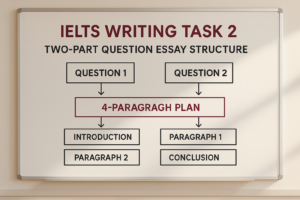
In the exam, a short planning stage can save you from a weak structure later. You do not need a detailed outline. You need a map. For an animal rights essay, that usually means deciding what each side believes, what your own position is, and which examples you can explain quickly without getting lost.
- underline the task words and the exact focus of the topic
- decide your opinion before you write the introduction
- give one body paragraph to each main side of the debate
- choose examples like food, medical research, or clothing only if they fit the prompt
- leave time at the end to check grammar, repetition, and clear linking
This planning habit is simple, but it works. A lot of weaker essays fail because the candidate had too many ideas and no control over them. If you want structured support around that process and your next test date, see our IELTS preparation plans and compare the option that fits your timeline.
How to make your opinion clear without sounding repetitive
Many candidates think they need to repeat I believe in every paragraph. That usually makes the writing feel stiff. A better approach is to make the opinion clear in the introduction, support it through paragraph choice and explanation, and then restate it naturally in the conclusion.
In this sample, the writer’s position is that animals deserve protection, but equal rights are not realistic. That opinion appears clearly in the introduction, then becomes stronger because the second body paragraph explains why limited and regulated use may still be justified. The structure itself carries part of the argument. That is much better than repeating the same sentence over and over.
Useful phrases for measured opinions include I agree that…, but…, a more practical approach is…, and this may be justified only when…. These expressions help you sound thoughtful rather than extreme. They also suit IELTS well because many Task 2 questions reward balance.
Use the sample to build method, not memorisation
The best use of an IELTS Writing Task 2 Animal Rights essay sample is not to copy it word for word. It is to study how the argument is built. Notice how the introduction frames the debate, how each paragraph stays focused, and how the conclusion returns to the same central judgment without adding new ideas.
If you can apply that method to a different animal rights question, you are learning something that will actually help on test day. Before the FAQ, use this as your practical checkpoint:
Ready to find out your IELTS band score?
Take the IELTS Express Pre-Test for just $4.99 and get your personalised band prediction with a 14-day improvement plan.
FAQ: IELTS Writing Task 2 Animal Rights essay sample
Is this IELTS Writing Task 2 Animal Rights essay sample good enough for Band 8?
It is closer to a solid Band 7 model. A Band 8 response would usually show slightly sharper development, more flexible vocabulary, and tighter control of complex grammar.
Should I memorise an animal rights essay before the exam?
No. It is better to learn the structure, reasoning, and useful language patterns. Memorised essays often become awkward when the real question changes focus.
What ideas are safe to use in an animal rights Task 2 essay?
Safe ideas usually include animal welfare, medical research, food production, responsible regulation, and the difference between protection and equal rights. The best ideas are the ones you can explain clearly.
Do I need advanced vocabulary for this topic?
No. You need precise vocabulary, not fancy vocabulary. Clear phrases such as unnecessary suffering, welfare standards, and responsible use are often more effective than difficult words you cannot control well.
How should I practise after reading a sample like this?
Write your own answer to a different animal rights question under timed conditions, then compare your structure, paragraph control, and clarity with the sample.
Study the structure, then write your own answer
Animal rights can feel like a difficult essay topic because it invites strong opinions, but the scoring logic stays simple. Read the question carefully, define the exact debate early, and make sure each paragraph has one clear role.
If you can do that under timed conditions, your writing becomes much more reliable. That is the real value of a good sample answer. Clear structure, relevant support, and language you can control will take you much further than trying to sound dramatic.